Kissena Forum Archive

Group ride protocol review

24 comments · 571 views
Looking to start a discussion to get member input on group riding protocol. I will post existing protocol and Bobby's idea. Let's start a discussion. All input is welcome
Here are the current guidelines:

• Our rides are no-drop rides. This is even more important 1) during the winter when having a problem on the road can become more significant and 2) when newer riders who may not be familiar with the roads are present

• Each of us is responsible for knowing who is on the group ride and taking note if someone is missing. Don't assume someone else is keeping track

• Make sure everyone in group knows the options when planning to go off the usual routes (e. g. going long or hard). Often that means splitting up at Piermont or other familiar spot. Make sure that members who are not staying with you know how to head back safely. 

• If the group breaks up on hills wait for the group to reconnect on top, circle back, or arrange to meet up at a pre-determined point. Communicate with each other so members know what to expect

• If you see someone getting dropped off the back, check on them and make sure to let the front of the group know to slow down or stop if necessary. This may be the most important guideline to remember

• If you have a mechanical or other problem, let others know quickly and clearly. Raise your hand if others are looking your way (and if its safe to do so), call out or yell if necessary 

• If you get separated from the group or need help, use Slack to message members. For example, use the #GWB channel for rides towards Piermont or call/message individual members who were on your ride. Note that while phones will receive Slack notifications, direct cell phone calls or texts to members (if you have their numbers) may be more effective as they should get alerts on their Wahoo/Garmin devices

Spirited group rides are fun, but your fitness will not suffer, and the rides will be more enjoyable if everyone pays attention to these guidelines. 

We look out and take care of each other!

Bobby and Dotan raised the idea of having a designated ride leader in another thread. Its an idea worth discussing. What are the benefits and downsides?

It may not be my place to say anything, but I think the best way to resolve this issue is to assign a ride leader (or two multiple ride leaders depending on the group size) to each group ride to be responsible for logistics and head counts. Also, I’ve been on many group rides and seen members join and leave as they please. I don’t think there’s anything entirely wrong with this (especially since we all live busy lives and it’s hard to align our schedules), but someone (like a ride leader) should account for members coming and going. 
I think a designated stop and route should be announced pre ride for official Kissena Saturday ride or Friday look sharp etc. Most of the time I have no idea where im going...

As I understand with the last ride I thought the people who got dropped were actually just stopping at our earlier designated stop at piermont bike shop instead of following to Nyack. 

Also I think a designated leader could useful in a bigger group for a B group going the same route. We ride as a pack and for those who are dropped for whatever reason are swept onto the B group. The A group can be a point to point no dropped ride so if they do fall back the group can either stop or keep going. The person that get dropped can either go at a slower pace and regrouped at the designated stop or slow down enough to join the B group that's behind.

Pros about this is B group can also do new member talk and skill drills while riding. I never really have any guidance as what to do if I did get dropped after joining Kissena. I think newer member need 1 pre joining and 1 post joining ride with some of the need to know info for the club.

Cons are pride might be hurt if you got dropped.


Two ideas to consider.

1. Take care on hills.  The bigger the group, the more likely it is that there will be disparities in strength.  Don't go 100% on every rise.  Take most of the hills at a pace the weakest climber can manage and pick a one or a few hills ahead of time where people will go all-out.  For this scenario, it's best to pick hills where either the road flattens (think the end of river road) or there's a short descent and a light where people can stop (like 9w going south from Rockland Lake).

2. Pull longer not stronger.  If we're riding two abreast and steady, the lead two pull for 5m and then go to the back.  If someone is tired or fears getting dropped, that person pulls for a shorter period of time.  If someone is feeling strong, that person can pull for longer.

Sometimes the most efficient way to ride is for the group to take it relatively easy on the rises and harder on the flats.  In some respects, this is also a strategy if you hope to have a successful breakaway in most road races.  
I'm in the same boat as Kevin- when we set out from the GWB I sometimes have no clue where I am (typically when we go through the backroads in Jersey, although I've learned some of the routes better) or have no idea where the ride is actually heading. I think just having a clear plan of attack as far as where we plan on going and how we plan to get there will be immensely helpful in letting each member decide what kind of day they are going to have in the saddle (i.e. a nice cafe ride to get a coffee and head home, or a long 100ish mile day in the saddle). 

Also Eloy mentioned it in the other thread just now and I think it's worth repeating: although many of us do this second hand (it's always helpful to have a checklist of sorts) everyone needs to be personally accountable for making sure your phone is charged, you have cash/card/form of ID, can navigate home via phone/garmin/wahoo and has spare tubes/air/patches
An idea, is how about making a repository of GPX files of the various rides so new members or those unfamiliar with some of the rides can then load the ride in their Garmin/Wahoo? This way, say I get dropped but want to complete the ride, I can activate turn by turn and finish up?
Reposting what I wrote last night on the other thread:

 I'll second @PatrickGrehan and add a few more things:

Dropping a rider is not only a blow to the rider's morale and feeling of belonging, but it is also dangerous. Needless to say why. The last thing we want is to leave someone behind only to know later that an accident happened and no teammates were there to assist. We start the ride as a team, we finish the ride as a team.

Here are some practices I think should be bundled to a protocol:

  1. A team ride schedule. Just like we have a race schedule, team rides should be on the calendar. No more "Hi, I'm leaving in fifteen min to do bear mountain, who wants to join?" No. We roll like this because there are no scheduled rides. And it can turn out good as it did on Saturday (minus the drop), or it can turn out chaotic and unclear like a lot of the times. Schedule rides, on the calendar, when members can plan to join the ride in advance. Development should be in charge of setting this calendar and design the team schedule.
  2. Posting the route in advance. Kissena should have a route repository were we store and retrieve the routes we do. Loading a GPX file before the ride to Wahoo/Gramin units can prevent confusion, getting lost, getting dropped and honestly it is nice to see what's ahead of you. Once we make this repository, it would be easier to plan a ride that is repeating this damn 9w over and over and over again. There are other routes out there. 
  3. Assigning each ride team leaders: a head leader, and a lieutenant at the back. The head leader is responsible to lead the team on the road, making sure everybody is together and that we execute the training according to plan (more on this in the further on). The lieutenant is responsible for the riders' safety. He is leading from the back. He addresses gaps, prevents fallbacks from becoming drops, he contacts the rest of the team when there is a technical problem. The leader and the lieutenant make sure that they have a clear phone connection between them before the ride in case they need to communicate remotely. 
  4. Team ride is team training. We should have a thought-out training plan for these rides. TTT, bridging, blocking, sprinting, chasing, breakaway... there's enough of these we can do to be a better team. 
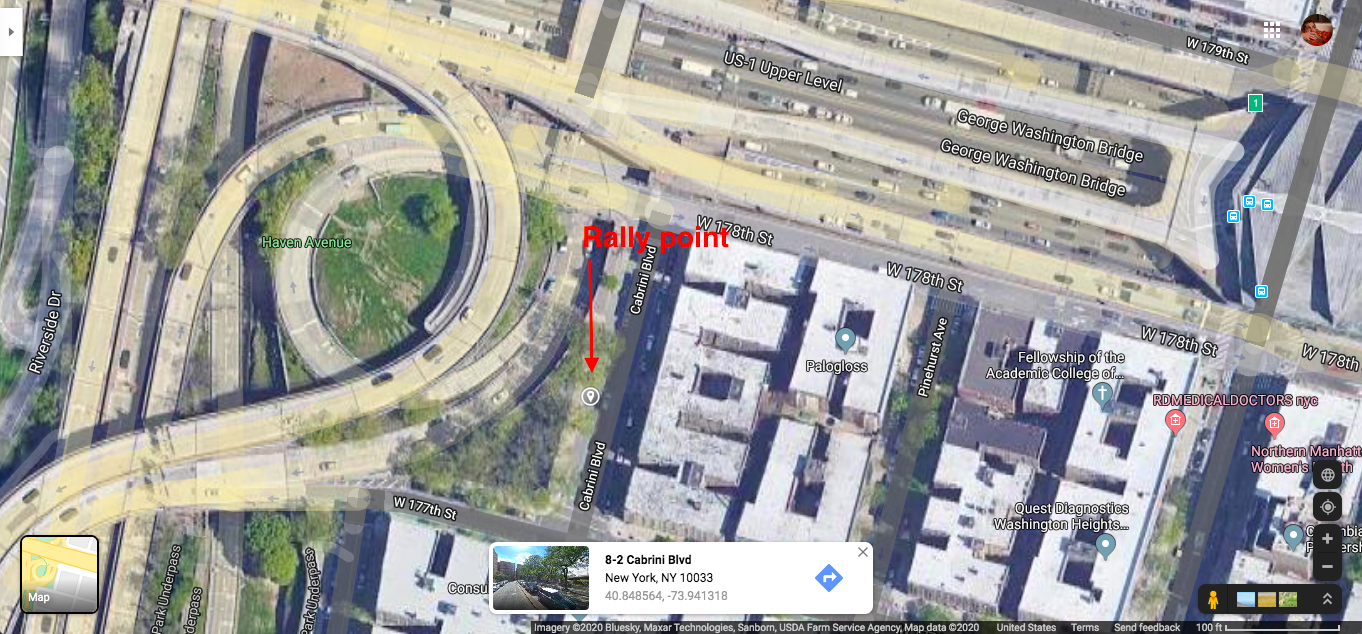
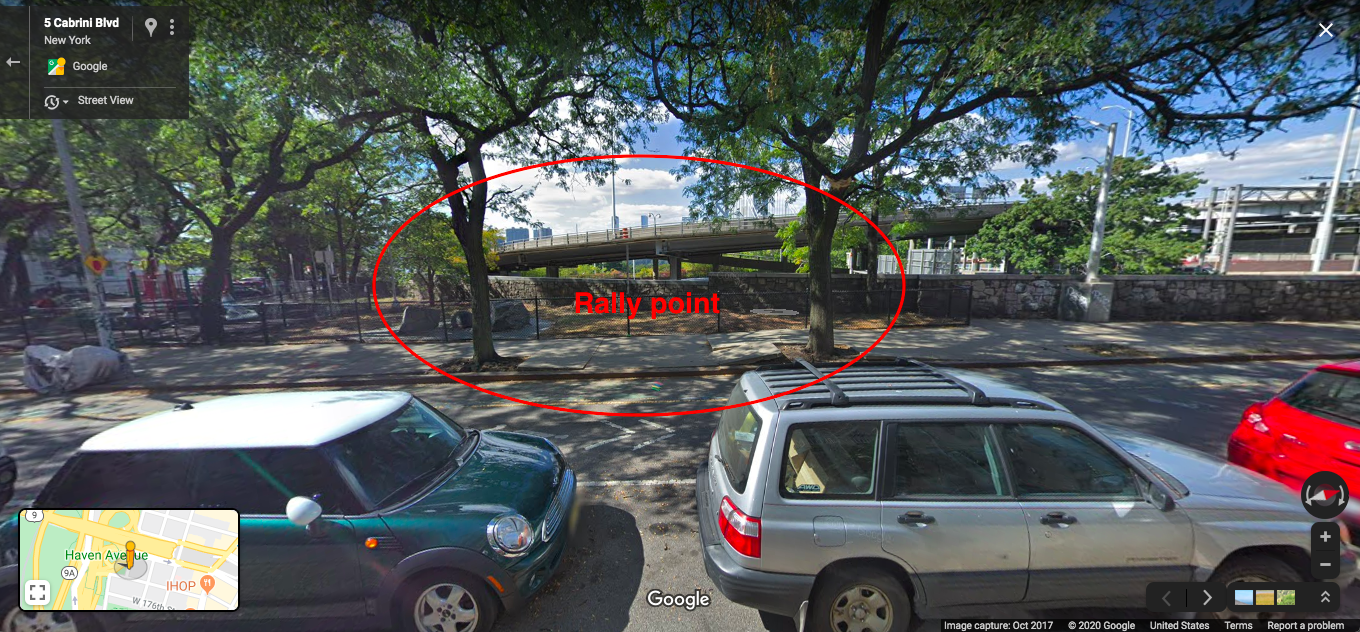
  5. Briefing. Every ride starts with briefing: introduction of new riders, route description, safety reminders, hand signals + communication (yes. I'm serious), today's training plan, headcount, stopping points, team announcements. This practice is already happening to some extent in group rides. The main problem is the awful rally point we keep getting back to. There is a spot on the Manhattan side of the GWB that is significantly quieter than under the bridge (photos attached). These briefings are super important! They set the tone for the whole ride. It is crucial that we will hear the ride leaders do the briefing and vice versa when we introduce new riders and have questions about the ride.
  6. Safety reports. The ride leader is responsible to bring all the riders back safely. Including reporting if there are incidents/near-miss/accidents. Kissena should have data about these things. With this data, we can learn more about the safety of our rides.
  7. End of the ride brief. It is important to mark the start of the ride as well as the end of it. Concluding the ride at the rally point will allow riders to reflect on the ride. There is always something to discuss, to suggest further, to reflect. This feedback is important for team building. 

Now, for some of you it may read like an overkill. Perhaps it's my military jargon, perhaps your experience is whole without this protocol, perhaps it's too rigid for you. I get it. However, we are already doing a little bit of every point I mentioned here. This protocol makes it clearer - as it should be. I've been riding in groups and teams since I was a teenager and I've seen some strange practices and some good ones. This protocol works. It addresses team-building practices and most importantly, safe ride practices.

Questions?

Dotan.

Here is the rally point suggestion:


The Kissena ride will forever meet at the NJ side of the GWB.

I appreciate this discussion, it is kinda awesome. Found Patrick's post very good.

Keeping it basic, KISS style:

1. Have fun
2. Know where your team and club mates are at all times
3. Do not leave the ride, or drop anyone, without first making sure everyone's ok and knows what's up

There's more nuance, sure, specially around how to actually ride as a group. But that's mostly it.

I suppose there's one more KISS point:

4. If you join a kissena group ride, be ready to be self-sufficient, be sure you can hold the pace and distance, bring the food you'll need, and tools/spares for basic on ride repairs.

---

Dotan, we can discuss your ideas on more detail once we ride together, I like where you are coming from, but some appear like solutions to problems we do not have, and I'd be careful about causing confusion. Check Patrick's post.

Simply: We meet & regroup at the NJ side of the GWB. There's no need for GXP files to get to Piermont. Generally, Kissena weekend road rides start at 8am BB/9am GWB. The ride leader is not responsible for anyone's safety, everyone is. 


I think Eloy put things nice and concisely! 

One thing I want to add in regards to pre-determined GPX routes is that this doesn't always work when conditions are changing. For example, last weekend we had some crazy headwinds and decided as a group to take River Road to shelter from the wind.

I also think theres some merit to deciding the route at the NJ Side of the GWB. I know I've gone out for a ride intending on turning back at the bike shop but felt motivated to go further when my teammates said they were going to tack on Bradley/Tweed loops and beyond. 

I think the usual practice is fine as long as everyone knows the general route at GWB and makes their personal intensions clear. If everyone follows the protocol Pat put out, everyone should regroup anyways if a wrong turn is made. 
Guys, guys. It's a group ride. As in... ride with the group

The route, tempo and drills often get decided on the spot based on who is attending and what the weather, skill, energy of the group allow.

Keep it simple. Ride like the gentlemen you are. And gentlewomen.


I read some absurd comments on this forum, but this thread made it to the top 10.

Let's rewind a bit.

This whole discussion started because of an incident that happened last Saturday group ride: @James Reeder was riding with the group until he had a technical - flat tire - and he had to stop and fix it. @DanSztanga that was riding alongside him noticed his flat and asked if he's ok. James replied he is, the group moved on, and James was left alone to fix his tire. His stop created a gap he could not bridge and eventually, he got dropped from the group and continued the ride alone. Did I get it right?

Now, let's dissect this incident as @eloy suggested.

A member has a flat and slows down. Other members see and understand there's a member who has a technical and ask if he's alright. A misunderstanding leaves both the need-of-help member and the other members in the group separate, and contact between the group and the rider breaks. At that point, nobody in the main group thinks of contacting the missing rider or to turn back to look for him with the assumption that "he will be fine", or perhaps they think "it's on him to contact the group". Each party thinks the other party is going somewhere else. The group leaves in the morning with x riders and comes back with x-1 (or more, I don't know).

Now all of you who "agreed" and "liked" the comments that basically say we don't need to rethink our group ride protocol, read what I just wrote above one more time, and read the existing group ride guidelines @PatrickGrehan posted earlier and tell me - do you REALLY think we just need to refresh our memory with these guidelines and be done with it?!

Tell me again I'm looking for solutions to problems we don't have. Tell me again you want to Keep It Simple Stupid. Because what I take from this incident is that there is more confusion than clearness on the basic principals of safety.

I don't really care if when you read the proposal I posted you feel overloaded with procedures. It works and it will assure Kissena rides are safe. The club do not have to adopt it, we are here to discuss it, but the club for sure cannot dismiss it offhand. Especially after intelligent members - @Matt Budofsky and @Kevin Man - wrote down that even they have no idea where they are, where they are going, and for how long in these group rides! And they are not new members! Now imagine you have a "new members ride", nobody really knows each other yet. It is not unimaginable that 50% of the riders on this ride are new and they only (barely) know the membership director. How do you intend to control this group on 9w? Do you need to refresh your memory about what happened earlier last year to @WilliamCheng? or is it too confusing?

And I want to be crystal clear where I'm coming from with this. This discussion started because there is a pattern of ill practice in Kissena and we get lucky every time we come back home from a ride because it sure seems like its only a matter of time that something we'll all regret will happen. And no, it does not depend on your riding skills.

But there's more. These rides make us look like amateurs. You want people to know Kissena? Act like a pro! Which means I'm not writing here to find solutions, I'm writing here to elevate our group ride practice. There's a big difference. The only reason to join Kissena is that you expect to ride in a TEAM. So maybe we should start to look like a team. Dressing up every Saturday with Kissena jersey and meet other people that wear the same jersey and orange helmet doesn't make a team. You want to win races? Practice as a team. You want to attract more strong members? Practice as a team. You want to nurture existing members? Practice as a team. Yes, an organized ride schedule that confirms with a TEAM training plan is a preparation for Kissena to grow, and not just enthusiastic "best intention". Think like pros. I'm not inventing the wheel here. No pun intended.

If you feel you need to, go back to the suggested protocol I wrote and read it again. Four out of the seven points I made are institutional practices. And they are not complicated. In fact its pretty basic. And as for "The Kissena ride will forever meet at the NJ side of the GWB". I don't want to hear this bullshit again.

Dotan.


Definitely a lot of good points regarding headcount, route planning, designated pit stops, etc.  

Particularly regarding dropped riders, the situation with James could have easily been avoided with better communication on the spot.   As Patrick pointed out above the most important rule is to check on a dropped rider and make sure to let the front of the group know to slow down or stop if necessary.  The key here is to communicate the necessary information up to the lead rider, which sometimes is tricky at high speeds with wind, fatigue, etc.  Here are some suggestions -- of course, if there is a better or more established way to do things then I have no pride in authorship here.
  • When a rider has a flat or other mechanical issue, or a rider goes down, the rider with the issue and/or all other riders aware of the issue should yell "mechanical" or "rider down" as loud as possible. Anyone who hears this should call it out to the rider in front of them, passing it up to the lead rider one by one so they can slow the group down or stop if necessary.  
  • Similarly, if a rider (or group of riders) falls behind, the dropped rider(s) should call out "off the back", and anyone in the lead group who hears this should pass it up to the lead rider so they can slow the pace a little until the dropped riders catch up.  Once the dropped group catches up, they should call out "all together", and pass that up to the lead rider who can resume the pace.
Sorry if these are rudimentary or obvious to most people, but figured it can't hurt to revisit in light of recent discussion.  
Hey Dotan,

Just to clarify, as I mentioned in the other thread, I did NOT notice that James had flatted. To add some more context, this was just after the State Line Sprint and the following rolling terrain, before the turn off to Piermont. I was pretty wiped and barely hanging off the back of the group. I thought at the time that James had let up a bit to recover as he was still on his bike, which is why I asked if he was ok as I passed him trying to catch up. I was not there to hear when he called out that he had flatted. 

I believe this was just a simple misunderstanding. I no doubt would have stopped and waited if I had known it was a mechanical, just as I'm sure everyone else would have as well.


Sorry for the long post. I wanted to refocus this discussion to productively  focus on a few issues but found myself describing the current ride structure and raising the question of how we might try to have more ride leaders. 

First I would like to review the current weekend ride structure as some of the comments inaccurately compare it to a free for all. While there is room for improvement, there is also an organization to the existing rides the same way that there are existing guidelines and etiquette. No doubt that this organization could be more explicitly communicated to new members, but that does not mean it doesn't exist. 

The structure of the weekend rides
Weekend rides have a long history of starting at 9am at GWB (8am at BB) taking a route down the low road to Piermont and returning by 9W. There are a few variations including River Road, heading over Clausland, or heading up to Rockland Lake. The above has traditionally been decided by the riders on the road. A number of questions are assessed for each member during each ride: How is their fitness? How much time do people have before they need to be home? What is the weather like? What are they trying to get out of a ride (e.g. long endurance ride, skills practice, hard hill ride)?

There is almost always a discussion on the way to Piermont during which each rider identifies whether they are heading to Piermont and then returning or wanting to go further. Often there are enough members to split into two or more groups based on length, pace or aspiration.

Some of route variations get announced beforehand on the forum such as JPs' wormhole ride and when people announce that they are heading to the Orchards, Bear Mountain, etc. Most of the time riders show up and make the decision on the fly based on who has showed up. 

Do we need to overhaul?
I don't think these procedures need a complete overhaul, but I think the comments above clarify that the structure of weekend rides and the guidelines for how we ride as a group could be made more explicit and accessible to members. Low handing fruit can include including information about the group rides and etiquette for members on the website (something the board is already working on). Additionally, it would also be easy enough to provide members with GPX files for common routes should they choose to separate from others on a group ride. 

My post a few days ago with guidelines clearly indicated that all ride members are responsible for each other and that intentions on the ride (where are they going, where are they going to turn off, etc.) should be communicated clearly. Nevertheless, several people are expressing that they see a benefit from having an explicit ride leader. The lack of an explicit leader means that the structure may not be communicated clearly to newer members. This may cause some discomfort or confusion until those members become more comfortable with the routine and routes. 

How to elicit more  explicit ride leaders?
Lets assume for a moment that we were to have designated ride leaders to address the above. How would we make this happen given the varied nature of our membership?

Let's hear proposals for what methods we could use to have members lead rides. Are they to volunteer or is it a member requirement? Let's think through the issues if we run into issues like there being are too few leaders etc. I have had to wrangle volunteers to help with registration at Park races, which can be a real pain in the butt at times. While I have no doubt that we would have people volunteering to lead a number of rides, it would probably be he same group of people and I would be loathe to make it a club requirement or to have to hound members to do it. 

Is it a sufficient improvement to have a few more dozen group rides with explicit ride leaders?

I could write more, but I am getting tired  


I went back almost 10 years on this forum and couldn't find the work "absurd" used once to describe another teammates comments.
Jules said:
I went back almost 10 years on this forum and couldn't find the work "absurd" used once to describe another teammates comments.
I'm glad you focused on the important issues. But I can't do passive-aggressive as well as you do. 
Jules said:
I went back almost 10 years on this forum and couldn't find the work "absurd" used once to describe another teammates comments.
Jules said:
I went back almost 10 years on this forum and couldn't find the work "absurd" used once to describe another teammates comments.
Yep, some people have to cool their jets.
What unfortunate and unnecessarily aggressive messages, Dotan.

Tone matters.

I wondered how or if I should reply... not sure if this is good: Consider this me telling you again, or whatever your call to action was.

¯\_(ツ)_/¯ 

cooling engines now ;)
Can we be nice?
Can we go for a ride?
mugwump said:
Can we be nice?
Can we go for a ride?
let's do it!
Jules said:
I went back almost 10 years on this forum and couldn't find the work "absurd" used once to describe another teammates comments.
I'm glad you focused on the important issues. But I can't do passive-aggressive as well as you do. 
Dotan your tone is and continues to be rude and dismissive. Everyone gets annoyed from time to time. People have managed to be civil and assume the best of one another on this forum for over ten years.

You can too.
Sorry for the long post. I wanted to refocus this discussion to productively  focus on a few issues but found myself describing the current ride structure and raising the question of how we might try to have more ride leaders. 

First I would like to review the current weekend ride structure as some of the comments inaccurately compare it to a free for all. While there is room for improvement, there is also an organization to the existing rides the same way that there are existing guidelines and etiquette. No doubt that this organization could be more explicitly communicated to new members, but that does not mean it doesn't exist. 

The structure of the weekend rides
Weekend rides have a long history of starting at 9am at GWB (8am at BB) taking a route down the low road to Piermont and returning by 9W. There are a few variations including River Road, heading over Clausland, or heading up to Rockland Lake. The above has traditionally been decided by the riders on the road. A number of questions are assessed for each member during each ride: How is their fitness? How much time do people have before they need to be home? What is the weather like? What are they trying to get out of a ride (e.g. long endurance ride, skills practice, hard hill ride)?

There is almost always a discussion on the way to Piermont during which each rider identifies whether they are heading to Piermont and then returning or wanting to go further. Often there are enough members to split into two or more groups based on length, pace or aspiration.

Some of route variations get announced beforehand on the forum such as JPs' wormhole ride and when people announce that they are heading to the Orchards, Bear Mountain, etc. Most of the time riders show up and make the decision on the fly based on who has showed up. 

Do we need to overhaul?
I don't think these procedures need a complete overhaul, but I think the comments above clarify that the structure of weekend rides and the guidelines for how we ride as a group could be made more explicit and accessible to members. Low handing fruit can include including information about the group rides and etiquette for members on the website (something the board is already working on). Additionally, it would also be easy enough to provide members with GPX files for common routes should they choose to separate from others on a group ride. 

My post a few days ago with guidelines clearly indicated that all ride members are responsible for each other and that intentions on the ride (where are they going, where are they going to turn off, etc.) should be communicated clearly. Nevertheless, several people are expressing that they see a benefit from having an explicit ride leader. The lack of an explicit leader means that the structure may not be communicated clearly to newer members. This may cause some discomfort or confusion until those members become more comfortable with the routine and routes. 

How to elicit more  explicit ride leaders?
Lets assume for a moment that we were to have designated ride leaders to address the above. How would we make this happen given the varied nature of our membership?

Let's hear proposals for what methods we could use to have members lead rides. Are they to volunteer or is it a member requirement? Let's think through the issues if we run into issues like there being are too few leaders etc. I have had to wrangle volunteers to help with registration at Park races, which can be a real pain in the butt at times. While I have no doubt that we would have people volunteering to lead a number of rides, it would probably be he same group of people and I would be loathe to make it a club requirement or to have to hound members to do it. 

Is it a sufficient improvement to have a few more dozen group rides with explicit ride leaders?

I could write more, but I am getting tired  


Ok, let's get back to the real discussion here:

Thank you, Patrick, for your comment. It helps to break down the issues as you did.

Regarding the structure of the rides: The decision about the weekend rides - length, intensity, route -  is done as you said on the spot and that is because it depends on who shows up, how much time they have and their fitness skill and the weather. Understood. Can we figure out a system that this discussion/options will be decided beforehand? Yes, it happens on the forum. But sometimes we don't know where and what only the night before. Like Matt says, it's hard to know what day you'll in the saddle. A ride plan can address this. Let's see how members respond to the plan you say is in the works already.

About the ride leaders. It's happening already de facto. When someone posts a ride on the forum, I assume he will lead the ride. And we have designated mentors in the club, am I wrong? The only difference I suggest here is the different approach. The ride leader should make sure to do proper briefing at the start and the end of the ride for feedback and honestly to say a proper farewell; the ride leader should know about the whereabouts of the group and ensures that its safe and rides together. It's important for me to highlight - this role doesn't take responsibility from other members, but on the contrary, it makes sure riders have can address issues to a designated rider, hence the leader. Should it be part of the membership requirement? Maybe not, not everyone is up for this role, or wish to play it. But it should be encouraged.

____

I think I wrote enough here in this thread. And today's was pretty spicy. I had personal conversations with people here that reached out to me and we settled things right. I didn't come with bad intentions and I hope I made it clear in these conversations. But I did come aggressive on purpose. Because safety is not an issue I take lightly. I don't need to be schooled, nor I appreciate passive aggression on the forum. I don't understand it, if I do, it comes too late, and there's a lot of it here. I can mention names, but I don't see the point to continue in this direction. Waste of time and energy.
Not sure if this is the correct thread for this since it mostly pertains to group ride etiquette, but do we have a COVID protocol in place for group rides?  Based on the COVID thread it looks like we've had a few positives in the club (myself included), but I can't seem to find the protocol for what we're considering safe.  Use our own judgement?  Negative rapid?  Negative PCR?  
Our COVID specific protocols are below. Obviously, if you are having symptoms, please refrain from joining group rides. Please also adhere to general CDC guidelines (CDC COVID guidelines) when it comes to isolation periods. Lastly, be able to provide a negative test (discuss what the group that is setting out are comfortable with as far as PCR vs rapid).


In order to resume group riding we are asking members to adhere to the following:


- Everyone in attendance must be fully vaccinated. For the safety of the group and the community, please only attend these rides if you can verify that you have received a full dose of the COVID-19 vaccination. Verification could be a picture of your vaccination card or the NYS Excelsior Pass.

- Post your ride intentions on the forum or KCC Slack before your ride. This could be something as simple as "I am going to be at GWB at 9:00, looking for a small group to ride with".

- RSVP to state that you intend to join a proposed ride. As always, please post/reach out if you are not going to make it or are running late (we would like to limit the amount of time spent grouped together, waiting for the group ride to begin). We would like to limit the amount of time spent grouped together, waiting for the group ride to begin. This serves to let others know approximately how many people will be attending the ride and will help in the unexpected event that contact tracing needs to occur. Again- it is expected that every member on the group ride is vaccinated.

- Adhere to CDC Guidelines while on the ride (IE: socially distance when not riding, wear masks at cafe stops, don't share bidons or snacks, be VERY mindful of snot rockets/ spit, etc). Please be respectful of your teammates' boundaries, precautions, and safety.

Of course, please use your own discretion. We have come a long way since March 2020 but we still need to be cautious. If we can align our group riding etiquette with COVID safety guidelines, we should be able to enjoy the company of new and familiar teammates on group rides.