Kissena Forum Archive

Goals for the upcoming season

51 comments · 651 views
It is that time again, folks. Folks, it is time to put our mouths someplace so that we subsequently will know where we should put our moneys. Or something.

Goals for the "upcoming" season!
(I left off the year so this thread can be recycled/re-used forever.)

I'll start.

Racing

Win a goddamn road race once and for all 

Sprint or lead out at Grant's Tomb
Manageable cramps at Battenkill
Super-domestique for strongest teammate at Battenkill
Become a skillful crit racer and contest for crit wins
Lead out a Kissena 3 to victory at Bound Brook
Don't get dropped at Pawling
Contest for stage wins at Green Mountain Stage Race
Never go out too hard in a TT
Identify a reliable (and safe) method to ensure a quality dump before morning races

Training 

Destroy all of Malcolmson's Strava records
Minimum three hours per week on indoor trainer Dec.-Feb.
Sub-160 lbs., Grant's Tomb through GMSR
Take a full ten days completely off right in the middle of July, after the Jersey crits
Spend ten days in July dog-sitting Leroy and hanging out in W'burg showing off crisp tan lines
Crisp tan lines
Learn three of JP's secret training routes
Obtain possession of the jawbone or thimble

1200w for :05
1100w for :10
700w for 1:00
375w for 5:00
325w for 10:00
300w for 20:00
290w for 60:00

5:30 Alpine climb

"Hope springs eternal"

Great stuff Jeff. Yacks better watch out. 
goals for 2013:

establish a successful breakaway
feel confident in a sprint at the end of a long road race.
shatter some souls
podium at an out of town race and get as many top 10s as I can in light to move up to cat3.
break 4.2W/kg threshold
maintain weight sub-140lbs during the season

training for 2013:

train with power
learning my way after crossing the gwb!
following a training program and learning to go slow when it counts.
keep motivation high and adhere to program as closely as possible.


Racing: Win Pawling.

Yes, I think I said this last year too.

Training: Drop William and/or Ryan on as many climbs as possible.

Make Tito's goal list ... Check! 

BTW, at the two minute mark of this inspiring video there's an awesome shot of Tito ripping a picture of me and William off his mirror. God, the intensity in those eyes...

http://www.youtube.com/watch?v=1oDTNEEu3Rw
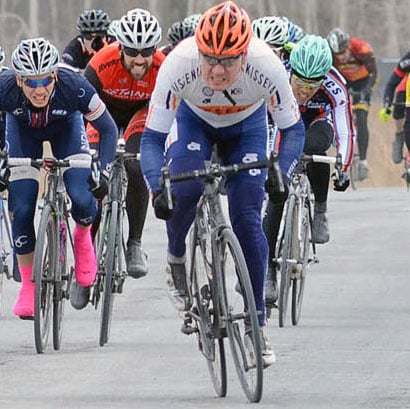


Destroy all of Malcolmson's Strava records

>
Smack!
From my Swiss hideaway, I'd like to contribute my goals for 2013:

Take advantage of local topography to rediscover my climbing legs
Become skilled at riding the local 166m track
At least one gran fondo
Improve descending skills
Learn enough mtb skills to comfortably ride the local trails
At least one local race
When I return for a visit in June and October, to join the gang at the races and kick ass
yea boi!

Goals. I've got a few. But the most important ones are to try and be a more active/better mentor for the club in 2013. One of my main objectives is to help you Alpine/Computrainer/FBF watt monsters become more successful racers. Stay tuned for more info as my plans develop.
I just reminded myself of another goal to help make myself a more valuable member of the club. That is to blog more often and more regularly. I've got a few ideas brewing that would be of general interest to the cycling community and hopefully we can start to grow our website into a destination for non-Kissena members as well.
Hot-list road racing edition???? Please???!?!
I just reminded myself of another goal to help make myself a more valuable member of the club. That is to blog more often and more regularly. I've got a few ideas brewing that would be of general interest to the cycling community and hopefully we can start to grow our website into a destination for non-Kissena members as well.

Hot-list road racing edition???? Please???!?!


I just reminded myself of another goal to help make myself a more valuable member of the club. That is to blog more often and more regularly. I've got a few ideas brewing that would be of general interest to the cycling community and hopefully we can start to grow our website into a destination for non-Kissena members as well.


Please!
Finish a Gran Fondo or two.  Slowly.
Ride at least 4-5 times per week.  Slowly.
Join at least one big KCC group ride over the GWB per month.  Slowly.
Get up the Col du Prospect in the KCC Championship race without an assist from Ragot.
Serve as a feed zone domestique extraordinaire at Battenkill, Pawling and 1 or 2 other out of town races.
Avoid trips to the ER.
Stay thin.
Have fun.

you left out the mohawk

was that on purpose?
you talkin' to me?
These are my 2013 Goals.  Based on today's field test though, number 1 is done :)

Threshold
4.5 watts/kg FTP (320 at 155)
420 for 5 minutes
375 for 10 minutes
Skills
Bunnyhopping a 1/2 height cross-barrier
Learn how to trackstand
Racing
Upgrade to Cat 3 this spring
P2A or Road Captain for Bkill
Win a Cat 4 CX Race
Upgrade to Cat 3 CX
General
Wrap bar tape as good as Purdy
Replace own brake cables
I just want to be better than I've ever been before. That includes being a top 10 climber in the 3s and a solid teammate and breakaway threat in park races and crits. Pawling and Catskills are the big goals.
@Jules. Hot shit with field test.

Protocol?
CTS standard: two 3 mile TT's
Nothing crazy big on the watts but I'm getting skinny. Sub 70kg these days
so you tested threshold doing 3 mile TTs? ...interesting.
There is always this Friel method :)http://www.joefrielsblog.com/2010/08/estimating-your-ftp.html And the 95% of your 20 minute maximum... Or just go out and rail it for an hour :)
I always test on the trainer. 20 min warmup, 5 min all out, 10 min rest, then TEST. 20 min. Subtract 5% and that's the FTP. My numbers on the road are always higher than on the trainer because its easier to manipulate the averages with road undulation. Also the trainer is totally controlled so if I'm trending up I can be pretty sure it's me getting stronger.
Nobody gives out prizes for extrapolated FTP's

All these methods are meant to help us calculate ranges for training, nothing more.  I'll retest in 4-6 weeks. My main goal is to make sure my training ranges are "accurate" in that I'm getting the most bang for the buck for every minute I spend in "tempo" or "steady state", etc.
I don't believe anything other than an hour TT (repeated multiple times for accuracy due to inter-effort variables) for the calculation of hour lactate threshold.  Don't really understand how the alternatives can be close.  I assume that this was deduced by a coach in one of either two ways, although I have no proof: an actual comparison of the two techniques which generated similar methods or just through 'anecdotal evidence' or 'experience with many clients'.  EIther way, I find it hard to believe that an amateur racer doing an ALL OUT effort for 20 minutes could maintain 95% of that over 60 minutes.

Take a 20 minute session, then if you extrapolate that over 300% the time it comes out to 95% the power??  I have absolutely no criticism concerning use of these sorts of tests as a training tool to help define some sort of intensity bracket for training, but I strongly disagree with the false nomenclature of this being one's 'hour threshold'.  BS.  An incredibly convenient way to assess one's fitness but the name needs to change.

Additionally, this doesn't even come close to training you for the absolute mental torture that is the 60 minute TT done right.  

I think you nailed it Jules: "Nobody gives out prizes for extrapolated FTP's"

I guess I'm posing a simple question, for which the answer interests me and I am not just being contrary.  For all those who have, using one method or another, calculated their hour threshold, let's say in the last 12 months, how many have confirmed the accuracy of this number with an actual all out, 60 minute best effort?

Thoughts peoples?

2013 Goals

1) Finish Pawling 
2) get one more win than last year - ( 3 total)  
3) results in more "out of town" races (Turkey Hill, Mullica, Battenkill, etc.? ), but keep being successful in park races, FBF, etc. 
4) hold my own in crits in the pro12 fields - work for ragot or whoever is on (keep working on positioning, energy conservation, cornering, etc.) 
5) organize real team structure for park racing, practice lead-outs etc., make it happen in the race - help teamamtes get results. 
6) get 18 cat 2-1 upgrade points
7) be at 160 lbs by the start of racing season (March 1), maintain a stable weight based on optimal power to weight ratio thereafter 
8) start mentoring new riders / racers 


http://www.fascatcoaching.com/mlss.html

I suppose this is the answer:

"As a result, functional threshold power set from a 20 minute Field Test in our experiences are too high and overshoot the important physiological breakpoint between the balance of lactate production and clearance.  In other words, athletes train too hard using power based training intensities set with a 20 minute field test."

I suppose that's good news for all your training animals out there.  You think you are training at your 1 hours max power but actually you work in excess of that!  That can only be good!
@Adam - it's almost impossible to do 60 minutes at maximum effort in a testing environment. I'm pretty sure I'm mentally incapable of such an effort. "FTP" refers to a physiological maximum, so mental weakness must be minimized. One method Hunter Allen and Andrew Coggan endorse (among others) is to simply use your 60:00 record for the last few weeks. They add the major caveat that you must be racing very hard, and a lot.
@ Adam

The "balance" you mention is exactly what we're lining up our newest (and fastest) Kissena Mike Garrigan to test for after he is done with Worlds - and pending interest :)

As I understand it Balance Point testing is intended to find the power output where you cease to clear (use) lactate as fast are you produce it.  It sounds like a grueling test where you first explode, then recover, then incrementally explode again.  (Plus zombies)

But again, Balance Point testing is intended to help generate optimal training ranges, not predict your hour power record.

As anyone who has tried will attest; and hour TT is as much if not more a mental and emotional exercise as it is physical.

I agree with you that the "FTP" extrapolated from any of these methods (5 minutes, 2x body weight in pounds, 20 minutes, 3 miles, etc) always seems higher than anything I'd be able to do... except that I do have several instances (anecdotes but they did happen to me) where I was able to randomly - and in a normal training week without any taper or other preparation - pound out an hour at a number that was very close to my "extrapolated" FTP, or an hour that was marginally lower but had a perceived effort of 7/10 or 8/10.
1. The 20 minute power is after depletion of anaerobic stores - that is the purpose of the 5 min blowout effort. If you were to do a 20 min effort without that 5 min effort, your numbers would be quite a bit higher.

2. Threshold according to Coggan is from 91% to 105% of FTP.

Thus, getting an approximation of the FTP value then using a 14% range to around that value will actually get you pretty damn close. As the Fascatcoaching site explains "This athlete's 20 minute Field Test power was 7.5% greater than his MLSS power (240w vs 222w)" Notice the 7.5%. So, the 20min method (with AWC depletion) will get you in about the same place.

One last thing to consider. If your FTP is calculated too high, you simply will be unable to perform intervals in the Level 4 Range (http://home.trainingpeaks.com/articles/cycling/power-training-levels,-by-andrew-coggan.aspx). And if you can eventually creep into the bottom of the range, then you are getting stronger. If you went and tested again using the 20min test, you'd find an increase in FTP leading to an increase in the numbers used for the zones.

Whatever system you use, if you maintain your protocol, you will improve your power output. The whole thing is kind of self-correcting because - "all you can do is all you can do."
Adam,
Fair question.  When I first started using the power meter, I did lots of testing.  Tried different protocols and so on.  I was able to do all the training suggested by the numbers--that is, hit my threshold in threshold efforts, hit my vo2 in vo2 efforts and so on.  that year, I did a criterium in the Tour of Connecticut stage race.  Lots of pros drilling it.  My normalized power (and I know not everyone believes in normalized) for the slightly greater than an hour race was 30w over my predicted threshold.  Average was, I think, about 5w below.  I probably should have adjusted my power numbers up at this point, but I didn't.  Then, that summer, I did La Marmotte in France.  My average power for the climb of the Glandon, about an hour of climbing, was within a few watts of that non-adjusted predicted threshold.  And that was the first climb of the day.  I still climbed the Telegraphe, Galibier, and Alpe d'Huez--though I fell apart on the Alpe.  

I don't think the predicted threshold number is perfect, but the point in extrapolating is not to fall off your bike writhing in pain after an hour, nor is it the supreme mental anguish of grinding out that number, but as a guide that saves you the agony and allows you to train effectively.  Perfection isn't the point.  Satisficing is.