Kissena Forum Archive

Professional Dopers

2136 comments · 20171 views
Mugwump --yeah, but is it really a "however" situation... the smart doctors (as opposed to say, Vini Farnese docs) would set the dosages and timings for any cheating regimen at a level that gets the benefits but keeps the physiology looking somewhat believably "natural". If someone, say Froome, can produce massive watts/kg with a hemocrit of 45 --that's his physiology... but to continue doing it for 3 weeks, and not seeing a pay-back drop from that 45 number... that scenario should trigger the passport infringement. Will that happen? I don't know. 

Maybe hematocrits are dropping and the performances are less powerful over these weeks, and the performances just look invincibly powerful because everyone is losing some power. Cheaters have done it successfully with EPO and blood transfusions, it follows that they would do so with this stuff which has the benefit (for them) of being less detectable via substance testing.

And come to think of it... isn't that meme about coming into form over the course of the tour just a platitude to explain away the doping. Did people say that in the pre-EPO days? It seems to contradict what we know about training and racing. If it were true, why don't we just say fuck recovery and ride balls out everyday for a couple of weeks to get some form in prep for a race 3 weeks from now? 


Norm I think the bio passport is intended to address this - they cannot test for epo very well anyway so they look for anomalous time series of several factors; hematocrit, old to young red blood cells and they look over season-long cycles rather than just three weeks.

That's not to say the system isn't beatable, but I think if its being beaten it is being done either by a very sophisticated system that manipulates multiple factors to create an acceptable signature, or the "old fashioned way" by bribing the testers.

The later is relatively (to the alternative) simple to execute and would explain Froome's certainty that he'll "never test positive"
On the "coming into form" thing I believe it is just a circuitous way of explaining that in the third week we see serious divergence between how some athletes decay.
These clowns can't figure it out...

"We are witnessing a daily attack against the dignity of the riders in a manner that can no longer be tolerated."
"We were treated like livestock, like criminals"

Which one is from today, and which is from 1998?

Jules said:
On the "coming into form" thing I believe it is just a circuitous way of explaining that in the third week we see serious divergence between how some athletes decay.
Norm,
I see your point. 

Back in 2005, I was present at a talk Allen Lim gave.  Floyd Landis was there. I think I've referenced this elsewhere.  Anyways, Lim tried to explain this claim.  Basically, looking at the threshold and tss/day the top riders can manage, the traditional first week of flat stages is a place where the top guys can take it relatively easy.  That is, aside from the occasional spike in power after an attack and short crosswind segments, their normalized power daily and total workload should be a good bit lower than they're able to manage in training.  He also showed the group a powerpoint slide showing that the first mountain stages of the 2005 Tour were pretty much steady the whole way until the final climb, where it was who could hold on the longest.  Whereas on the later mountain stages, the top guys started slow, rode steady, and then attacked the final climb--putting out higher efforts on the final climbs.

We now know that doping was a good part of their ability to do this. 

But as Jules suggests, it's possible that the difference is real, it's just that they're not so much coming into form, as getting severely fatigued slower.  

No one can hold a peak for three weeks.  I can see where people might try to come into the Tour a bit under-trained relative to where they were at the end of the Giro, Dauphine, or Suisse.  At the same time, the opening week of the Tour this year, and the typical opening week of the Giro, would make coming to these Grand Tours under-trained very hard.
Copied and pasted from a story on cyclingnews.com:

As if to illustrate the point, Contador’s Saxo-Tinkoff teammate Roman Kreuziger now lies in third place overall after he, too, produced a remarkable performance against the watch, placing fourth, 23 seconds down on Froome. Already on the offensive on Tuesday’s stage to gap, the Saxo-Tinkoff pair appears to be rejuvenated since the Tour’s second rest day.

Classless reporting.  The innuendo is basic.  The insult/meaning easily inferred.  Could try harder, no?  It seems that every dick in cycling has read that twat Hamilton's 'The Secret Race' and is now an expert on doping, blood bags and 'bread and water'.  And, of course, the difference between the different states and how to tell which one a cyclist is in.
On the subject of "trying hard enough" and in my (fruitless) search for the PPT slide @Wump mentions, I ran across this gem from Outside on Landis

http://www.outsideonline.com/outdoor-adventure/biking/road-biking/The-New-American-in-Paris.html?page=all

I'm struck most with the thought that I don't think sports writers (or journalists at large) would even know what to do with a clean athlete... wouldn't recognize one if he/she bit them on the you-know-what. Just as importantly wouldn't know how to write the story about a talented athlete who dedicated him/herself to the cause... not completely you see, just a LOT... a real LOT... but not really enough to take that final set of steps.

Would Mr./Mrs. Clean be a hero in that story, or a sad sack who never made it past the team selection, or the minor leagues.

I mean, yeah, the winners are bent in the head and cheats, and moral lepers and all that but goddamn can that guy climb!

image
The latest attempt to figure it out from afar: http://nyti.ms/1114Qyk
Mugwump --thanks, that's interesting stuff on the riding into form scenario.
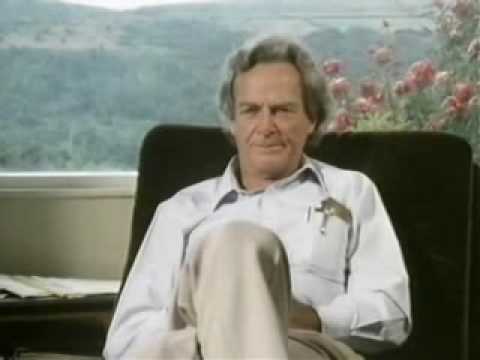
Adam --re: cyclingnews quotation --of course it's bad reporting... there's a lot of that. I just think of Feynman on knowing things:

http://www.youtube.com/watch?v=IaO69CF5mbY
Damn, I was about to try and contract it in hopes of a performance boost:

http://deadspin.com/is-the-tour-de-france-leaders-parasitic-infection-bull-832487973

Damn, I was about to try and contract it in hopes of a performance boost:

http://deadspin.com/is-the-tour-de-france-leaders-parasitic-infection-bull-832487973
I had no idea that schistosomiasis=bilharzia.  Is it my failure or the cycling media's?  

The first I've heard of, and that makes me feel it's not so rare.  Reading up a bit on it, bilharzia is not so rare.  And now that I've read about the treatment, it makes me wonder what Froome, Brailsford, and the media are discussing with it.   makes me remember the way Bunde supporters treated Clomid, and the way VeloNews excused Rory Sutherland's use of the same.
JP,

You buy the Zirbel's defense?
http://velorooms.com/index.php?topic=3007
JP,

You buy the Zirbel's defense?
Are you discussing Tom Zirbel's claim of "I don't know how dope ended up in my system, but it wasn't from me" from a few years back?

If you're referring to that, the answer is no.  He could have published all his drug tests over the past several years in an effort to clear his name.  Yet he didn't.  He asked us to trust him.  I know several people who are well acquainted with Zirbel, and they thought he was a pretty straight arrow type,a bit of a jerk at times, not a nice guy like Tyler Hamilton, but not a doper.  Of course, the first guy who was beating him at the year-long NRC was doping don Nathan O'Neill.  And the second was Rory Sutherland, he of the clomid positive.  All three are physically large guys.  The only surprise was that Zirbel's positive wasn't for a weight-loss drug.
Yeah, he's a big dude.

This has been touched on before but was still kinda interesting:

http://www.economist.com/news/science-and-technology/21581978-sportsmen-who-take-drugs-may-be-prisoners-different-game-athletes-dilemma
@Owens that's a good one
Hey dudes,

I was curious how doping prevalence in the peloton affected the GC contenders.  So, I did a thing.

More details (waaaay more details) here:
https://docs.google.com/document/d/1m3FkbGzNfs-Ks3wKECGAAPoTl9VTW_jD7rQkVdXdzSI/edit?usp=sharing

-A

image

Alex, I get that if doping is 4x more effective there will be more of the GC incented to dope... but where is the insight?
lol, fair point. And to be clear, the model doesn't aim to do much aside from satisfying my curiosity about the dynamics of doping. 

Anyway, though, I explicitly don't model incentive - i just assume that 10% of the pelotom are assholes. If doping is effective, and dopers are spread randomly through the peloton, then instead of the GC being incented to dope, the GC is packed with non-GC guys who doped their way in. That feels different to me (although maybe worse?). 

 The surprising result for me (although maybe not for everybody) is twofold. 

One, that it really doesnt take much doping to totally fuck up the GC. 

And two, that even if the same # of guys dope throughout the peloton, if that doping is less effective because of better tesing, then the GC is automatically cleaner - and gets cleaner faster than the rest of the peloton. That's a little surprising to me, and good to know.

(Of course, ignoring incentives is a huge assumption. But between increased incentive and increased testing for the GC guys, I assumed it would wash out. It probably doesn't, particularly as people dope to keep up with the newly stacked GC.)
That's a probability model, not a doping model... :)

The first thing everyone says about doping is that the benefits are not consistent across athletes.
Oh, totally! It's definitely a probability model, and says nothing about any rider (or even about the peloton in any given year). Really, it's just a thought experiment to see what you get from a set of pretty minimal assumptions.

I added variance in doping effectiveness, though - it  turns out not to matter much qualitatively, but it does change the precise number you get. Basically, people who respond better than average will dominate the GC a bit more than normal - so, for the "dirty error" model, you go from 84% dopers in the model GC to 92% when you include variance in the response to doping (as SD = .0625 W/Kg).  I have no idea what kind of response variance is normal, though, so that's just a guess.

What happens to w/kg when you stipulate ALL the GC candidates (based on natural w/kg at threshold) are doped?

Or perhaps, more "scientifically," what would performances look like if w/kg at threshold correlated exponentially to likeliness of doping?
Both would give GC contenders more extreme performances.  So, if the peloton was between 5.5 and 6 W/Kg (as in the model, for better or worse), then the GC guys would all be 6.25W/Kg.   

But this model isn't really necessary for that.  Just pick your number for "best non-doping W/kg", and add your "effect of doping in W/kg", and there you go.
Thanks for this Chris Froome....I am now TOTALLY convinced that you do not take ANY banned substances...I mean you have passed ALL of the tests...and the way the sport is "policed" and "controlled" surely it must mean that no cheater could get by undetected....:

"The way the sport is now and the way the testing is, it is so, so strict. Each rider has a blood passport where almost on a monthly basis, readings are taken," Froome said in an interview with Reuters TV the day after his triumph.

"People don't realise the amount of testing we actually go through. I am confident to say that cycling really must be one of the cleanest sports, if not the cleanest, just because of the way it's policed and controlled."

http://www.dailymail.co.uk/health/article-2238842/Could-elixir-hold-key-weight-loss-Experts-hope-itll-treat-diabetes-epilepsy-Alzheimers.html
@Jeff.  That's extraordinary sounding, but then I felt like I was being sucked into an infomercial ..I'd pay dearly for that stuff.
twoyacks said:
Thanks for this Chris Froome....I am now TOTALLY convinced that you do not take ANY banned substances...I mean you have passed ALL of the tests...and the way the sport is "policed" and "controlled" surely it must mean that no cheater could get by undetected....:

"The way the sport is now and the way the testing is, it is so, so strict. Each rider has a blood passport where almost on a monthly basis, readings are taken," Froome said in an interview with Reuters TV the day after his triumph.

"People don't realise the amount of testing we actually go through. I am confident to say that cycling really must be one of the cleanest sports, if not the cleanest, just because of the way it's policed and controlled."

@Yaks I agree with Froome; I think Cycling *is* probably the cleanest sport out there - but that doesn't mean it isn't dirty.  Like saying they're the nicest bank robbers in the jail... probably true, but missing some context.
Here's the link for the ketone study: http://www.gracewellness.se/pdf/reducer/Life-Science-77-194-204.pdf

And crazily enough, you can just buy the stuff from Sigma by the Kg.  
http://www.sigmaaldrich.com/catalog/search?interface=All&term=raspberry&lang=en&region=US&focus=product&N=0+220003048+219853269+219853286&mode=match partialmax

You can also do the same thing with capsaicin!  This is, uh, not recommended in high doses.
This cat gets my vote.....

http://www.velonation.com/News/ID/15071/Cookson-calls-for-the-sharing-of-data-with-anti-doping-bodies-to-be-obligatory-for-teams-and-organisers.aspx