Kissena Forum Archive

Winter Riding

86 comments · 951 views
Warning No formatter is installed for the format not-found
Those rando tires are awesome.
Too cold for my gatorskins today. I swapped the rear for my trainer tire (old race slick).

It's cold out, but it won't be long now... 

image
dstokes said:
Too cold for my gatorskins today. I swapped the rear for my trainer tire (old race slick).
Wait, what? Stokes...you've ridden in MUCH colder. It was 28 degrees, dry and sunny!
Grinding through Battlestar Galactica (the new one) while riding the trainer these days.  Much more my speed than the zombie/serial killer/DHS-fetish stuff.

Still crying about Netflix pulling Big Trouble in Little China though...

image
i'm trying to stitch the 3 battenkill videos into one EPIC video!
Bump.  Cold Riding.

Choices depend on what works for you, whether or not the sun is out, how windy it is, length of the ride, the quality of your clothes, and a host of other factors.

Bike clothing is made, and designed, to be aerodynamic, prevent chafing, wick moisture, look good.  Most of that can be disregarded for winter training.  You don't need cycling specific clothing, such as gloves you can pick up at Home Depot or REI, wool socks from anywhere, though nothing beats a soft thumb patch for runny noses.

I have different types of gloves and carry extras in case they get wet, and I buy thick winter gloves a size too big so I can fit another pair of liners, if need be. I wear toe covers on my shoes and below 40, break out my winter road shoes.  

Clear lenses for my glasses on cloudy days, and I now have a front and rear light permanently fixed to my bike, because a lovely afternoon ride plus a flat means getting home after dark.

This is the basic chart I use, adding clothing as the temp goes down.  Longer rides depend on the temp at the end of the ride, and I generally choose to be too cool at the start, so I'm not overheated by the end.  Packable clothing, like my vest, get a lot of use in cooler weather.

Clothing Temp Recommendation.  Find what works for you.

63 Shorts, short sleeve jersey, summer gloves
61 Light base layer and short sleeve jersey, or arm warmers, or summer long sleeve
60 Knickers
54 Wool socks
53 Toe covers
52 Fleece Long sleeve jersey, spring long fingered gloves, hat.  Vest if it's windy.
49 Tights
43 Thick base layer, neck warmer
42 Winter Jacket, Winter Gloves
40 Winter road shoes
33 Second pair of wool socks, glove liners
28 God be with you, because I'm on my trainer
+ 1 on multiple gloves. I have several different glove combinations I can wear in order to optimize my finger warmth/dexterity/water resistance for different conditions.

Lots and lots of information on the board for this subject so I will not belabor the point, but different people react to cold differently. So my super cold feet would never survive down to 40 with just toe covers, and hats to cover head vs covering ears are two different things. I may overheat but I don't want to freeze off my ears at some temps where Bruce's bald pate requires full coverage.

TL:DR - We're all special in our own ways.
If only there was a consolidated doc for Kissenas to read covering topics like cold weather riding...

http://www.kissenacycling.com/wp-content/uploads/2013/07/How-to-race-your-bike-v10.pdf

Oh well...
Phew, found it!
Winter riding.  Projected to be 31F at 10am Saturday 12/8/2018.  (2018, how young I was!!! - for when I find this thread in a couple of more years).

The link above has great info for riding in the cold.  For newer riders, take a look through the discussion about cold riding.  It can be fun, but it can also be brutal.  Great information here.

Phew, found it!
Winter riding.  Projected to be 31F at 10am Saturday 12/8/2018.  (2018, how young I was!!! - for when I find this thread in a couple of more years).

The link above has great info for riding in the cold.  For newer riders, take a look through the discussion about cold riding.  It can be fun, but it can also be brutal.  Great information here.
Bruce you're like the Indiana Jones of Kissena lore.


Tire selection for winter.

First, take off the race tires.  If they're in good condition, wash them with soapy water, air dry, pick out the nearly-microscopic bits of glass and grit, and put in a dry place for the rest of the winter.

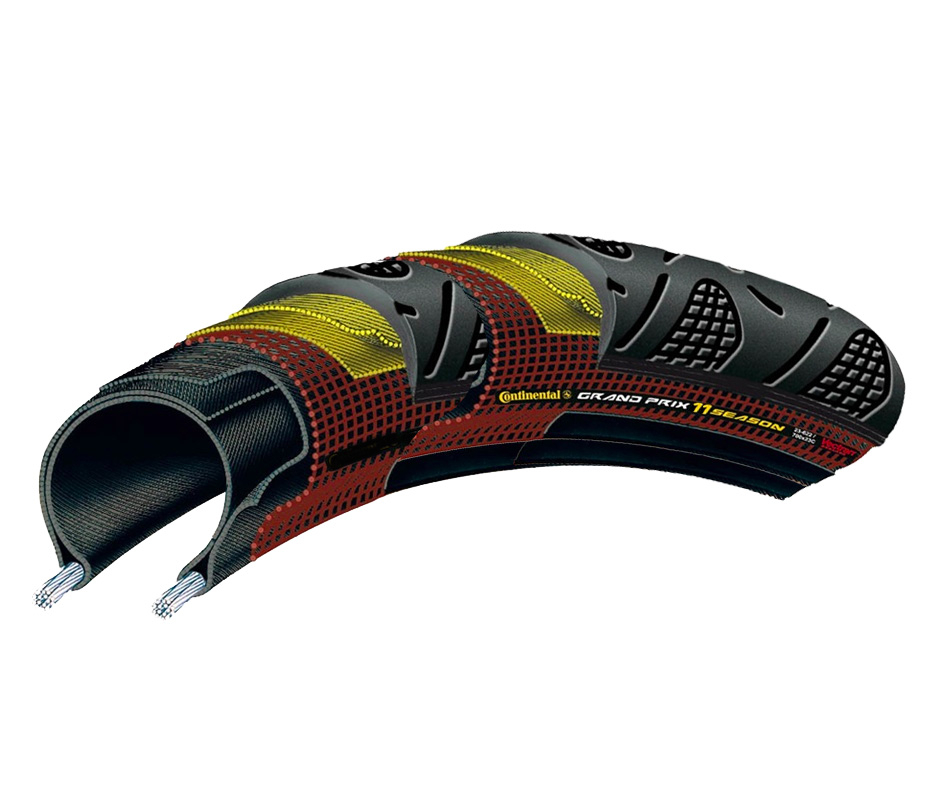
There are plenty of options in the tire realm.  At the very least, something with a thicker casing is more resistant to cuts.  Only go for tires that have some kind of "breaker" layer, which better resists cuts, at least between the tread and the casing.  Some tires have a tough casing, too.  

Generally, training tires have a thicker casing, and thicker, harder rubber.  The question is always how far you want to to in the protection direction.  

Specialized Armadillos are incredibly tough, with a Kevlar casing and thick, hard rubber.  The only things to fear are pinch flats and industrial staples (I've actually had this happen a few times).  Tough winter tires can last a few winters depending on how you ride.  The problem is that they're heavy, the thick casing is stiffer than a race casing, and the tread isn't as grippy.  As a result, the bike can feel sluggish in terms of acceleration (extra weight) and slower when going hard (extra weight and greater rolling resistance).

I used to ride Armadillos,  They were super tough, but I never liked the ride.  Continental Gatorshells are similar, but a bit lighter and more flexible.  Conti' Gatorskins have a softer casing than the 'shells, which means they feel a bit better, but are more susceptible to sidewall cuts.  Last winter, I went with Cont' Grand Prix 4-Season, and they did pretty well, and I just put them back on the bike.  They have a tougher casing than the Gatorskins, and more supple, too.  I think some folks ride GP 4-S year round.

In all cases, while the steel bead version is cheaper, the Kevlar bead version is lighter, something you'll notice.

I'm sure other folks have other preferences.  I'd love to read them.

Let the tire games begin.

Oh yeah, and read this document.  

http://www.kissenacycling.com/wp-content/uploads/2013/07/How-to-race-your-bike-v10.pdf
Gatorskin 4 seasons have done me good. Only ever pinch flatted when running >40 psi
Anyone have an opinion on road tubeless 4 season tires? The Hutchinson tires seem to be the best option I can find

Rigby, I believe, is no longer lurking, so our former tubeless expert is rendered silent.

FWIW, I'd only be interested in tubeless if the sealant doesn't dry out at all.  To me, that the goo dries out means you have to check the sealant regularly, and that is effectively a planned tire change.

It seems like Finish Line is working on that.  

http://www.finishlineusa.com/products/tubeless-tire-sealant/sealant

mugwump said:
Anyone have an opinion on road tubeless 4 season tires? The Hutchinson tires seem to be the best option I can find
Rigby, I believe, is no longer lurking, so our former tubeless expert is rendered silent.

FWIW, I'd only be interested in tubeless if the sealant doesn't dry out at all.  To me, that the goo dries out means you have to check the sealant regularly, and that is effectively a planned tire change.

It seems like Finish Line is working on that.  

http://www.finishlineusa.com/products/tubeless-tire-sealant/sealant
David Vollbach and Al Barouh, Kissena alumni, both work at finish line. Review reports are that the sealant is not as effective.

But checking the state of your sealant shouldn't require removing the tire, all you need is to remove the core valve, and use a stick to check (much in the same way you would use a dip stick to check engine oil), and top off the sealant if needed. Arguably, you can skip the stick and just add sealant every few weeks regardless. It is winter riding anyway.
I'm curious , what were the "race tires" that Robert had ?
I actually think the winter tire is a bit of a carry over from the days when we rode tubulars or skinny 19mm tires for racing 
Most folk now days run 25mm ,min, all year round and the clincher tire anti puncture technology has come on a long way ,while i agree that you are more susceptible to punctures in the rain( Ilya told me it acts as a lubricant for debris to penetrate the tire itself) in warm and cold climates , i think its important to roll up to group rides on a good all round tire in good condition all year 

I'm curious , what were the "race tires" that Robert had ?
I actually think the winter tire is a bit of a carry over from the days when we rode tubulars or skinny 19mm tires for racing 
Most folk now days run 25mm ,min, all year round and the clincher tire anti puncture technology has come on a long way ,while i agree that you are more susceptible to punctures in the rain( Ilya told me it acts as a lubricant for debris to penetrate the tire itself) in warm and cold climates , i think its important to roll up to group rides on a good all round tire in good condition all year 
They looked like Vittoria Corsa CX tires.

I think see what you're getting at.  And some might make the argument that a flexible casing, as with a latex tube, might deform more before getting cut.  I guess some could go further and point out that thicker tread rubber holds more grit and sharp stuff, which could eventually cut through a casing.

However, I think that a thicker casing is harder to pierce.  I think the belts are probably a bit thicker, and with some tires, the belts cover a wider area, or the entire casing.  The tread rubber being thicker and harder means the tire will probably take longer to wear out, and there's more stuff between the sharp object and the tube or casing.  On this last point could be some of the success of tubeless tires.  Most tubeless tire casings are lined with butyl rubber, which not only provides the largely impermeable membrane, but also makes it harder for the casing to rip (and deform, which is why most tubeless tires have more rolling resistance than tubed)

On your last point, I largely agree,  I think tires in good condition are important to have in general, and more so, when others are counting on you.  Though one year, I did start the Basking Ridge Crit behind Edwin Bull, the guy behind Van Dessel.  I noticed some casing showing through the tread on his rear tire.  I pointed it out to him.  He shrugged, "ah, you don't corner in the middle of the tire anyway."  He spent the whole race at the front.  

mugwump said:
I'm curious , what were the "race tires" that Robert had ?
I actually think the winter tire is a bit of a carry over from the days when we rode tubulars or skinny 19mm tires for racing 
Most folk now days run 25mm ,min, all year round and the clincher tire anti puncture technology has come on a long way ,while i agree that you are more susceptible to punctures in the rain( Ilya told me it acts as a lubricant for debris to penetrate the tire itself) in warm and cold climates , i think its important to roll up to group rides on a good all round tire in good condition all year 
They looked like Vittoria Corsa CX tires.

I think see what you're getting at.  And some might make the argument that a flexible casing, as with a latex tube, might deform more before getting cut.  I guess some could go further and point out that thicker tread rubber holds more grit and sharp stuff, which could eventually cut through a casing.

However, I think that a thicker casing is harder to pierce.  I think the belts are probably a bit thicker, and with some tires, the belts cover a wider area, or the entire casing.  The tread rubber being thicker and harder means the tire will probably take longer to wear out, and there's more stuff between the sharp object and the tube or casing.  On this last point could be some of the success of tubeless tires.  Most tubeless tire casings are lined with butyl rubber, which not only provides the largely impermeable membrane, but also makes it harder for the casing to rip (and deform, which is why most tubeless tires have more rolling resistance than tubed)

On your last point, I largely agree,  I think tires in good condition are important to have in general, and more so, when others are counting on you.  Though one year, I did start the Basking Ridge Crit behind Edwin Bull, the guy behind Van Dessel.  I noticed some casing showing through the tread on his rear tire.  I pointed it out to him.  He shrugged, "ah, you don't corner in the middle of the tire anyway."  He spent the whole race at the front.  
Yep, 25 Vittoria Corsa G+ (I'm not sure of the exact name, but the tanwalled ones with "graphene" in them). I actually used them (not this particular pair) at Battenkill last year and had no issues. To be fair, I've only had 3 flats on them. They just all happened to be on the same ride lol.

I think the issue was really that they were very used. I think I did one ride too many on them. They probably had the same flat protection when they were new, but a 'winter tire' probably wouldn't have been as susceptible to flats with the same amount of mileage. I picked up a pair of Conti 4Seasons to last through the winter and hopefully prevent a second Tour de Flat.


Y'all are talking bush league ... now this is a winter tire


@Jules if one were to go biking in Iceland (in/around frozen volcanic craters) that just might be a viable option haha
I wish Continental would release a tubeless version of the Continental 4 Seasons tire. The closest rival I can find is a Hutchinson option, but I've never used them and not sure I trust them as much as the Contis. I'm tempted to to just run my tubeless rims with a tube so I can stick with what I know is reliable.
IF you have the clearence

SCHWALBE G-ONE SPEED


THE SPECIAL ONE.

Unleashing profile and breathtakingly fast – especially when large volume counts. As a 30mm wide road race version with V-Guard protection, G-One Speed is a tire for the real tough jobs. You can ride it as a handmade tubular or with the most modern Tubeless Easy technology. But it is also a guarantee for maximum speed in the extra-wide 60mm execution – of course not only at the fascinating beach races on Holland’s coasts. The new G-One Speed is an evolution of the former S-One and Big One.

I've heard that the Schwalbe tubeless tires are about as durable as tissue paper.