Kissena Forum Archive

Winter Riding

86 comments · 951 views

Part 1 of 3


Winter riding should be approached just like Rain riding with a few extras (I've included the relevant bits from Rain Riding)


FINGERS & TOES & NECK!

Good gloves, good booties.  Few things are as miserable as cold feet & fingers.  Cold (and heat) injuries make you more prone to them in the future so if you've had frostbite (or worse) prior take extra care.  (I have a thumb knuckle that got frostbit riding to high school - 25 years ago - with no gloves and to this day it is the first piece of my hands to get cold)  Some people bring a second set of dry gloves with them in case the first get wet.  A good neck gaiter can also be a lifesaver.

CORE! 

Keep your core warm.  Proper layering is a topic unto itself that you can read up on all over the internet.  Remember WET KILLS so you want to have a layering strategy that keeps you dry and warm.

TIRES! 

Get some puncture proof (resistant) tires like Gatorskins as flats are both more frequent in the wet and the consequences are worse in teh cold.  Standing around on a winter day waiting for a friend to fix a flat as the sun quickly sets is flirting with hypothermia.  Run the pressure a little lower than usual to help with traction and pinch flats from things that may be obscured by a layer of snow.

EAT & DRINK!

While training in the cold you burn way more calories just keeping your body warm.  Don't expect your peak power outputs in the very cold air as your body has other things (like surviving) to donate energy to.  You also lose a ton of water to the dry winter air.  For some reason most people find it hard to eat & drink in the very cold - so make it a task and commit to getting it done.  Running out of calories on a cold day is no joke.  Don't be afraid of the calorie bomb at your rest stop.


I got a few questions about this recently, so I'm reposting here something I had on the web and seemed to have lost in the transition.

While I have your attention, love to know what are people's essential pieces of winter gear.  For example, I find a thin wind vest expands the temperature range of everything I own.  One seems to go with me on most of my cool and cold weather rides.

If I were starting from zero and wanted to buy Kissena threads, I'd probably get a fleece jersey, a wind vest, windproof gloves, fleece shorts, fleece leg warmers, maybe fleece knee warmers.  With this set, plus some undershirts, a pair of knit gloves and a pair of booties, I'd probably be able to mix and match layers from about 50 degrees down to 32 degrees.

Thanks JP.

I think the wind-proof bib tights are essential.  They help keep the core warm, and do a dramatically better job than pure fleece, which feels porous to me.

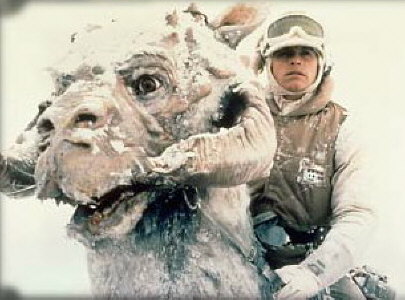
As well, my Craft hat, which is truly tiny & light is my favorite accessory for the chill.  I can sneak it off without removing my helmet, and it keeps me warm on the days when I don't want to go Full Tauntaun
Jules,
I've found that fleece bottoms start to prove itself insufficient in the mid 30s, particularly if I'm just riding slow.  If the ride is moderate or hard, the wind-fronts can get too warm.

I've also found that a jacket/jersey that has a windproof front and sleeves but breathable back is great in the 30s.

For budget-conscious buyers, Marshalls can be good for finding blowout undershirts and gloves.  
If we're talking cheap underlayers. Uniqlo is your friend. their Airism undershirts are awesome baselayers, and come in shortsleeve and sleeveless for less than $13. (Take that $90 Rapha baselayer!). Their Heattech longsleeve baselayers are $20 and are perfect under a fleece jersey (or even a Jersey + Arm Warmers) on a cold ride.

My biggest issue with discomfort on a cold ride is pain in the extremities. If my feet, hands, ears or junk feel cold, then I am likely to chicken out and go home for a hot cup of cocoa.

My winter essentials:
* Wind Vest (this is worth 10x its weight in warmth)
* Fleece jersey
* Windproof outer gloves + a variety of glove liners (this way you can swap the liners for different conditions)
* Fleece Leg Warmers.
* Booties
* Line your insoles with aluminum foil, and block the entry points with ducttape to make your shoes more wind resistant.
* Wool Socks! So essential, not the heavy weight hiking socks but lightweight wool socks from TJ Maxx or Century21 (preferably argyle which are *known* to keep your feet warmer).
* Something to cover your ears. My head gets warm but my ears freeze, so a headband is essentiail
* Save your solo socks where their buddies go missing. Below 40 degrees, I wear a third sock on my junk a total life saver!

I bought an used pair of shoes that are a size larger than I wear. This allows me to duct tape them and also wear a couple of pairs of wool socks comfortably.

I splurged on some Icebreaker 260 baselayers. Expensive, but they have lasted 4 seasons of very regular use and they are still in great condition. I really like the thumb loops that stop the sleeves riding up. And they are super toasty.

DeFeet Wool socks and Defeet shoe covers. Craft baselayers are my favorite. I have a pair of Capo Fleece Bib Knickers that are great for those 40-50deg days. I also have a Castelli winter jacket I was given that is pretty amazing. I tend to overheat if I wear headgear that is too thick, so I'll be looking for ear warmers for this winter. I also have a pair of Pearl Izumi gloves that work well in all temps. I'd like to get a pair of fleece bibs for the fall this year, I also have two Cannondale kits that come up pretty high on my waist that do great job on that waist to mid stomach area for warmth.  

I typically will be at the gym if it's sub 25degrees out though.


Having spent many cold Sundays riding with JP - my biggest lifesavers were in sub-30 temps were:
a) regular bib shorts worn under winter bib pants (Kissena fleece lined or Rapha - depending on how cold it was)

b) proper fitting clothing - in the warmer months, something a little loose didn't matter so much- in the winter any extra air pockets/wind flow made for major discomfort

c) +1 for Dan's third sock suggestion - and if its really bad, put a "hand"warmer in the sock, and just put the sock in front of your junk (not over it).

I know CX season is approaching and summer is over soon..but WINTER?! I am thinking warm thoughts for a few more weeks.
Part 2 of 3

COME PREPARED!

Do NOT head out on a winter ride without a spare tube, pump & C02, adequate clothing and food.  If you have questions about what you should wear, ask a teammate.  In the summertime not riding with a spare tube is inconsiderate; in the winter it is dangerous.  Some people carry 2 of each after Thanksgiving.

WET IS DEADLY!

Do NOT let yourself get all sweaty and then chilled.  This means you will have to either a) find a magic winter suit that keeps you dry in all conditions or b) learn to feather your layers like an expert.  When you start to overheat unzip, delayer, etc to keep yourself from getting wet.  This is a very important consideration if you flat in the midst of a savage interval.

PICK REST STOPS WISELY!

If you have to stop try and pick carefully.  Indoors make sure to get those layers OFF quickly so that you don't get sweaty (see WET above).  Keep indoor stops short to avoid warming up and/or running out of daylight.  If you're outdoors and have to stop in a hurry try and find a spot that is in the lee of the wind and preferably in the sun.

HYPOTHERMIA!

Learn the signs & symptoms of hypothermia, and understand their consequences.  Hypothermia is a MEDICAL EMERGENCY.  Think about treatment options based on where you will be on your ride. 

The most dangerous symptoms while on a ride are:

1) Loss of coordination
2) Confusion, difficulty thinking and poor decision making

Alcohol, drug use and age (over 65) are all risk factors.

STICK TO THE PLAN!

Given the poor decision making that comes quickly with hypothermia try to come up with a plan before you ride and stick to it.  That plan may be as simple as:

If we're not back to the Alpine ranger station by 4pm we're pulling into the nearest store and calling a wife/family member/shop buddy for a pickup.

or

We won't do Alpine in either direction without one fresh tube & co2 each

or 

If someone gets "too cold" we're turning them back with 2 teammates

or

We won't do River road on the way back unless we get there by 3pm

Having a plan that was thought out in the luxury of your living room (or coffee shop) with zero stress and all your wits about you beats HANDS DOWN whatever scheme you may come up with 3 hours into a cold ride where you didn't quite eat or drink enough and the sun is looking low.


Part 3 of 3

FENDERS! 

Buy one that protects the rider behind you (not just one of those "beaver tails" that only keep you dry) and learn how to install it.  Nothing screams "screw you fellow teammates!" like someone showing up for a group ride in the rain without a fender.  Nobody wants to eat your "rooster tail" of road sewage, so be considerate.  Get a front fender to keep your legs dry.

HANDLING! 

Slow down and anticipate.  Everything happens a little slower in the rain and snow, except falling.  Your brakes can take a little longer to grab, you can't accellerate as fast and people turn more gingerly.

METAL!  

All those metal grates and plates on the ground can become slick as ice in the wet.

Spare the whip.  When you jump on the gas you increase the likelihood of slipping out your rear wheel so pay attention and feather the power.

All these handling warnings apply not only to you but the other riders and drivers around you.  Everyone has a little harder time in the wet & snow so give them that extra few seconds, inches etc.

I'm surprised we haven't had cries of "bull-shit" and "prove it with a peer-reviewed journal article" on the "need more food when it's cold out" point. I guess it's only when I say that stuff.

Seriously though...

I'm a big fan of bringing a second pair of gloves when it gets very cold and you bust out those heavy-duty Mt Everest gloves only to realize you are sweating straight through them within an hour.

Also, I might be the only one for whom booties and wool socks aren't always warm enough. So in those cases I turn to the chemical-reaction hand/foot warmers you can find at a CVS.
Marc is correct in that cold weather doesn't really make a difference in terms of caloric burn.  I corrected him in the past on this, so it's only right that I tweak Jules.  Yes, if you stand around shivering, you'll burn more calories than if you're not shivering, possibly up to a few hundred calories in an hour.  But we're often sweating.  

The University of Utah did a study, but I can only find references to it:
http://www.nytimes.com/2011/01/11/science/11qna.html?_r=0

finding peer-reviewed studies on bicycle tire traction in various conditions has proven more difficult. However, Traction increases with surface area.  So, yes, tire pressure does make a difference.  Is a reduction of 20psi enough to make a difference?  Depends on how far you push your tires.  Are metal plates more slippery than asphalt when wet?  I think this is beyond dispute.  

I have gone hypothermic on bike rides before, I don't know if you can actually notice it when you're in the hypothermic fog.  And when you're there, it's almost impossible to help yourself.    

I went hypothermic once after a spring series race in CP. My misjudgement was considering only the temperature (~40 deg) and not the rain. As I got wet, I got cold. I faded from feeling good at the front of the field to feeling miserable at the back. I was shivering so uncontrollably on the way home after the race that I was worried about controlling my bike. It was REALLY unpleasant. Take home message is that you need an extra layer when it is raining and should bring dry clothes for after the race.

Cold fingers are a different matter. Long California descents in the winter come to mind and can be excruciating.
My first experience with hypothermia was riding a bike marathon in 60+ degree rain.  It doesn't have to be cold.  
I learned my lesson this year at Grant's Tomb.  No fun.
lol

yes

Nicola remembers you as "the kind, cold man from Grant's Tomb"
so, so cold...
WilliamDC said:
"the kind, cold man from Grant's Tomb"

There was a kind, cold man from Grant's Tomb
Who brushed off his fleas with a broom
Although they were bite-y
His kick was still mighty
In the sprint he had plenty of room


Well, it's getting cooler again and I thought I'd post what has worked for me.  Do read above this post, as Jules has posted some excellent information for winter riding, and JP has a PDF of what to wear, similar to mine.

This is a dangerous subject, because the cold can really do some damage to you, so keep in mind, this is a list that works for me.

When it's cold, I use my temperature listings to gauge what I've worn in the past that has worked. Different factors change what I'll wear, though. If it's dark and it will stay dark, I'll need to wear more. Or if it's going to be windy, say, over 15mph, which it often is, I'll want to consider how low that wind is going to bring the temperature, but if the sun is going to be out, I want to make sure I don't get overheated or wet, and may want a layer I can remove.

I have a pair of running tights which I wear beneath my bib shorts, and I also have a pair of padded fleece winter tights, which I'll wear if it's going to be both cold and very windy. My legs, however, have never felt cold. It's my hands and feet I try to keep warm. My fleece tights aren't listed in my temperature sheet.

Below 40f and I break out my winter road shoes, which have no holes, are thick and have a high ankle. They're heavy and warm and I recommend anyone riding below 40 have a pair. Get them one size too big to stuff thick wool socks into.

I have a new pair of KCC Arm warmers and I'm going to try those in place of a base layer down to 48 only if the sun is going to be out later in the ride.

I just got my first wind vest, so haven't factored that in yet, but I think it's going to be good when it's windy and I'm going on a long ride, so I can remove it and put it in my jersey pocket if the sun comes out.

I have summer gloves without fingers, spring gloves that have fingers but are not thick, and crazy thick winter gloves, plus liners. You can get liners at the dollar store and keep them in your pocket. I use them if my gloves get wet during a ride.

People are different in the cold weather and I've ridden with guys who consider knickers their cold weather pants, and I was in the park today and saw people, with our first touch of 50f, bundled up like the Michelin man. Find what works for you. Experiment, but not at the expense of being too cold or too hot. Shorter rides in the park can help you figure out what's best for you, and consider the type of riding you'll be doing, as well.

Rising Temperature during Long Rides

38-52 Running Tights, black base, long sleeve jersey, summer gloves, bandana
Temperature and Gear
63 Shorts, short sleeve jersey, summer gloves, bandana
62 Shorts, black base, short sleeve jersey, summer gloves, bandana

60 Knickers, black base, short sleeve jersey, summer gloves, bandana
58 Knickers, black base, short sleeve jersey, summer gloves, bandana

54 Knickers, black base, short sleeve jersey, summer gloves, bandana, wool socks
53 Knickers, black base, short sleeve jersey, summer gloves, bandana, wool socks,
toe covers

52 Running Tights, black base, long sleeve jersey, spring long fingered gloves, hat,
wool socks, toe covers
48 Running Tights, black base, long sleeve jersey, spring long fingered gloves, hat,
wool socks, toe covers
44 Running Tights, black base, long sleeve jersey, spring long fingered gloves, hat,
wool socks, toe covers

43 Running Tights, white base, long sleeve jersey, spring long fingered gloves, hat,
wool socks, toe covers, neck warmer

42 Running Tights, white base, long sleeve jersey, spring long fingered gloves, hat,
wool socks, toe covers, neck warmer, Winter Jacket

40 Running Tights, white base, long sleeve jersey, spring long fingered gloves, hat,
wool socks, neck warmer, Winter Jacket, winter road shoes
39 Running Tights, white base, long sleeve jersey, spring long fingered gloves, hat,
wool socks, neck warmer, Winter Jacket, winter road shoes
33 Running Tights, white base, long sleeve jersey, winter gloves, hat,
wool socks, neck warmer, Winter Jacket, winter road shoes, second pair of wool socks,
glove liners
The whole bandana thing has left me somewhat discombobulated
You guys are nuts.
I friggin LOVE this thread. <3 even!

I'm sure it's been mentioned on this thread before, but I'll speak up again so anyone new-ish to cold weather riding doesn't have to sort through the whole thread to hear this:

It's not just about the temperature, when deciding what to wear on cold weather days. This happened several times last year, when it was in the low 20s and the flood of indoor ride reports filled the day. But if the relative humidity is low, (i.e. the air is dry) then that significantly changes the outdoor "rideability."

I will choose to ride on a sunny, dry day at 23 degrees without a second thought--these are actually really nice days to ride outside, but if it's damp, cloudy and 38 degrees? Those are tough days on the bike.

Bottom line though, you are going to have to do some experimenting with the weather and your clothing choices this winter. I find that no matter what the weather, someone always has a diff't idea of the perfect clothing choices for any given day. Fortunately, there's always someone going outside to ride on any given winter day, so you'll never lack for company if you want it!

"About as much use as a chocolate fire guard..." Huh. Never knew Hotlist had a British cousin. http://m.youtube.com/watch?list=PLUdAMlZtaV101mRAD3qI7l4PhoFUA9Mqi&amp;v=097kJPd-0q8&amp;desktop_uri=/watch?v=097kJPd-0q8&list=PLUdAMlZtaV101mRAD3qI7l4PhoFUA9Mqi
I love this article - If you love sniffing out old school euro wisdom, I promise its worth the read. 
-J
http://www.flandriacafe.com/2010/03/i-just-love-article-below.html

The principal of specificity. 

Very simply, the training that a competitive cyclist should do is based on riding a bicycle. Once the season is over, there is another thing the cyclist should do -- and that is to ride a bicycle. When the cyclist doesn't know what else to do, he should do a third thing -- ride a bicycle. 
Warning No formatter is installed for the format not-found
This article recommends underdressing the core and overdressing the extremities, but there is a lot of science that says the reverse is better, or at least keeping  the core warm will aid keeping your feet and hands warm. When the core starts to get cold more blood is directed around the organs, increasing blood pressure to keep them warm and protected. This results in a reduced blood flow to the hands and feet.

The other thing is dress relative to exertion. So wrap up very well for long steady endurance rides, but you will need to wear a lot less in early season races even in very wintery conditions.
Warning No formatter is installed for the format not-found
Gwynna,
I'm with Ian on the chart you shared. I don't have enough knowledge of Reynaud's to comment on it, but generally speaking, I think there's evidence that people need to heat their cores first.  My experience on cold days is that I generally do better with extra layers on my torso and not my arms.

Yesterday, I wore one long-sleeve baselayer, a mid-layer vest the thickness of a warm jersey, and a Kissena winter jacket.  On my legs, regular bibshorts and wind-front bib tights. My feet had a pair of wool socks and windproof booties.  I am very much of the mind that too many people overdo foot insulation to their detriment.  I'm not a fan of hats under helmets--I find it uncomfortable, but I covered my ears and sported a neck warmer (everyone should have one for cold days).  

My only problem yesterday was how my hands got cold changing my flat tire.  I usually take about four minutes to change a flat in the cold, but I first tried to pump up the tire before changing it on the hope it was a slow leak.  It wasn't a slow-enough leak and I think my experiment added about two minutes of ungloved time.  Not good.  I did put my gloves inside my jacket after taking them off, a step I strongly recommend everyone do when they have to take off their gloves in the cold.  

Have you tried the charcoal/chemical hand-warmer trick that others have used to good effect?  Curious as to your experience there.  I figure tossing some into a jersey pocket and deploying if needed could be good insurance.  
Warning No formatter is installed for the format not-found