Kissena Forum Archive

Watts in the Bank (aka the school of marginal gains)

176 comments · 2101 views
is if you list how many races you DNF'd or missed on a result because of a puncture and no wheel support, what do you get?

While it sucked every time, in 20+ years of racing I have DNF'd because of a flat maybe 6 or 7 times. In other words, it is not significant. 

We are amateurs, so here's my tip: Whenever possible, race the tire that feels faster.

I'm suggesting that the cost in rotating weight could potentially be greater than the advantage of rolling resistance in some circumstances.  And since the width doesn't seem to matter, if people have found pinch-flatting a rare occurrence, then perhaps they should go or the narrower tire.  Might be better aerodynamically, as well, on narrow rims.  And it would be worth looking into whether or not whatever tire width you're using works best with the rim you're using.

I flatted out of one race on the road (Michelin Pro4 Race 23mm) and one race in CX last year. Neither was a pinch flat.  The previous year I think I pinch-flatted out of one race (double-pinch flat on some really big bumps) and flatted before one race. Very little FBF racing in the past two years though.  And most of my pinch flats outside of races seem to occur because I'm lazy and typically only pump up the tires on my daily wheels once a week.

I agree that if you're flatting out more than rarely, probably you should consider tires a liability.  Then again, if you've never flatted, there's a chance you're using a tire that's unnecessarily slowing you down.  

That written, almost by definition those that are more puncture-resistant are less supple.  All have either a thicker casing or a belt that reduces deformation.  Or both.

I took a look at Al Morrison's CRR chart.  The Vittoria CX Open with latex tube takes 12.3 watts per wheel.  The Conti' GP 4-Season with butyl tube takes 18.2 watts per wheel.  You're ceding 11.8w and the CX Open isn't even the fastest tire out there.  Not that 11.8w (for two wheels) is much if the tires can't get you through a race.  And that 11.8w is probably more important to smaller riders than it is bigger riders.  But one of my few race flats on the CX's--I raced them regularly two or three years ago-- happened when I tore the casing in a skid  (stayed upright, and the flatted three miles later, should have pulled out of the race before the flat).  I did go for a slightly slower tire after that, one where I thought ripping a casing was less likely. 

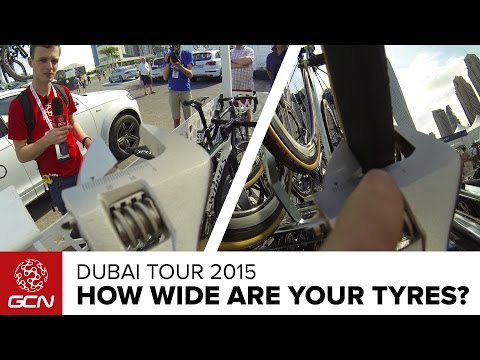
BTW, I have a set of the new Zipp tires (23mm).  I'll bust them out this spring.  Not sure about for the first March races though.  Maybe I'll try a set of 25's later, but if Heine is right, they're no faster.  The weight penalty is supposedly 10g per tire.  Despite what Heine claims, Tom Anhalt tested the tires and found the advantage for the 25's as 3w at 40kph.  

Tire width may be marginal gains, but I think tire casing is real gains.
I don't know...I only ride Vittoria open corsa's and corsa tubs...they just feel awesome. I use latex tubes and ride through all kinds of shit and can't remember my last flat...cept that rainy prospect race last year where just about everyone flatted. I ride 25's at 90-95 psi...will experiment with higher psi next year to see if that feels faster...or if I'm just getting beat up from too much pressure
I'm going to chime in and side with Malcolmson. Fast tires don't matter when they're flat. I race at Floyd. I ride to my races. I run 4-Seasons clinchers and Gatorskin Sprinter tubulars. I just installed some Shwalbe Ultremo tubulars. I expect them to flat instantly.

Just for some color, I know that this isn't about marginal gains, but most pros are running 25's. I'm sure that speed matters more to them than it does us.

https://www.youtube.com/watch?v=EAq979WV1c4

FWIW, I haven't decided what to run on my TT rig yet. I'm waiting for wind tunnel recommendations, but they will be puncture resistant. That's for sure.

"Just for some color, I know that this isn't about marginal gains, but most pros are running 25's. I'm sure that speed matters more to them than it does us."--Vlad

Selective survey, and almost as many were on 23 and 24mm tires. as 25's. (Sky and Quick Step on 22.8 and 23.2, Astana on 24's) And the mechanics and Boom claimed it was because of of complimentary aerodynamics. What was surprising is that Quick Step and Tinkoff ride the same wheels, and I would have assumed the same tires. Maybe Cav' and the dane were on different depth wheels. Likewise BMC and Sky ride the same wheels, but Sky on 22.8 and BMC on 25's; again, maybe it had to do with rim depths. All are well-funded squads, all have been known to take advantage of wind tunnel testing.
@mugwump Not sure how scientific this is. How will the RR correlate with rougher road surfaces where it's suggested wider tires perform better with increased contact and lower PSI.
Crr values are typical for very smooth surfaces - Crr on typical road surfaces may be 50 to 100 % higher
Tire Pressure = 120 psi unless otherwise noted
Speed ~ 51 km/hr (54X13 - ~ 100 rpm cadence)
SRM Pro Power Measurement (Zero'd before each test run - Calibrated every 6 months)
Crr Calculation from Tom Anhalt's Spreadsheet
Tacx Rollers (79 mm PVC - 26 cm spacing) with Hinged Front Fork Mount
Test Run time ~ 2 minutes
Power per Wheel at 25 mph with 100 lb load
http://www.biketechreview.com/tires_old/images/AFM_tire_testing_rev9.pdf

http://silca.cc/blogs/news/16840396-belichick-your-bike-seriously

more Josh Poertner

Aero: Nobody is talking about the effect of inflation on size, but a 10psi football is a few mm smaller than a 14psi football. Theoretically you can throw it faster and farther than a larger ball in the same atmospheric conditions. Similarly, your tires grow in both height and cross section with pressure. For example, a 23mm Continental GP4000s measures 24mm wide on a Zipp 404 at 100 psi and 25mm wide at 120psi. This results in an aero penalty of more than 1 watt 30mph, which may not be a large number, but at the same time is larger than the savings you would realize by swapping your wheel bearings to the highest grade ceramics.
Crr: Also known as coefficient of rolling resistance. This one has nothing to do with football and everything to do with cycling. On non-perfect surfaces (ie, the real world) Crr decreases as pressure increases, up to a point, and then begins increasing dramatically again. The data show that being 5psi overinflated from your optimum has a greater penalty than being 5psi underinflated, and our survey data show that if you are reading this, you are most likely over-inflating your tires as over 90% of cyclist are statistically likey to be over-inflating!!

Similarly, your tires grow in both height and cross section with pressure. For example, a 23mm Continental GP4000s measures 24mm wide on a Zipp 404 at 100 psi and 25mm wide at 120psi.
Curious if they measured the tire width with the wheel off or on a bike. A person riding on top of it and putting their weight on the tire would deform the tire more, creating more of a contact patch and displacing more of the available air inside the tube to spread out possibly making the tire wider. I mean the differences would be pretty miniscule, but as long as we're talking about details and marginal gains...

(I am completely aware that none of this really matters for guys at my level of slow, but it is fun to be a back seat analyst BSing with friends on an internet message board.)
Yang, Where does the tire deform?

More importantly, these findings are way more beneficial to someone at your level of slow. Adding 1w to your threshold yields a much bigger difference than adding 1w to Cancellara's.
I was terrible at physics (and failed 9th grade phys ed. to boot) so this is probably wildly incorrect...

Let's take a yoga/balance ball, the kind that you sit on and do crunches on at a gym or sit on at a desk to improve your posture. Resting by itself, the ball is more or less a sphere with a small contact patch with the floor. Yang, who just ate a bunch of cookies, comes over and sits down on the ball. The sides bulge out and deform and the contact patch with the floor becomes larger.

(Epilogue: Yang eats another cookie and the ball bursts.)

Not a perfect analogy because the weight of the rider wouldn't be directly on the tire, but it will still transfer through the fork, onto the axle (to the hub, spokes, rim, and finally tire/tube) and the PSI would increase (more or less depending on rider weight distribution on the handlebar), which would increase the contact patch of the tire/ground, which would displace the air inside the finite space of the tube/tire, which would push up against the flexible sidewalls and deform and stretch the tire making them wider.
Can we get an optimal psi bar graph based on rider weight...rim width and tire width Pa-lease
You forgot to add parameters for road conditions, barometric pressure, the tide, phase of the moon, and how many licks it takes YOU to get to the center of a tootsie pop.
At first I was jarred by the article and wanted to tear it apart. After careful reading and looking into his methodology, I just want to kill the title.

Tire pressure does have an affect on rolling resistance. It's just different than what cycling culture has dictated for too long.

The conclusion of this study should be restated as: Air pressure will affect your tire's rolling resistance in different ways depending on the tire, rider, and use. Higher pressure != faster.

One of my most referenced articles on this topic: http://velonews.competitor.com/2012/04/bikes-and-tech/what-tires-wheels-and-pressures-were-roubaix-riders-running_212925 (check down to Boonen's tires, then check the speed)

Distance

257.5 km (160.0 mi)
Winning time5h 55' 22" (43.5 km/h or 27.0 mph)
@Vlad: For a TT you really want the fastest tire you can get away with, which is almost certainly something other than a sprinter gatorskin. You have a clear view of the road surface so you can avoid holes and debris. Back in the UK (where they take their TT very seriously) silk track tubs are not uncommon for the big events.
I know @ian , it's a tough choice. I would totally ride the fastest tires, or in your case tyres, if I didn't have to ride from my place to Penman's house on the LES on many an occassion. This involves riding to and through Williamsburg and over that bridge... on tubulars. Gatorskins ftw.

I don't want to carry an extra set of wheels on my back on that bike at 4am. It's a shitty compromise, but it's a practical choice.

I agree that during the event I have a clear view of the roadway, but it's not the most comfortable view. The tendency is to drop the head down. I destroyed the front 65mm Edge tubular I acquired from you doing just that. As well, those bikes are not the most maneuverable, especially at 27+mph. Did I mentioned how uncomfortable the act of TTing is?

If I had better support, I would probably run Zipp's new tires.

Just to append that train of thought, I saw this photo and couldn't help questioning how something that looks so cool could hurt so much. What kind of cruel irony is that which we put ourselves through?
Ah, there is a proper way to take your race wheels to the event. Wheel carriers. I haven't seen a pair over here, but I have a pair in my Dad's shed. Although they should be easy to make.

http://www.bikeradar.com/road/gear/article/friction-facts-free-speed-from-proper-shifting-44016/

Long live the Big Ring
Ahead of Paris-Roubaix

"Coming out of the Pave portion of the testing the riders seemed to be truly sold on the larger tires once and for all.  The 28mm tire in the low-mid 60psi range proved to be nearly 1km/hr faster than the 24mm tire with pressure in the mid 70 psi range (which is what is required to prevent bottoming the tire) when the data was normalized for rider power output. 

Moving on to the pavement testing, we had Fabian do some interval efforts on the new wheels and the old wheels to try and demonstrate the aero differences.  The results even shocked our engineers!  The traditional wheels with 24mm tires required 24-26 additional watts to go the same speed as the aero wheels with the 28mm tires!"


http://silca.cc/blogs/news/18010556-road-to-roubaix-part-3-we-just-invented-the-future

seems nuts! do you think the future is aero wheels with 28mm tires at 60psi?
vlad said:
seems nuts! do you think the future is aero wheels with 28mm tires at 60psi?
If you're riding Paris-Roubaix, yes.  If you're riding pavement, no.  (scroll up for more advice on tire pressure)

Remember, the point of comparison are box-section aluminum rims with 32 spokes and 24mm tires. 

JP I've got 22mm wide rims and 25mm wide tires...I weigh 170...what pressure for Branchbrook?
what tires?
Vittoria Open Corsa...(I am awaiting a new tubular tire from PBR...so it's clinchers for now)
Basing it off the Zipp chart, I'm going to guess 110 front 115 rear is the high end.  You could probably go down a bit, like 5psi both front and rear and get a little more cushion and a little more speed.  Could you do 10psi?  Probably without issue.

I've ridden 25mm tires down at 65psi without pinching.  But 87 was recommended by michelin for my weight on their chart.  I even dropped the pressure to 80 a few times thinking it would improve traction.  Didn't pinch flat.

from above: "The data show that being 5psi overinflated from your optimum has a greater penalty than being 5psi underinflated, and our survey data show that if you are reading this, you are most likely over-inflating your tires as over 90% of cyclist are statistically likey to be over-inflating!!"
i've been riding them at 90 front 95 rear for training but will go up for race day...thanks
If that's the case, all bets are off. :)
I rode them at 100/105 today...it felt great...especially in the sweeper
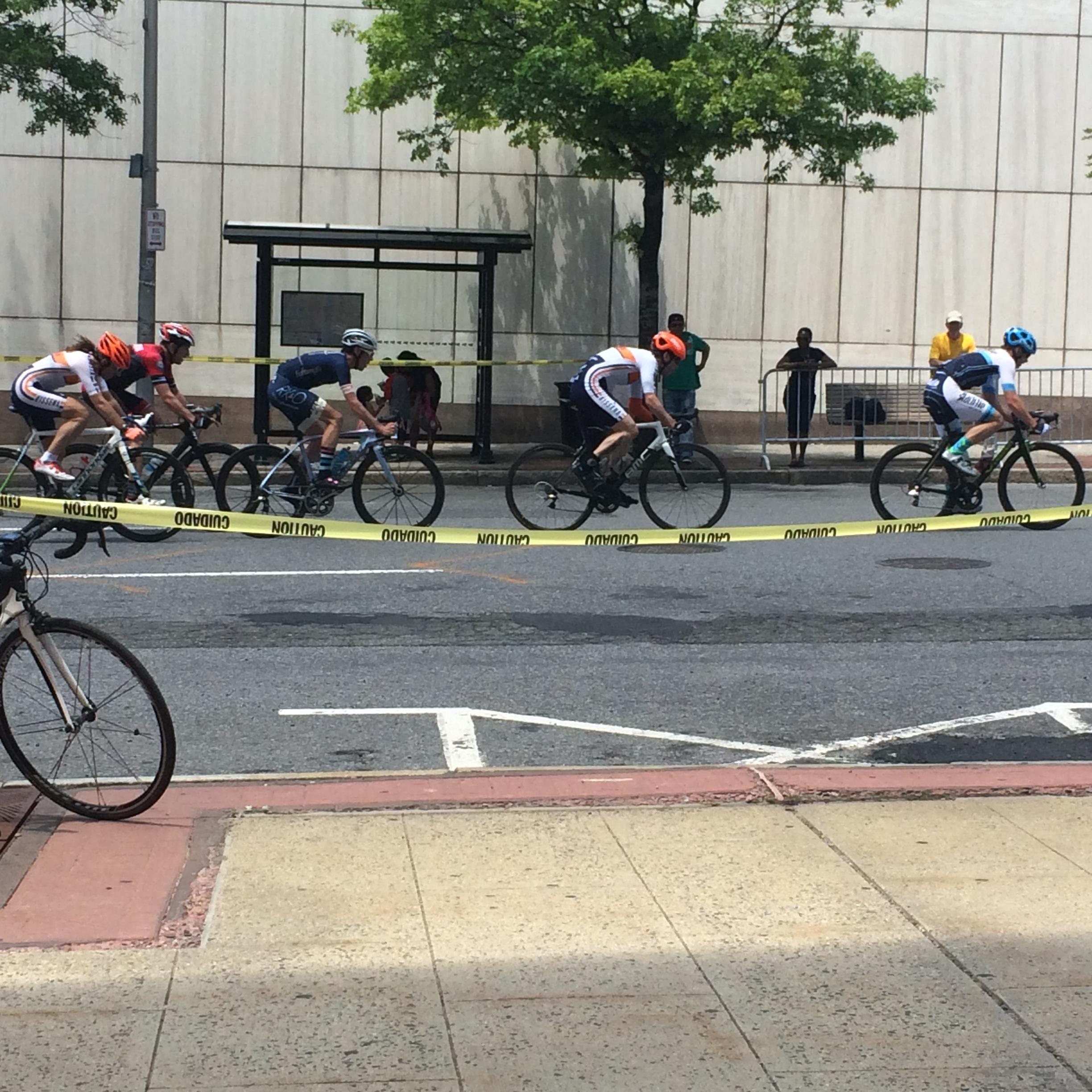
Me in the drops.


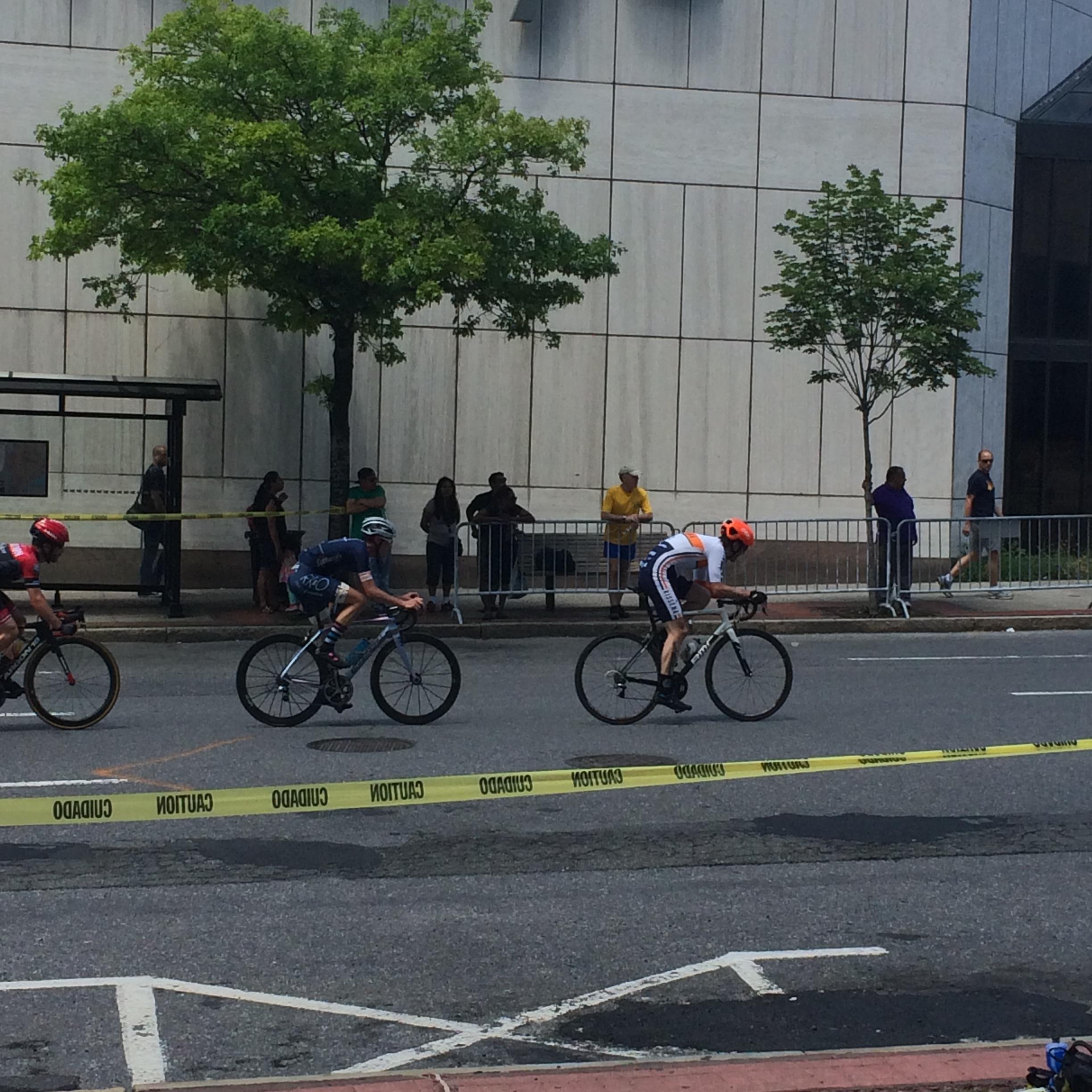
Me on the hoods.


Quien es mas aero? #marginal

p.s. http://norewardisworththis.tumblr.com/post/64845798933/snl-quien-es-mas-macho-sketch-from-2-17-19