Kissena Forum Archive

Training to Race: Faster, Stronger, Awesomer

2133 comments · 23940 views
A few comments on getting cadence right for riding with the pack up the hill in Prospect got me thinking of cadence drills.

First, while I, like most everybody, started out riding overgeared (aka in too big a gear, or riding too slow a cadence) much of the time, I eventually learned many benefits to a higher cadence.

I think of overgearing on hills kind of like when trying to sprint up stairs by skipping steps.  I can do it for a while, but when I start to slow down, I really slow down, and it's hard to recover.  So, a smaller gear has benefits because it's easier when pedaling a higher cadence to push either for a slightly higher cadence or relax into a slightly lower cadence.  And, when the hill starts to bite and I'm starting to flail, I can then shift to a bigger gear.  When you start in a bigger gear, the changes of speed are harder to handle, and once your cadence starts to drop due to fatigue or an increasing gradient, it's harder to recover.

So, a few workout ways to expand the range of where one is comfortable pedaling.

Add varying cadence to steady-state intervals.  

Back in the day when people rode with maybe a speedometer or HRM, I learned a workout called 'multi-gear.'  It was basically set a speed or heart rate and shift gears every minute.  Like start in the 53x19, and shift into a bigger gear until you get to the biggest gear.  Then shift into a smaller gear until you're in the 19 again.  this can be attempted at almost any pace/power level/RPE.  I used it do it some when I was doing 20m tempo efforts on flattish terrain.

I've also tried doing something similar on recovery days riding along the west side bike path. There, I'd get myself so I was pedaling 80rpm at a recovery power rate, something low, and then use shifting to get to 90, 100, 110, 120rpm, while keeping a recovery power.  Sometimes, if I wasn't feeling totally blown, I'd then go 110, 100, 90, 80, 70.  When I'm feeling ok, I'd do 3m at each cadence level, when I was really tired, it would just be 1m at each.

Another such workout is to over- and then under-gear.  When riding at a steady state, ride at 80rpm for a fixed amountn of time, then, while keepign the same power, ride at 110rpm for the same time.  Then repeat.  

2. Riding rollers without resistance.

Just getting on rollers is good for pedaling technique.  It seems that just being on the treadmill gets many to pull through the bottom of their pedal stroke more than on the road.  Maybe it's because without the distraction of the road, you're more focused on pedal stroke.  But once you've mastered riding them, moving on to varying cadence drills.  
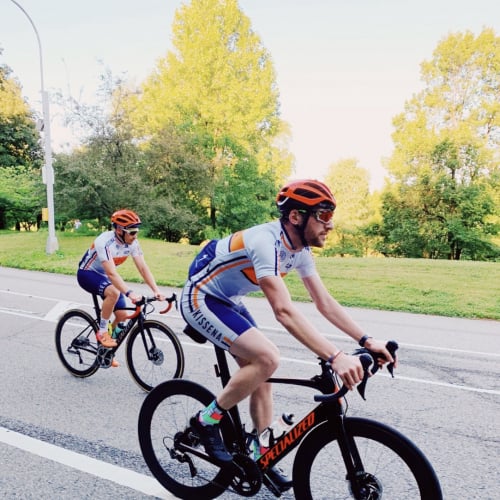
A bunch of my work outs lately have been doing an SST intervals at 95 rpm and then the same interval at 80 rpm in order to work your aerobic vs muscular system and it's been pretty enlightening as far as effecting how I feel. Typically I lean on my muscular system when climbing and lower my cadence and basically brute my way through a climb, but have recently started breaking climbs into segments where I'll lean on one system vs the other by adjusting cadence and effectively giving myself some recovery.

Yesterday in the race, I'd break the climb into either 3rds or half depending on how I was feeling on that particular lap and I never really felt like I was nearing that "I'm going to explode" feeling.
Free watts are the best watts.
https://www.youtube.com/watch?v=fsl2qIirnno

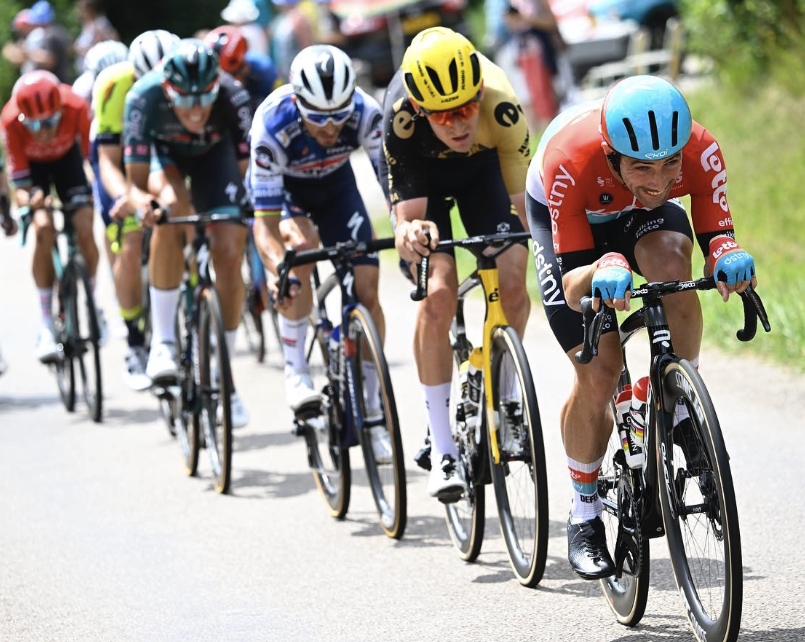
Getting lower is shockingly faster.
Jules said:
Getting lower is shockingly faster.

And yet, it remains off most cyclists' radars, simply because, unlike HR or power, CdA is difficult to measure. 

It also becomes an equilibrium of sorts. What's the lowest you can get and hold without power dropping off/fatiguing quickly
Exactly. And without CdA measurement, you have no clue how to find that position. 
If you just assume lower is more aerodynamic, you can do an interval at a power that is comfortable in your current position; something like 20 minutes at high tempo.  Then lower your bars say 10mm and repeat the interval.  Compare your RPE and if your significantly more fatigued then you shouldn't go lower, yet.
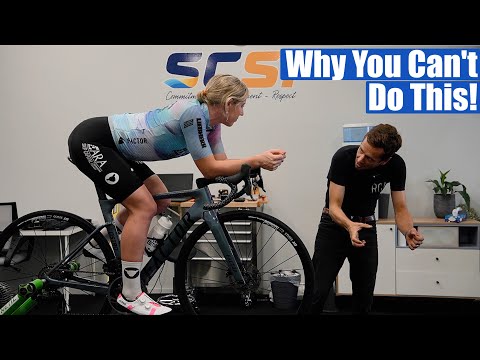
Lower position is more than just removing spacers from your stack.
Also, the way to get a lower RPE in a different position is to train in that different position.
There is a great infographic/photo of the evolution of Bradley Wiggens' bike position. Can't seem to find it today.
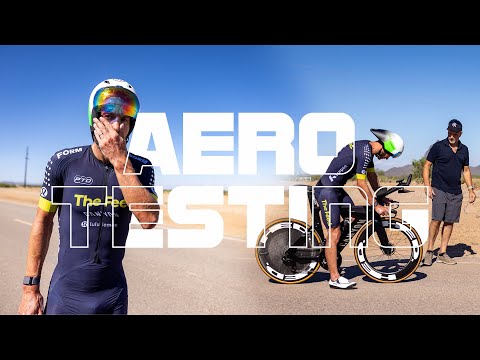
Very much related, a few months ago Lionel Sanders worked with an expert, in prep for 2024, and did some aero testing on the road (instead of a tunnel) the video contains some cool insights.

One is that at the tri pro level you are expected to be at least under 0.200 CDA (pro tour around 0.170~0.180), one change on Lionel's hand position and then another helmet and they went from .230 to .198

Another learning is the difference between 0.230 cda and 0.200 cda is often referred as 30 watts -- that's what almost all marketing means when they mention watts savings

20 some odd minutes, but might interest some of you:
https://www.youtube.com/watch?v=6u_Tw3S8KWA
Jules said:
Lower position is more than just removing spacers from your stack.
Also, the way to get a lower RPE in a different position is to train in that different position.
There is a great infographic/photo of the evolution of Bradley Wiggens' bike position. Can't seem to find it today.

Yes, it's not removing spacers.  Look at Campanaerts and the guys behind him.  Elbows are bent.  The more horizontal your forearm is, the better.  And training with the elbows bent, knees grazing chest is not all; stronger core matters.  So, definitely building lower back strength.  

Wiggo also lost 10-15 kilos I believe.  And that surely made it easier to get his torso lower.


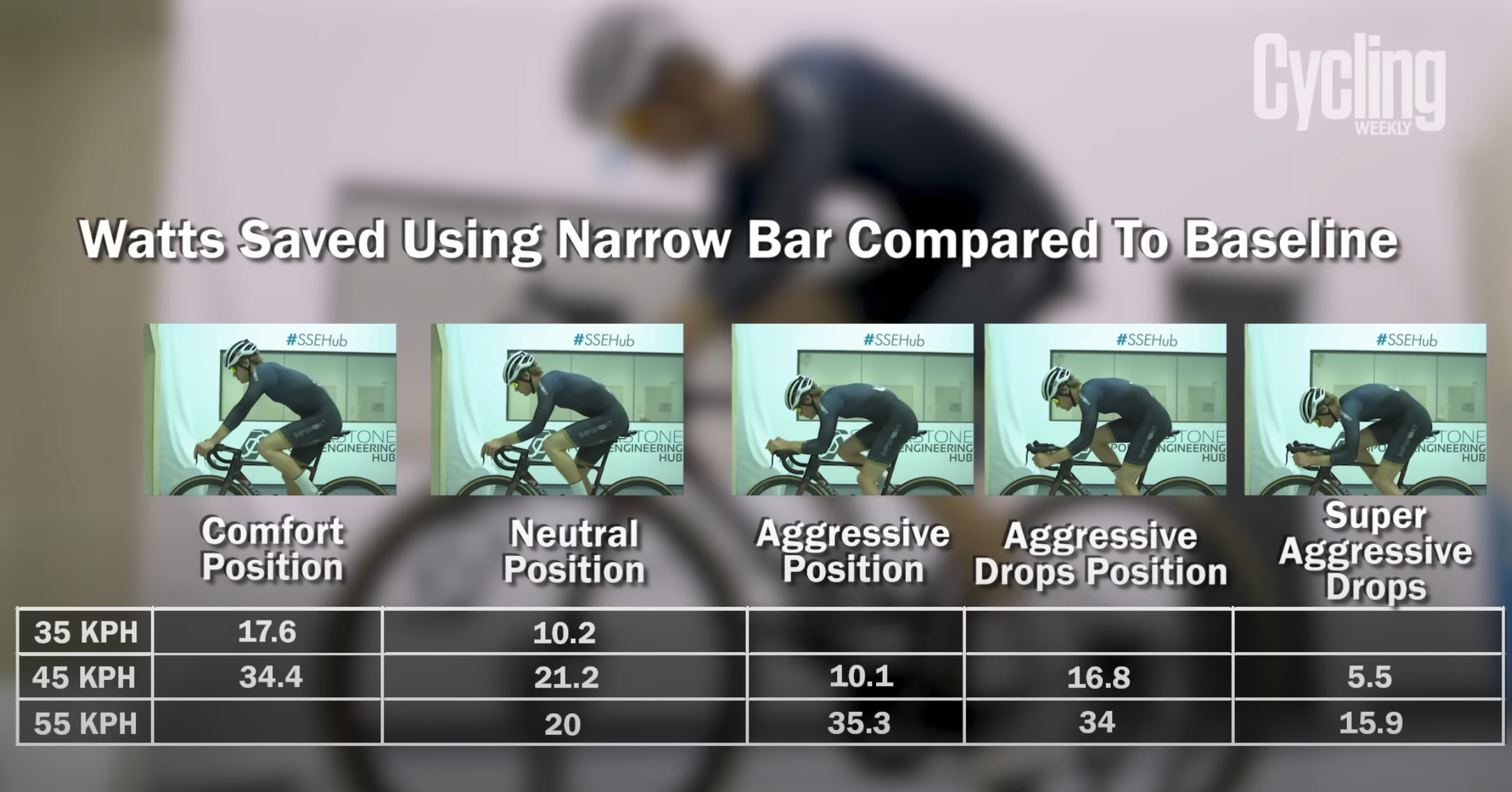
Related: The narrow top bars data is crazy, but as Jules notes, it requires tons training, not to mention flexibility, fitting, and position work, to be able to ride that position for an extended amount of time. Hard yards. 
Forgot to mention... As crazy as tri bicycle setups are, triathletes sometimes have a slightly higher CDA because an ironman and half iroman distance is dramatically longer than any pro tour TT.

This also starts to explain the success of Paula Findley (Canada's TT road champion, and pro triathlete) and Taylor Knibb (similar, pro triathlete and US TT champion) As they are hitting .150~.170 cda and putting out world class power. i.e. for whatever reason they are able to sustain the pro tour level power and CDA even at the longer Tri distances. Interesting that Knibb latest tri races are draft legal.
Bars that narrow make me nervous. They make the front end so twitchy 
THere was an excellent time trialist in NYC about 20 years ago by the name of Ken Harris.  I think he set a masters hour record.  He was pretty big, over 6'2", broad shoulders, and raced 36 or 38cm bars.  

He did happen to crash relatively frequently, and more than a few times in corners.  But it's only one racer, so an anecdote.  I assume the WorldTour riders do better.  
I still see Ken normally coming back when I’m heading over the bridge , still with the narrow bars
Bars that narrow make me nervous. They make the front end so twitchy 
Stable in drops though. 

Dude in video says it don’t bother him in a crit, it was holding the narrow elbow position that was difficult. 
At the world tour/professional level I assume there's a level of bike handling that makes riding them far less sketchy. Obviously there are some exceptional bike handlers in the pack, but I have significantly less faith in those lining up for early morning park races (especially in the 3/4s or 4/5s)
Not sure you'd find them sketchy Matt.

"unlikely to cause any handling issues for the majority of cyclists, though, and, providing you have no issues with the fit, they should make you a little faster for no extra effort."
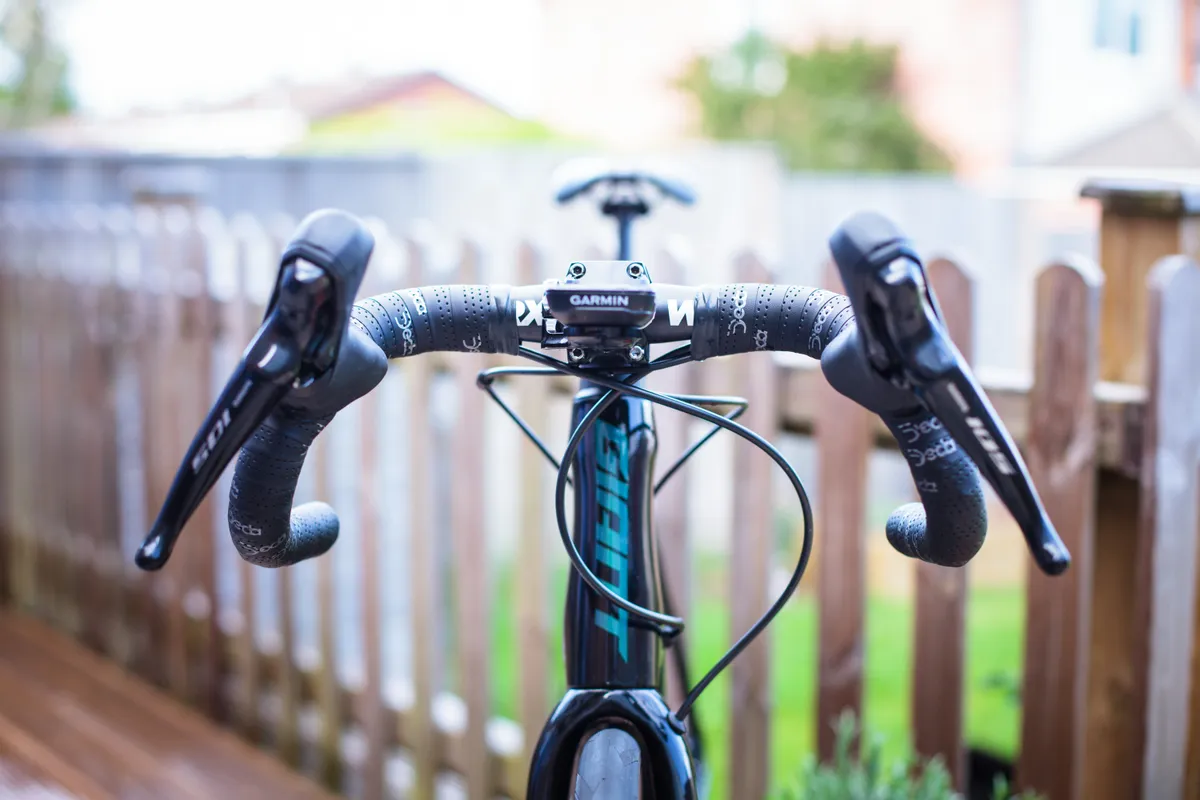
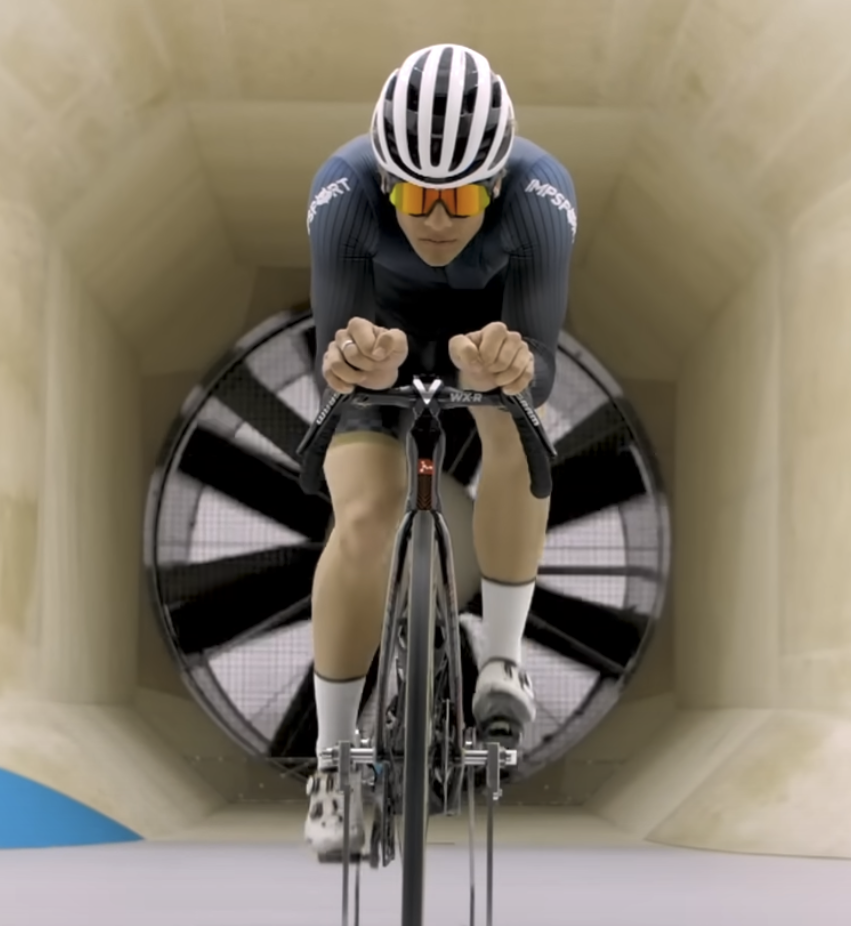
Worx track handlebar front view

The downsides (according to testers): fugliness (banishment from Look Sharp ride!?); little room on tops for hands + lights + mounts; climbing out of the saddle is weird; super low speed turning is funky. 

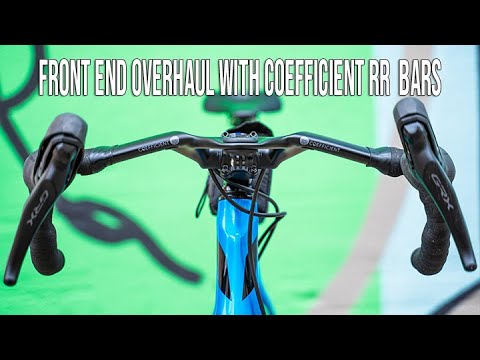
I'm umming and ahing about bar choice. Having just had wrist surgery, I'm leaning towards these coefficient bars (skip to 7min 30). 
https://youtu.be/Jda7VmuapCQ?si=MZouVBpk9stou28R&t=455
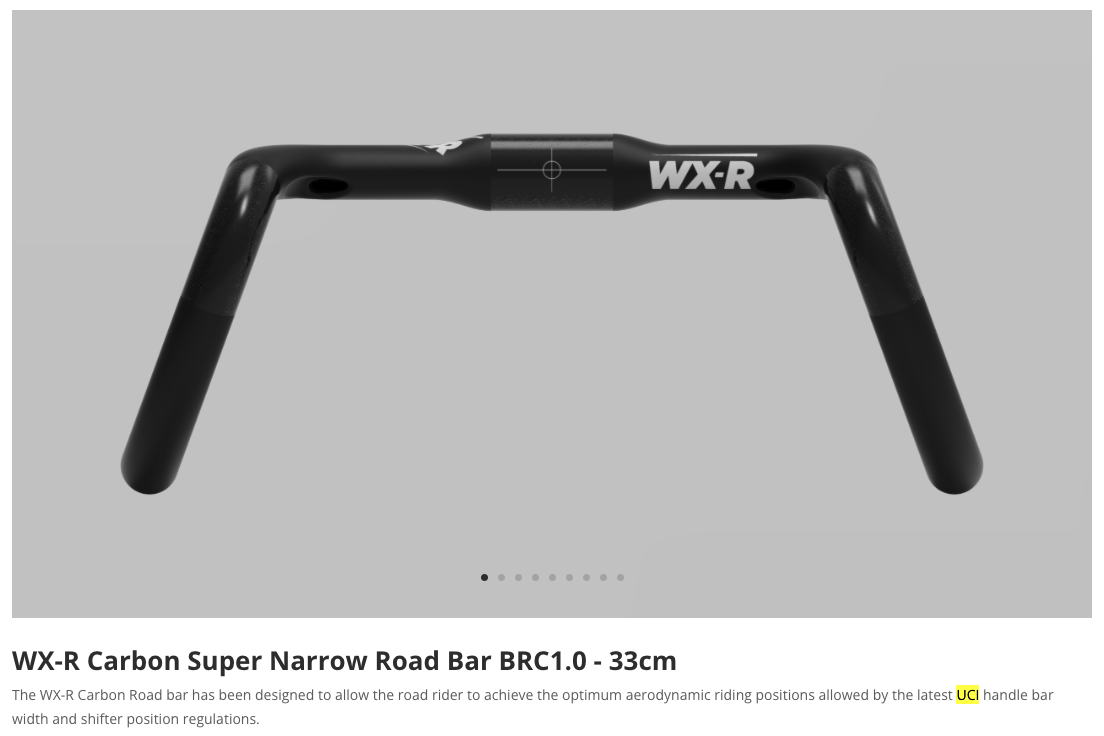
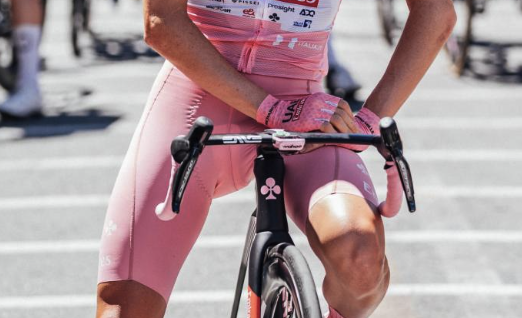
:'(
The fugly factor cannot be denied.
@JohnMalcolmson

I have my doubts about the canted-in position of brake lever.  It seems that it's harder to brake, harder to shift, harder to hold when out of the saddle.  And less aero when in the drops or on the tops.  

FWIW, I have Zipp's carbon-fiber aero drop bars on my track bike.  I don't know why the wing-section tops aren't comfortable, but they don't work for my hands when I'm resting them up there.  I've been wondering if it has to do with where my palms contact it or that they are a different stiffness than round aluminum bars, but I don't like it.
Not sure you'd find them sketchy Matt.

"unlikely to cause any handling issues for the majority of cyclists, though, and, providing you have no issues with the fit, they should make you a little faster for no extra effort."
Worx track handlebar front view

The downsides (according to testers): fugliness (banishment from Look Sharp ride!?); little room on tops for hands + lights + mounts; climbing out of the saddle is weird; super low speed turning is funky. 

these type of bars started to make an appearance in 21/22. The UCI banned them in 2022 and you don’t really see them anymore (even on non UCI events) I think the legal low limit is now 35 or 36 mm width, the legal high limit is 50 mm (including any flares) — otherwise narrow bars and a smaller frontal area have been pushed as a real advantage since 2018 ish, and now days many many serious riders, even at the amateur level are riding 38 mm to 36 mm bars, and narrower bars (from stock 40 or 42mm) are a usual update to new bikes, caveat and consideration for fully integrated cables.

YMWV


mugwump said:
@JohnMalcolmson

I have my doubts about the canted-in position of brake lever.  It seems that it's harder to brake, harder to shift, harder to hold when out of the saddle.  And less aero when in the drops or on the tops.  

mugwump said:
@JohnMalcolmson

I have my doubts about the canted-in position of brake lever.  It seems that it's harder to brake, harder to shift, harder to hold when out of the saddle.  And less aero when in the drops or on the tops.  

Right.  Evenepoel, in his first years with Quick-Step had his levers canted in further.

Just because a person at the top does something does not mean that the thing he does is the cause of his success.  It could be hindering him, but maybe not enough to have a negative impact on results.  We also have to keep in mind that top pros, like many, can be sensitive to trends and FOMO.  

For example, there was a period in the oughts where brake levers migrated up handlebars and bars started getting tipped back more.  There was a feeling among many fitters that it was due to riders wanting their stems slammed (itself a trend), and the migration of fit points was a result of bars being lower than they should have veen for those riders.
Sure JP, but the coefficient bars are one the most loved handlebars I've seen. Reviewers rave about it as the most comfortable bar, ergo, and the setup involves canting the levers. So?

Move this over to tech gear thread. 
@JohnMalcolmson, What do you want to go faster for ? You will basically be riding away from your friends =)
@mugwump tilting the shifters in slightly forces the hand and forearm to be closer, if not, entirely in their neutral, relaxed position (like if your arms were just by your sides), which is, at least in my opinion, infinitely more comfortable, especially on long days. I think this is why the trend caught on so quickly and so widely
@JohnMalcolmson, What do you want to go faster for ? You will basically be riding away from your friends =)
So when I drop my phone (again), I can chase back on!