Kissena Forum Archive

Bicycle Tech/Gear Discussion Thread

8105 comments · 108281 views
Garmin 500 or 510?

Leaning towards the 500 because of size, and also at $400 I rather buy a wheelset or some other actually ridable item. 

Recommendations for other under $200 GPS Ant+ "Works great w PowerTap" computers welcome too.
@eloy, I have a 500 and have no complaints. 
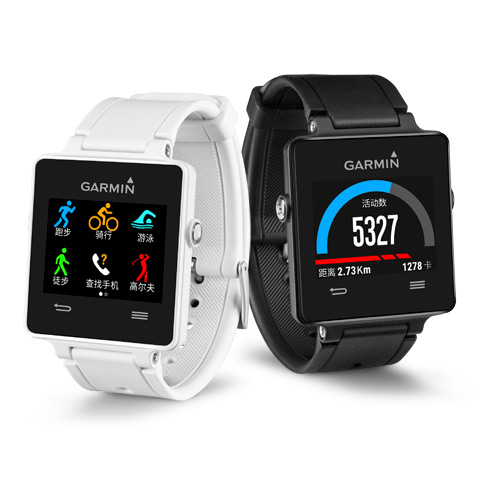
I'm waiting for them to turn this into a bike computer


http://www.amazon.com/Garmin-010-01297-01-Vivoactive-White/dp/B00RE1UKLC/ref=sr_1_3?ie=UTF8&qid=1424975838&sr=8-3&keywords=garmin+vivoactive

otherwise I say 500

500
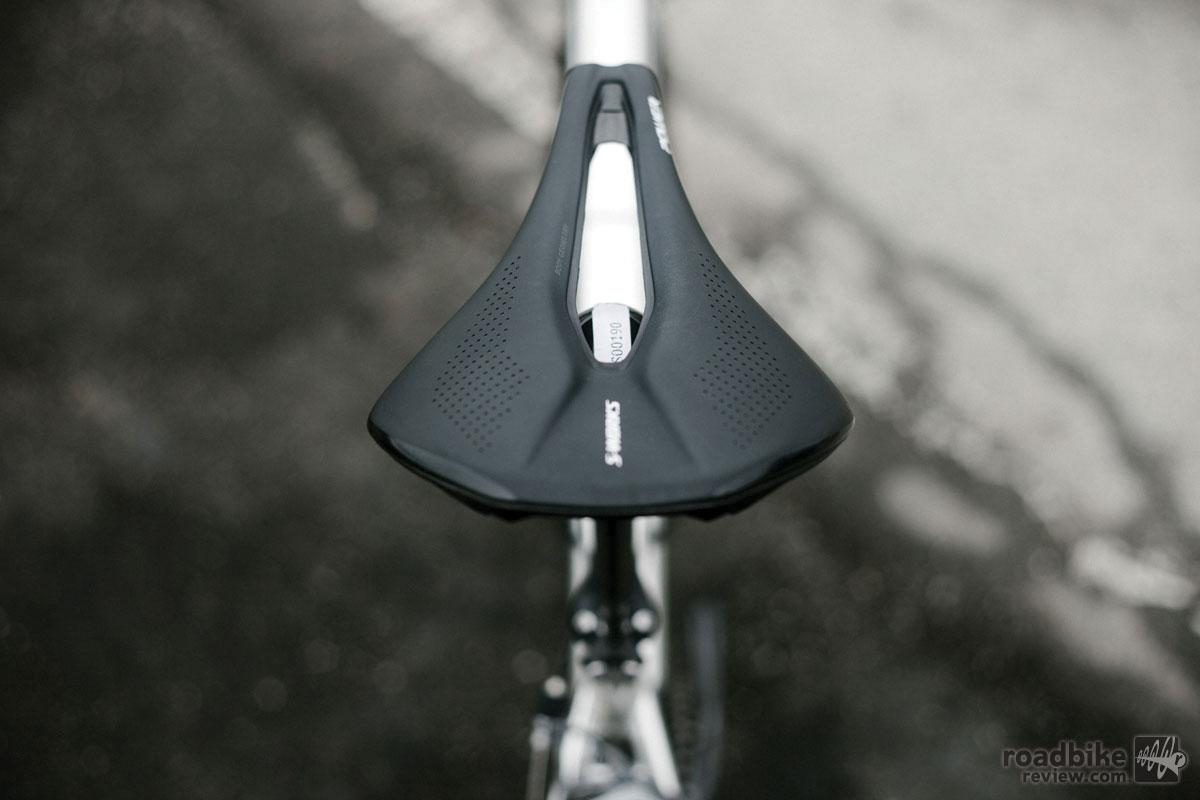
Looking for a Romin replacement. Anyone demo'd this badboy?
Not sure it's available yet, but getting good reviews. JP?

http://www.roadbikereview.com/reviews/specialized-unveils-aggressive-position-power-road-saddle#slider-pro-3-2


http://www.bikeradar.com/road/gear/category/components/saddles/product/review-specialized-s-works-power-49275/

They like the saddle as long as that you stay on your drops.

Ride might have a demo one in a couple of weeks. The Spesh sales rep showed me the literature and gave me the rap today. It looks promising.
A saddle with no discomfort after 5 hours sounds pretty awesome.

Thierry, if you had a seat that was comfortable in the drops you'd tend to train more in the drops no?
Being comfortable riding in the drops requires more than a comfortable saddle, you also need proper fit, good flexibility and decent core strength. Otherwise your ass may be comfy but your back and/or arms will be complaining.

Regarding this saddle. I am skeptical. Either of the saddle or the reviewer.
People just do not ride for 5 hours in the drops (eccentric British TT racers competing in 12hour events excluded). For a start most people climb using the tops or hoods - why have a saddle that is uncomfortable for what could be amount to hours of riding during a tour stage.

So either this is a saddle for specific events: a TT for example, where a more forward saddle position opens up the hips and helps avoid pulling oneself onto the nose of the saddle. But stubby TT saddles are already not uncommon. Crits and all track events are short and intense enough that staying in the drops in the norm and so this saddle may be a good option there.

Or .. the saddle is actually way more versatile than described and the reviewer is just clueless.
@ian ellis  I started riding the cut-out Specialized Romin last year which is great for in the drops, but got gnarly after a couple of hours. Admittedly it could have been a matter of breaking it in (it snapped before I could log a seriously long ride) but chafing was a regular issue after 50 miles or so. Have been hunting for a saddle that's comfortable for racing and the Specialized Power looks like a more data driven evolution of the Romin. Worth noting is the Romin and the Power both have an up-sloping tail that gives you a more "locked" position (unlike the Arione where you move fore/aft a lot). IMO this makes correct bike fit super critical.

What might not be great about the Power is you can't scoot forward to lay down the power, as it's got no nose. The "not comfortable on the tops/climbing" remains to be seen, two reviewers say "no prob", another says "deal breaker".

The really freaky thing is the Dr who developed the seat states: “even at 0% bloodflow to the region, male riders cannot feel the difference. If you get numbness, that’s most likely because there’s compression of the nerves. It doesn’t mean it’s the constriction of the artery. You can’t feel the constriction of the artery.” ( http://cyclingtips.com.au/2015/03/specialized-power-saddle-review/ ). One of the guys on on Axis had to basically give up cycling because of a problem with compressing this artery, something that happened afters years of racing. 

Lastly, my question is: if we are training for racing, might we want to train in a position closer to our race position to recruit the right muscles and develop the necessary core etc? I wonder about this when I spend an hour at threshold with straight arms on the Computrainer.


@John We should train in the position we race in. But don't we do that already ? Last night I did VO2 intervals and I was in the drops and pulled forward on the saddle. (And puffing and panting). Likewise when we have hard pacelines on group rides. That is training for a race situation and hence riding in the drops is appropriate. However riding steady and chit-chatting on the way out to Piermont for a Muffin is not a race situation (I wish it was - I would be WAY more successful as a bike racer) and so staying in the drops might be a bit over-kill.
Saddles are pretty personal.  I've been through a couple and really like the Toupe Expert, which Specialized has of course changed.

One thing to consider is the rail size.  Carbon rails are larger than titanium, at least for Specialized saddles, so one needs to make sure it will fit on the seat post.  The carbon rails tend to be 9mm, and Titanium are for 7mm side clamps.  

On the trainer, I do all my workouts in the drops.
Then I squirt water over my headset and bolts.  They're covered with old shirts, to catch the sweat, but I don't want them seizing up or rusting.
@Ian I agree we need the social ride on the tops for sanity's sake and when we're climbing an equation of drag vs easier breathing is at play, perhaps it's a question of how much time you log in either position and what is the optimal split for going fast while keeping sane?

The more comfortable you can get in an aero position the more time you'll want to spend there => the faster you'll go. So yeah, you and Bruce in the drops on the trainer are doing the right thing, whereas me tending to go to the tops because it's more comfortable and generates more power, is maybe bad (unless all we raced was hills).

I've noticed racing with elite riders, you just don't get as much of a draft because they have their position so dialed. Sure they have watts to match, but they're fast because they have a flat back and they are comfortable and efficient there. Developing that efficiency is what I hope the Power saddle will encourage. Definitely flexibility and physiology (and age dammit!) are factors too.
I told the Spesh dude to get me one. It's not going to be available for a little while. I'll let you know once I have it.
Bike fit is bike fit. There is a prevailing myth in cycling culture that a competitive rider has to change his body to fit his bicycle. This is utterly incorrect. Your bike is your tool, your weapon. You adjust your bike so it fits YOU. The other myth: if my neck/knee/elbow/low back/crotch/hands/wrist are in pain then it means I'm going faster. "Speed requires sacrifice!!!"

If you want to change some aspect of your position in the name of efficiency, watts, or just aerodynamics, you need to do work OFF the bike to allow that to happen. Real improvements happen when your bike is dialed to your body. As you improve your body's flexibility and strength, you can adjust your bike to accommodate the new you.

Road handlebars have multiple positions for multiple uses. Adjust your bike so that all of the positions are available to you as you would need them. If you're a breakaway magician then you need to be able to cruise in the drops for 2 hours. If your bar is slammed so you can only ride the tops or have to frequently change position, you're also inhibiting your hamstrings' firing and going slower than you would be. Not to mention that you've got a crick in your neck, you can't breath right, and your recovery takes twice as long.

Flat backs are good for folks with flat backs. If you're curvy, embrace the curve. Look at Tony Martin. http://cdn.velonews.competitor.com/files/2011/07/MARTIN-TT.jpg. Look at that curve.
@Redbeard Ilya, thanks for your insightful post. Would like to hear if you have suggestions for off-the-bike exercises to improve position. 

My point is though, real improvements happen when a piece of equipment is better designed to enable your body to perform a certain task (see potato peeler). Assuming your bike is already fit and you're at race weight, what can you do to work on the taint off the bike? To me it's a design interface problem—If my ass is more comfy in the drops and I know a saddle is not squashing the artery there, or hurting my family planning, then I'm going to be more likely to spend time there. It follows that, spending more time there will improve my performance because I can focus on developing my form to be faster in that position. The one thing I don't like so much about the Romin and the Power in contrast to something like the Arionne, is you are locked in to one fore/aft position, perhaps you have a POV on that?

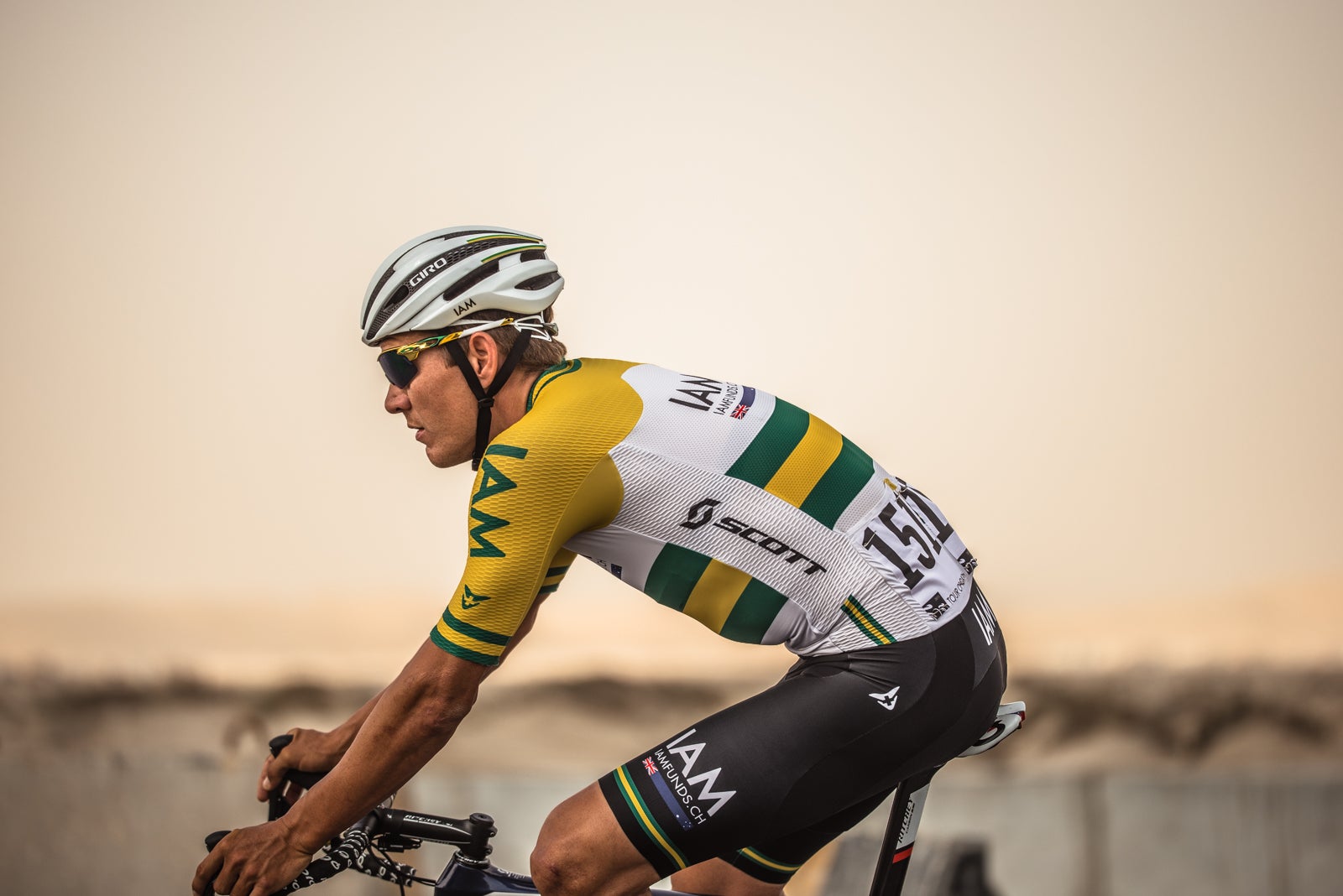
I also have a bike fit question: Do you know why nowadays many pros have their "most aero" position on the tops? Certainly the drop on newer handlebar designs is much less than it used to be, but is it because it allows them to extend their arms longer and be further forward on the bike? Or something else? Terpstra is a good example of what I'm talking about: 
(I know we're all unique and different and one position does not... yada yada). Thanks.

Having some issues with my Stages power meter.  The battery becomes dislodged inside the unit thus cutting power....I have tried new o-rings and covers to no avail.  What seems to be working is rolling up a small piece of electrical tape a placing inside the cover...so when I put the cover on the battery, the tape prevents the battery from coming loose.  Any reason why I should not continue with this hack?

Because you paid $600+ for it, and for that money it should all fit together properly.
but he buys thinner 99 cent store batteries...
because you're right leg dominant and averaging the power between you're two legs would do wonders for your ego even if it yielded only 3-5 watts more for your FTP numbers
I will buy fatter batteries
I agree that equipment that's designed to work with your body will work better. And I agree that there's little you can do to improve your "sitting area."  As a fitter in NYC, I have come to the conclusion that most bikes that "fit" rarely do. I have just seen that riders have made modifications that allow them to experience the least amount of discomfort in a compromised position. 

Without seeing you and your bike, I would have no way of answering. 

The reality is Terpstra is NOT in a position pros are comfortable riding in. The picture above shows a rider in top flight. That is a rider going all out for less than 15 minutes. A pro rider that gets a massage before the race and after. Is paid to be on the bike. Is paid to suffer. Is paid to be flexible and fit.

Spending more time on the tip of the saddle is certainly not a good solution for a long ride. If you look at Tri bikes you'll see a huge number of ISM saddles and saddles with wide, noseless perches. The wider saddle nose puts pressure back where it belongs, onto your pubic rami. Onto bone, not onto soft tissue.

In the case of a triathlon, or a short TT, or a late breakaway, a rider can sacrifice hamstring recruitment and long-term efficiency in the name of pure aerodynamics. Most riders will not spend a significant amount of time perched on the rivet. It's not just a question of comfort, it's also a question of sustained speed. Quads provide 60-70% of the driving force for a cyclist. You won't win races for long by using only 70% of your equipment. But, in the name of pure aerodynamics, for short periods, you can overdrive your largest muscle-group in the body (the quads) by rotating your position forward, and lessening the dependence on hamstrings. This is not an ideal long-distance position.

My point is well illustrated by Niki Terpstra himself. In the pictures below look at how he's riding when he's not in flight. We don't get long, isolated views, of riders in the middle of a race while they're in the middle of the peloton. We get the shots of the riders out front. At max effort.

To answer the question of aero position on the hoods. I'd argue that the position that allows forearms to be mostly parallel to the ground will reduce drag by reducing frontal area. And I'd argue that in the old days, the hoods were farther away than the drops. That shot doesn't seem like his body would care where he kept his hands except that it's probably more comfortable for the wrists, braking, and shifting.

In light of this very long response I invite you all to a fitting clinic night at Redbeard Bikes. I will spend 2-3 hours explaining the concepts and the realities. I will bring in representatives from 2 distinct groups of cyclists and use them to explain some interesting differences between riders' bodies and bike fitting. I will ask and answer questions. I recommend it to everyone. I want everyone on the team to win races. I'll make another post.


Thinking of converting to single chainring cross set up , 38 or 42 tooth 
thoughts anyone
vlad said:
Looking at that pic of Terpstra in the Dutch national champion's jersey, I find myself wondering if this particular position is specifically for a time trial where there are no hills whatsoever (and rules which forbid aero bars).  The bars are lower and the stem longer than we see above.  
Isn't there a requisite "drops not tops" screed due here from Wump?


not exactly.  It's odd to me that Terpstra has the bars so low, is on the flats, yet riding his tops. But for all we know he was taking a breather. Without context, the pic is hard to analyze.


Here's the pic you should think of when sprinting on the tops


look at Fabian.  Sprinting on the tops cost him bronze.  (of course, Goss opened the door for Cav' and that cost him the win.  
Think that this is what Terprsta is about in that picture:

http://road.cc/content/news/133598-want-ride-faster-hunker-down-hoods
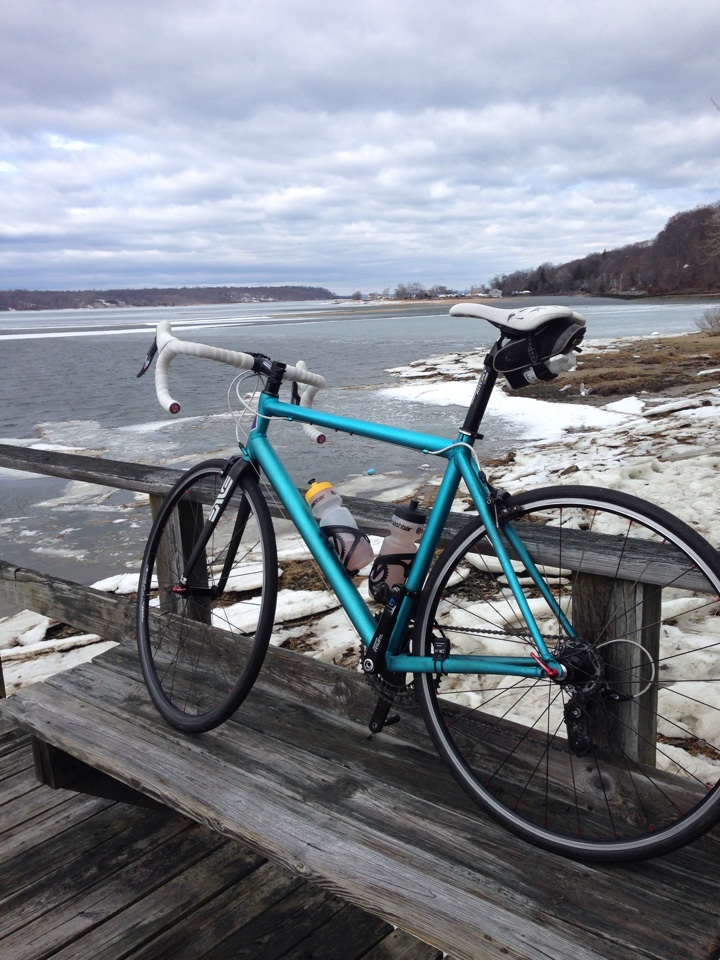
Cold Spring Harbor misses you...pic taken today