Kissena Forum Archive

Bicycle Tech/Gear Discussion Thread

8105 comments · 108281 views
I'd argue that not much on a bike is overly complex, other than perhaps, today there are almost no standards for basically anything on a bicycle, which makes things unnecessarily more complex than they need to be. 

In any case, bleeding is not specially complex.  Mostly you need to remove two bolts (one on the lever and one of the brake caliper) and connect some fluid containers (syringes for sram, and a syringes and funnel for shimano) and then pump new fluid from one container till the old dirty(ish) fluid ends in the other container, making sure there is only fluid (no air or dirt) on the line. And then close the two bolts. 

An example of unnecessary complexity, and lack of standards, is that sram uses DOT fluid, similar to most cars, Shimano uses mineral oil, similar to baby oil. And none of it is compatible, you can't mix bleed kits, syringes, funnels, etc... 

@eloy yeah that’s what I was leaning towards. Which Swiss Stop pads are you running?

i’ve bled my shimano brakes on my road bike a few times and it’s super straight forward and easy. 

That said, DOT fluid is a bit more of a hassle to deal with since it’s corrosive in nature/I don’t necessarily want to buy another bleed kit so it’ll probably be a trip to the bike shop for me
@Matt Budofsky

totally understand if you wanna take it to a shop -- whenever I'm looking at new bikes I lean towards sram for that reason. 

A super easy tip with DOT fluid..., as you mentioned, it is water soluble. So, yes, DOT is corrosive, but all you need to do is spray water (or alcohol) anywhere you got some of it, and problem solved, this is by design.

re: Pads:
I either get these green ones (the amazon photo is wrong, these are the right red/force/rival shape)
https://www.amazon.com/gp/product/B00EN1UO9O/ref=ppx_yo_dt_b_search_asin_title?ie=UTF8&th=1&psc=1

or these yellow ones:
https://www.amazon.com/gp/product/B07D3SRHVG/ref=ppx_yo_dt_b_search_asin_title?ie=UTF8&psc=1

I am sure there is a reason these are colored, but I have no idea what the actual difference is.


I ordered a kit, looks surgical  :)
eloy said:
A super easy tip with DOT fluid..., as you mentioned, it is water soluble. So, yes, DOT is corrosive, but all you need to do is spray water (or alcohol) anywhere you got some of it, and problem solved, this is by design.


And if you're running Shimano, just do the bleed on some hardwood floor and you can polish them up with any fluid that spilled.
This looks pretty nifty

https://www.cycplus.com/products/tiny-pump-cube?

https://youtu.be/tHPi5-JZDz0?si=XExzoQVOtDAiJ_Fl
For rotor disc brake users:

Don't know if this works, but I'd be interested to know if it does.

https://www.swissstop.com/accessories/disc-brake-silencer/
This was defiantly the weekend to try it out
Ended up buying a bleed kit and bleeding the brakes. The process is pretty straight forward (followed Sram's guide and accompanying youtube video), but after the bleed the brakes felt like trash. Went back in with the system closed on one end and pulled up on the syringe to get air bubbles out and my god was there so much air dissolved in the fluid (I'm using finish line DOT 5.1 fluid). Brakes feel great now, but I'm now firmly planted in the "Shimano's hydro system is better" camp.
Cool! The first time I did, took me a couple of tries too. This is why I advocate for the more expensive/better kits, it is pretty obvious that cheap plastic syringes can push air into the fluid.

A thing to pay attention on SRAM: sometimes but not always, the lever reach might change as pads wear out, or new fluid is added, etc... it's an easy adjustment, there's a little 2.5mm allen bolt under the levers for reach. Still not sure why this happens (like it makes some sense that the travel is affected, but not sure about the reach)

& one last note: DOT fluid doesn't keep well over time, so once you opened the bottle you want to use most of it in a week or two. SRAM and Finish Line make small bottles to address this.
Jules said:
Not in its current iteration.
Had an odd thing happen today.  It has to do with powermeters.  Looking for some way to normalize the power readings.  

I've had a Quarq on my road bike for over a decade, the most recent version I think is four or five years old.  I have a Stages on my CX bike, which is at least as old as the Quarq.

I've often had the sensation that the Stages reads lower than the Quarq for the same effort.  Back when I had an SRM and the first Quarq iteration, I actually tested the calibration with weights.  I haven't done that in ages and not with either of my current PMs.  FWIW, I seem to favor my left leg slightly, at least according to the Quarq.  And my max power has never been as high on the Stages as on the Quarq.

So, today, I went to do a VO2 climbing interval after three days easy.  I did it on my CX bike.  It's heavier than my road bike, though without two bottles, that might be a wash.  And I'm riding heavier wheels with 32mm gravel tires (Panaracer Gravel King) that can be run tubeless, though I've got tubes in them--they feel much slower than the 25mm tires I'm running.  

On this interval, I could see my power was a good bit lower than I was hoping for.  At the end, as fixed by Strava and in my WKO+ program, my time was about 2s slower, and my average power was 30w lower.  It's a 0.92mi distance, averaging 6.2% (peaking at 15% or thereabouts), so aerodynamics are barely an issue.  I didn't stop to zero the offset, but I don't think there's much temperature differential between when I was out yesterday and out today.  And the temp difference between my apartment and outside is also very litte--though I had been out for long enough to bring the meter back to a constant.

Something is off.  Not sure how to figure out if it's the Stages or Quarq, and then how to normalize between the two.  
@mugwump you can't really normalize between the two; even dissimilar devices of the same manufacturer will have variance. I think the last I read was industry accuracies of +/- 2% so you could be 4% off between two devices before you even roll out the door.

Assuming you are climbing at 300 watts (probably more) that would get you to 24 watts.

As someone who never missed a data capture in 12 years of racing/training with numerous devices (SRM, Stages, Kickr, Quark and even an early hub-mounted powertap) I'd say the thing is to pick your device seasonally; and use it to field test and train with.

Also, zeroing isn't a bad idea either ;)
Agree with Jules. Pick one for the season(ish).

I am sure that's not always the case, but my sense is that my stages also measures lower than my quarqs, or at least the power on the quarqs is a tad higher for the same perceived effort. Which isn't helped for by my left leg being the 49%ter (lower on the stages) but there are other factors. 

I think most power meters today are closer to +/- 1% but the things we use are possibly a bit older. 

All that said, the amount you mention, has the potential to be some sort of calibration issue -- the added weight and rolling resistance of the cx bike should have certainly yielded a higher power, not lower -- maybe there was crazy tailwind? or a crazy headwind on the other attempt? or maybe the brakes were rubbing on the other bike?!? haha  ;)  


What torque wrench do folks use to tighten the west post clamp, for example on a tarmac , my torque wrench head doesn’t allow me to get to the head with out the hex driver going in at an angle and rounding off the “ bolt”
My phalanges.

What torque wrench do you have?  If it uses a separate bit you might be able to get a longer bit to make it easier to get to the bolt.
@Mark Taylor

Are you on the SL6?  Is that the one with the bolt that is right next to the post?

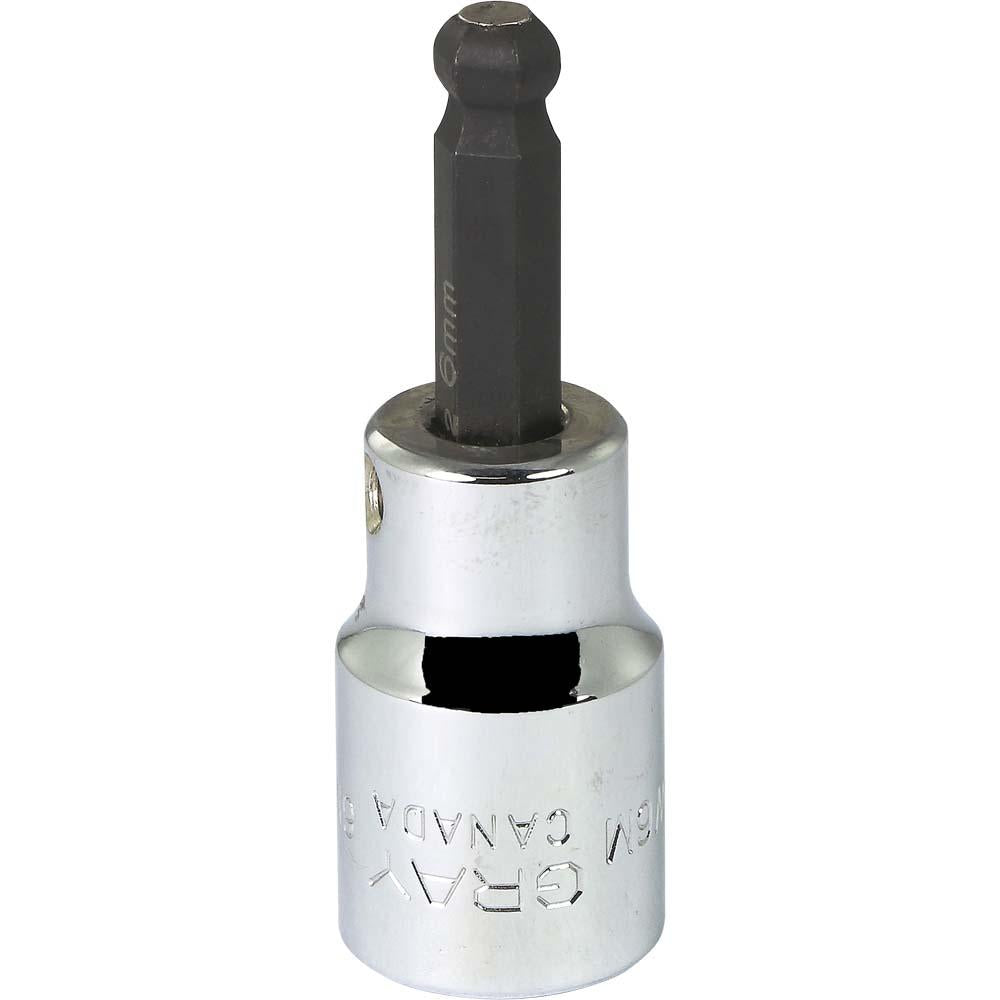
If so, perhaps a "ball head socket" would be the answer.

My Effeto Mariposa Torque Wrench came with a set of bits that included 100mm long 4mm & 5mm Allens, and a 100mm T25.  

https://www.effettomariposa.eu/en-us/collections/torque-wrenches/products/giustaforza-bit-set-replacement-bits

Such sockets can be purchased separately, and individually.  As can a ball head socket.
GregHoge said:
My phalanges.

What torque wrench do you have?  If it uses a separate bit you might be able to get a longer bit to make it easier to get to the bolt.

Mighty Torque Wrench Kit Silver
mugwump said:
@Mark Taylor

Are you on the SL6?  Is that the one with the bolt that is right next to the post?

If so, perhaps a "ball head socket" would be the answer.

My Effeto Mariposa Torque Wrench came with a set of bits that included 100mm long 4mm & 5mm Allens, and a 100mm T25.  

https://www.effettomariposa.eu/en-us/collections/torque-wrenches/products/giustaforza-bit-set-replacement-bits

Such sockets can be purchased separately, and individually.  As can a ball head socket.

How does the ball head socket work?
@Mark Taylor

The idea is that teh end of the Allen head is ball-shaped, meaning that it can still work when installed into the bolt at an offset or non-perpendicular angle.  They are designed for reaching partially obstructed bolts.  

 longer the shaft, the shallower the offset angle will be


The ball socket lets you get at the bolt from odd angles.  The trade-off is there's higher risk of rounding the bolt head and you can't get as high of a torque; for a seatpost neither should be an issue.
I picked up a 4mm extender , worked well with my existing wrench 👍
eloy said:
I'd argue that not much on a bike is overly complex, other than perhaps, today there are almost no standards for basically anything on a bicycle, which makes things unnecessarily more complex than they need to be. 

This should be put on a monument at the top of the Alpine climb. People would leave uneaten gu packets and old multi-tools as tribute
Regarding my Stages power issue:

"Something is off.  Not sure how to figure out if it's the Stages or Quarq, and then how to normalize between the two."

I wrote Stages on October 6 with what I told y'all.  Didn't hear back until today.  (seems like they must have a skeleton staff these days)

They first told me: "With the power meter being 9 years old, it is possible the accuracy has degraded. The zero reset value should be telling. Your zero reset value should be around 896."

I checked and it's at 918.

To which, the person responded:  "918 is a little higher than I would like to see, enough to skew your power data.

"You can try the following and see if the zero reset value falls a few points or at least, gets closer to 896.

"Remove the battery cover and battery and let the power meter housing air out for at least 24 hours. You can check the zero reset value and see if it is dropping. If it is dropping but not 896-900, go another 24 hours and see if it will be close to that range.

​"We do not have the ability to adjust the slope to power match, sorry. We can upgrade this power meter to Gen 3 and install new power meter parts for $200 so you have this option."

So, I took out the battery and left off the cover.  I'll reinstall tomorrow night and see where it's at.


speaking of power meters, I have a project in the works and just picked up a new 4iiii precision 3+ powermeter (the one that works with the apple find my network) based on the GP Llama review. Once I have it installed, I'll report back on it
Nine years is a long run for a power meter. Mine are probably there too; whatever else may be said I have to tip my hat to anything electronic that lasts nine+ years!
Alright! I've decided I want to get a proper cross bike. I'm looking to ride gravel (lots of gravel group rides in Greenwich), easier single track, and cross races (this bike being likely not until next season). Bike brands seem to mostly offer gravel bikes with only a few still offering cross specific bikes.

I'm really interested in getting a titanium frame and the Lynskey GR300 is perfectly in my budget. That said, it's not advertised as being for cross, so i'm wondering if the geometry is going to be a hinderance in cross races or the easier single track. I imagine at my level of skill the bike geometry isn't going to be what's holding me back handling wise but i'm not sure.

Can anyone tell me their opinions on the geo compare to traditional cross frames? I was alternatively thinking about the Ritchey Swiss Cross but don't know how to look at the geometry charts and translate that to ride characteristics (i.e. reach/rake/wheelbase to performance in corners)

https://lynskeyperformance.com/gr300-internal-cable-routing-complete-bicycle/

The looks cool , one thing of note , do they offer a 1x option ?
The geo looks pretty gravely to me. Long wheelbase and chainstays and pretty slack headtube.  Trail will tell you more about front end steering than rake since it takes into account multiple measurements.  

How did you like the handling of the bike you used at Croton?
@GrantSeltzer  If we're starting from road bike geometry, a cyclocross bike is kind of like a criterium bike but with greater clearance for 33mm knobbies.

to wit, CX bikes used to have either have road bike head and seat angles or go 1/2-1 degree steeper, with slightly less trail at the fork to keep the steering "light" or "agile," and the bottom bracket drop, that is the distance the BB is lower than the hubs, slightly lesser than on a road bike.

The BB drop range varies, and is pretty important when it comes to racing.

A classic road bike typically has around 68-72mm of drop.  The greater the drop, the more stable the bike feels.  However, the greater the drop, the less ability you have to pedal through corners.  The drop issue has also been evolving on the road as bike geometry is being adjusted with larger diameter tires in mind.  A CX bike is more like 61-70mm of drop.  The short side, 61-64, you can still find on some Belgian-style cross bikes, like Ridleys and Fuji's Jari (influenced by Jonathan Page).  The shorter drop was designed for being able to pedal though grass and mud with your toe clips hanging down, but today, since almost no one uses toe clips, some people like it because it enables them to pedal through steeper, faster, turns.  

Gravel bikes are all over the place on the BB drop issue.  Some companies are emphasizing that you can run 650b wheels, and if they're afraid a user will pedal strike when the user puts 650b x 25mm tires, they'll opt for a short drop, like in the low 60s.  OTOH, some companies are thinking more bike packing and are making the drop pretty long, like 80-85mm, which is in the touring bike range.  

The Lynskey has 75mm of drop in the ML size.  That's fairly low compared to CX bikes.  So pedaling through corners won't be great on 35mm tires--the drop was probably built around 45mm tires, which come standard.

The second thing that might be an issue is the trail.  According to the trail calculator I used, if you run 35mm tires, you'll be looking at 76mm of trail, when CX bikes are typically more in the 60-65mm range.  They probably did this so that you don't have your toes overlapping with your tires.  However, with this long trail the bike will feel less reactive than a traditional CX bike, so flicking your bars through tight turns might not feel as light or easy.  This, unlike the drop issue is something that is more about getting used to the feel than limiting you.

 A third thing might be stack and reach numbers.  Some folks like to set their bars in the same position as that on their road bike.  Some like their 'cross setup to have slightly higher bar position.  This may or may not be an issue for you.  Start with what you're currently riding and if the position can cross over, in case you want that option.

 A fourth thing might be whether or not there's room to shoulder your bike.  If you're on the ML, I don't think this will be an issue.  But for come bikes, it could be.  

FWIW, Edwin Bull, who designed several popular CX bikes when he was running Van Dessel (a bunch of us have his bikes), is now designing bikes for Fuji and has been racing his Fuji SL-A road bike and a prototype Fuji carbon-fiber Fuji road bike at local cross races, not the Jari.  33mm cross tubulars fit, and he likes to say, a good cross bike is like a road bike with extra clearance.  If it's a sticky mud day at the CX race, he might be limited by the minimal clearance between his tires and the frame, but other than that, there are no drawbacks.  In the late 90s/early 2000s, my CX bike was a road bike with canti' studs brazed on and had room for the then-popular 30mm tire width.  I only had one race where the mud overwhelmed the clearance.  

Here's the trail calculator: http://www.yojimg.net/bike/web_tools/trailcalc.php