Kissena Forum Archive

Training to Race: Faster, Stronger, Awesomer

2133 comments · 23940 views

So here's something I read recently that echos my personal experience and belief in what makes a successful bike racer. It actually is a quote from one of my wife's uncles, who is a pro race car driver and coach to many drivers over 40 years, including some Formula 1 stars.

"The most important attribute in racing is anticipation. Timing is everything in all sports, but in racing, the difference from stick-and-ball sports, is that we're the object moving through space."

"Once you believe in the anticipation part, you have to work on being disciplined and precise with your timing, which requires feel--but you can develop feel with practice."

So, it's been a few years since I've had my motor tuned up properly (working on that part currently), but have been more or less still competitive or at least not totally useless in local and regional racing. I attribute that in no small part to my "experience points."  (D&D reference in the house, hollah!)

Knowing when and where to move in and out of a flowing racing pack in any given moment? Critical. I also use a combination of momentum and varying cadences to stay in the mix when others are killing their knees with big-gear monster-watt efforts. I don't always get it right, but often I do.

There are others on this club that are similarly experienced in this regard. I look forward to racing with as many of you as possible this season, new and experienced alike. Just know that if I or JP or Malcolmson or someone else with a crap-ton-load of experience "tells" you to do something, you'll probably be better off if you do it, than if you do your own thing. #ATMO #DoesRichardSachsOwnThatHashTag? #noscienceadvice

With that said, if you're still new to this racing stuff or want to expand your knowledge base, JP is having a tactics talk on 2/17.

http://kissenacycling.vanillaforums.com/discussion/comment/73510/#Comment_73510


On an obnoxiously cold day such as today, this is welcomed news. I'm really glad that I bought that Kickr.

https://www.youtube.com/watch?v=HTuaxOGdeXU


Curious if anyone here sets up their front wheels higher on an indoor trainer to mimic hill climbing and if that's actually called for in training programs.  I feel like because your center of gravity shifts and your riding position changes a bit on an incline your muscles would be engaged differently.
In my experience, it doesn't do a damn thing. Pedal hard.
Yes Yanger....raise high that front wheel and soon you will be climbing at 6.5W/kg.  To increase your descending skills, hike that rear wheel WAY up on the trainer...On 2nd thought = not logical
image
Yang's...I've run your question by some consultants and here is the response....
https://www.youtube.com/watch?v=zrWoG8IckyE
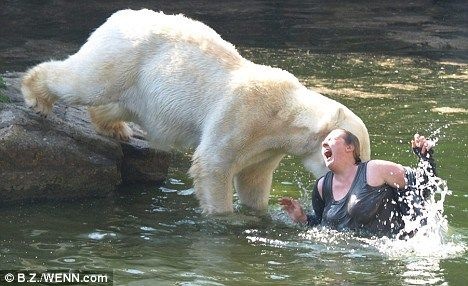
Let it be known that Yacks and I are mortal strava enemies from now on.
You poke the bear Hadji and shit gets really real...image

David, I think it makes sense in certain contexts to raise that front wheel. I think you would find little argument even amongst our club that in order to climb better, one should practice actually climbing. When you climb, you recruit different muscle groups when in climbing position, especially when climbing out of the saddle vs in the saddle. But even during a seated climb the angles of your hips, thighs, all that changes.

A lot of folks spend a lot of time and money working on their TT position. Part of that work is about getting your body more flexible, but also used to working out those muscles in a diff't position from your standard RR position. Of course, part of that is finding your personal best combo of power output vs aero efficiency. But for the sake of this discussion, we should focus on how changing position, changes your ability to produce power.

So, if it seems reasonable for folks to practice a TT position, then it makes sense to practice a seated climbing position. Of course most trainers can't really simulate indoor out of the saddle climbing due to the bike being locked into a single position. But seated climbing? No problem.

Finally, I think though to truly to simulate seated climbing you should adjust your cadence accordingly. Despite what Phil and Paul used to love saying about Lance's climbing style, I am confident he did not climb at 100 rpm. I would, if you are doing seated, climbing drills, gear up, and crank in the 60-80 rpm range. It's a good opportunity to work in some big gear workouts into your trainer routine as well.

My coach is always telling me to do stuff in the drops during indoor workouts. To me it feels totally different in the drops out on the road as opposed to the trainer and even more weird/wrong when I'm on the rollers….I do 90 percent of my indoor training on my rollers. It feels a lot harder/uncomfortable indoors and not at all equivalent when it comes to effort or muscle recruitment somehow

Yang:

1) Battenkill has some climbing but none of the climbs are that long, really. It's not like Airport Road stage of Catskills. The years I did it there wasn't a single climb more than 4 minutes long.

2) This idea that your seated position is different doesn't hold water. What exactly is different? Are your arms bent more because of the sudden fierce change in gravity? Come on. Unless you're talking about seriously wild angles it's snake oil.

3) lastly, these are marginal gains - which are useful ON THE MARGINS - which don't appear until after you're already training 20 hours a week, sleeping 10 hours a day and eating like a bird with beriberi. So if that's the case, then cool, get yourself some leg compression pumps, an inflatable mat to raise your front wheel and some wrist magnets to wear in your hypoxia tent.

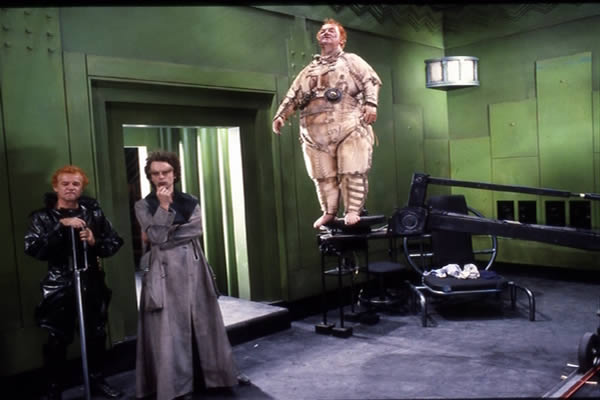
Otherwise, spend your finite mental engery  on shit that really moves the needle; accumulating minutes above 85% of FTP, not overdoing the food and recovery that would make the Baron Harkonin look like a workaholic.

I’m pleased to announce we’ve struck a coaching arrangement with Peaks Coaching. (PCG)

Head on over to the Peaks Coaching thread to learn more.


Kinematics, physiology, muscle force, contraction, torque as it relates to joint angles. These are fields of science and subjects of study.

I’m pleased to announce we’ve struck a coaching arrangement with Peaks Coaching. (PCG)

Head on over to the Peaks Coaching thread to learn more.

https://www.youtube.com/watch?v=Ra70O9nps6E
2) This idea that your seated position is different doesn't hold water. What exactly is different? Are your arms bent more because of the sudden fierce change in gravity? Come on. Unless you're talking about seriously wild angles it's snake oil.

When I'm climbing a steep hill in the saddle, I work my arms more to get my torso lower because it feels like if I don't, the front wheel will lose traction and I'll do a wheelie.  When I watch pro's going up a steep hill, they seem to do the same.  And when I'm out of the saddle on a steep hill, I'm more forward over my bike than when I'm sprinting on the flats.  I see the same with pro's.  People lean forward when walking uphill as well--when you go up stairs, you're emphasizing different muscles than you are when you walk on a flat road. 

I don't think it's snake oil.  Effective seat angle is changing relative to level ground, and the forces of gravity on your body are important.  But the benefit is probably more to your mental state than your physical. 
2) This idea that your seated position is different doesn't hold water. What exactly is different? Are your arms bent more because of the sudden fierce change in gravity? Come on. Unless you're talking about seriously wild angles it's snake oil.

When I'm climbing a steep hill in the saddle, I work my arms more to get my torso lower because it feels like if I don't, the front wheel will lose traction and I'll do a wheelie.  When I watch pro's going up a steep hill, they seem to do the same.  And when I'm out of the saddle on a steep hill, I'm more forward over my bike than when I'm sprinting on the flats.  I see the same with pro's.  People lean forward when walking uphill as well--when you go up stairs, you're emphasizing different muscles than you are when you walk on a flat road. 

I don't think it's snake oil.  Effective seat angle is changing relative to level ground, and the forces of gravity on your body are important.  But I do think that the benefit is small. 
The steepness is the issue, I agree. I think the gains are small and the utility for this race even smaller.


The steepness is the issue, I agree. I think the gains are small and the utility for this race even smaller.
I think that's basically my viewpoint, but I see it as a positive:  It is "low hanging fruit" that takes very little to no effort to implement and is either neutral at worst or beneficial at best.  With all training efforts being equal (i.e. I'm pumping out the same hard efforts either way) it becomes a freebie.

Battenkill for sure isn't a climber's race, but I'll tell you that trying to hang with skinny guys like Alyosha and David Hall up anything longer than the parks "hills" is tough.
Stop yer grinnin' and drop yer linin... head on over to the Peaks Coaching thread for a badass reply from TC!

If you haven't already, I highly recommend starring that discussion so you can get updates emailed to you.
The best way to get better at climbing is to practice climbing. Your body position is a very small part of what makes climbing different from riding on flat terrain.

The physics equations governing the turning of your cranks change substantially as gravity becomes a more predominant resistive force in comparison to wind resistance and mechanical friction. I know of no practical way to simulate that indoors, and while resistive trainers such as CompuTrainer might try to mimic gravitational resistance, they don't even come close to passing the "feel" test.
Warning No formatter is installed for the format not-found
@Gwynna LOLZ. Next time you're on a Computrainer, do a spin scan™? Or, watch the movie The Exorcist.
Gwynna, sorry I can't help with your wandering trainer issue but I have to say I'm a bit worried about the cat in the room. I've always locked our cats upstairs during trainer sessions for fear of ending up with thinly sliced cat all over the basement floor. Or perhaps your cat is just much smarter than mine.
Before I got a mat, I lodged the corner of the trainer against a bookcase because of this sliding phenomenon which would happen to me.  Since you already have a mat, you could buy some contact drawer liner, or carpet liner, from Bed Bath and Beyond or someplace similar, and cut it to fit under your mat.  That should help with the floating.
Also, smooth our your pedal stroke.  This may help in preventing the trainer getting pushed back, but you should be practicing it anyway.

My trainer is in the room with the cat box.  They occasionally brave coming into the room to use the box, and then it's the perfect climbing simulation because my breath gets labored, my cadence slows way down, I squint in pain and I sweat profusely while riding slowly.  
Warning No formatter is installed for the format not-found
My wife wants to try a spin class. Does anyone have a recommendation for a good local spot in the vicinity of Prospect Park, Gowanus etc?  She tried Soulcycle in W'berg, but it's a long trek from crown heights.  Thanks!
Avi
There's one on Flatbush Ave called Amy and the Brooklyn Team
Warning No formatter is installed for the format not-found
Equinox on Brooklyn Heights:
http://www.equinox.com/clubs/new-york/brooklyn/brooklynheights

They have a spinning studio --- which is great.

As a sidenote, once their studio is updated, and might already be, they'll be using software and graphics designed by my co-workers.
Thanks! Very helpful