Kissena Forum Archive

Training to Race: Faster, Stronger, Awesomer

2133 comments · 23940 views
Keep training.

We're entering that bizarre purgatory of time where it's supposed to be getting lighter out but it's still dark, you have little contact with other riders, the weather is all over the place and it's cold and snowy and rainy and overcast, you're getting over being sick, you are sick, you're worried that if you push too hard you're going to get sick again, the trainer makes your back hurt, your butt hurt, you're not going hard but you have a dehydration headache, you're riding outside in the dark and cold and you spend more time getting dressed than actually riding, and an hour of sleep in the morning seems better.

But something's nagging at the back of your thoughts.  
You want to be riding.  You want to fight this.

If this was easy, everyone would do it.  We're an elite group.  Riding chose us.

Riding, training when it's light out, warm, when teammates greet you with a smile and challenge your sprints, is awesome.  That's easy motivation.  But that's not today.

This is where the work is.  Being consistent.  Pushing through without motivation.  Swinging your leg over the top tube not because you want to, because you have goals, because it's amazing, but because it's 5:45am, or 7am, or 6pm.  Get on your bike because that's the time you're supposed to be riding.

You're building a base of fitness, and you're building habits.  Today.  This week.  This is how it's done.  
Join Zwift.  Post your rides on Strava.  Follow someone who rides more than you.  Squeeze out whatever you need in order to stick with it.

Keep training.
@Bruce van-Schalkwyk You've depressed me and motivated me in a single post. Keep it coming!
Keep training.

We're entering that bizarre purgatory of time where it's supposed to be getting lighter out but it's still dark, you have little contact with other riders, the weather is all over the place and it's cold and snowy and rainy and overcast, you're getting over being sick, you are sick, you're worried that if you push too hard you're going to get sick again, the trainer makes your back hurt, your butt hurt, you're not going hard but you have a dehydration headache, you're riding outside in the dark and cold and you spend more time getting dressed than actually riding, and an hour of sleep in the morning seems better.

But something's nagging at the back of your thoughts.  
You want to be riding.  You want to fight this.

If this was easy, everyone would do it.  We're an elite group.  Riding chose us.

Riding, training when it's light out, warm, when teammates greet you with a smile and challenge your sprints, is awesome.  That's easy motivation.  But that's not today.

This is where the work is.  Being consistent.  Pushing through without motivation.  Swinging your leg over the top tube not because you want to, because you have goals, because it's amazing, but because it's 5:45am, or 7am, or 6pm.  Get on your bike because that's the time you're supposed to be riding.

You're building a base of fitness, and you're building habits.  Today.  This week.  This is how it's done.  
Join Zwift.  Post your rides on Strava.  Follow someone who rides more than you.  Squeeze out whatever you need in order to stick with it.

Keep training.
                                                          (get a TUE)
FTP Test

Your Functional Threshold Power is a necessary number for training, since it allows you to set your zones.  And your zones determine how much work you're going to put in.  This is important so you don't go too hard, and so you rest after you have gone hard.

You need a baseline number, so you need to make the effort.  You should, ideally, check this each quarter, or just after you've finished a training block as part of your cycle, say, from Base to Build.  And this should be done on the trainer for a trainer FTP, and on the road.  These numbers may be different, with the road higher, until you get to be more practiced and the numbers start to even out.
Though I think, in part, the road is higher because you're just so damned excited to finally be outside.  And you're in better shape.

I don't like the name Test, since it implies the possibility of failing.  Think of it as an extended V02Max Effort.  You can't study for the FTP Test.  You CAN practice for the V02Max Effort and efforts just below V02Max.  
An extended effort should be done after you've rested, and when you're feeling good (not sick), got enough sleep, have your head straight, can keep focus.

While the number is important, it does not determine how you're going to do in races.  The main number is Watts/Kilogram, so how much you weigh, and how much your bike weights, matters also.
But racing is also about bike handling, skills, drafting, teamwork, smart decisions, and the guy in front of you getting a mechanical.
And about confidence.  When you go off the front, you are out there alone.  Embrace it.

When you do your extended effort, be sure to wear a heart rate monitor, because at some point, your power meter will crap out.  Then you'll train using HR for that day, or week.

Zwift has a nice FTP option as part of their workouts.  Youtube has some good videos of people doing it.
If you try and can't do it, you need to both train a little harder, emphasizing longer efforts, and reduce your watts during the effort.  I know you want them to be high, but too high, and you don't get your FTP.
If you've done it and you're disappointed, don't be.  This is a baseline number that lets you set your zones.  If that's the number you could produce, that's where you need to be training.  Train harder, hit all your targets, and bring that number up.

On a personal note, I ignored all that advice and quit my effort recently.  I couldn't hold it.  I was going too hard (no I wasn't), and I'm battling an internal competitiveness (Go, Team!).  I've rewritten my training schedule with longer, hard efforts, and more rest.  I need a new number, so I need to work up to completing the full 20 minutes.

I follow a rider who rides in my Zone 5 as his tempo.  It's kind of frightening, and keeps me motivated.
I did mine on Jan 19th; first time in a *long* time I've been organized enough to do it.

It takes a bit of practice to be able to gauge your effort, regardless which of the eight zillion protocols you use.
i think i find it much harder to do an FTP test on zwift than outdoors...but then again, i've only ever done one on zwift
Some people insist on two tests (!) because indoor and outdoor efforts are so different. 
I just did my FTP test and the second half of it was almost pure bargaining with myself in order to stay strong mentally.

Like Bruce said, the FTP isn't the end, it's only a marker to help you train smarter, stronger, awesomer.  So even though my FTP is now higher and I feel a sense of pride and accomplishment, I have to remember that the workouts are now going to be harder... 
i just aborted an ftp test not even halfway through.  i'll do it when i don't have a sickness

edit: i might just make a personal rule of always doing these outside.  any good roads in NJ/9W come to mind?  does river road work well for a 20 min all out effort?
The effort is definitely psychological.  It's supposed to demonstrate what we can hold for one hour, yet we struggle for 20 minutes.  I believe our bodies can handle it, but the mental training is what we ( I ) need to work on, to hold that effort, and to push passed the pain, the doubt.

Brendan, you don't want to tax yourself when you're not 100%, but let me throw this out at you.  Could you have held that effort at 30 watts lower?  20?
If you're not feeling well, but you're training at a high FTP, making the effort at a lower wattage would set you up to train at lower watts, which may not be a bad idea while you recover, and then you can make the effort again in another 6 weeks or so.

These are all good reviews for when, and how, to push oneself hard.  If you're really not feeling up to it, don't do it.  The same goes for general training, if you're not hitting your targets during intervals, then wave off and stop, recover for a day, or longer.  It's February, and there's a long season ahead.  The time to push will be here, with warm weather, short sleeve jerseys, and ice coffee.

For me, I generally lower into a valley when I come back to training after the first initial excitement, and seem to be there now.  It's a long hike back up, but once I'm at the peak, the views are totally worth the climb.
Brendan,

I tried a river road ftp test last year. It was pretty tough to keep the effort up on all the downhills and I spun out a bunch of times. I would think 9w would be better. Bear would also be a good spot if you can start at 202 and then up perkins. Though you might be able to get up there in under 20.
Brendan, there are a number of protocols you can use that have different time commitments. They all produce an estimate of FTP. I think a chap like you can do some research and check them out.

I had a sweet spot on 9w for my 3 mile CTS sufferfest (yes, it's only 7+ minutes) but you can also use your fancy new kickr to do a ramp test 
If it's any consolation, this is usually how I approach field tests...

https://nyti.ms/2jRsCub
^my link above is kinda shitty. I think it's like 75% of your best minute power from the RAMP test is FTP.
#ymmv
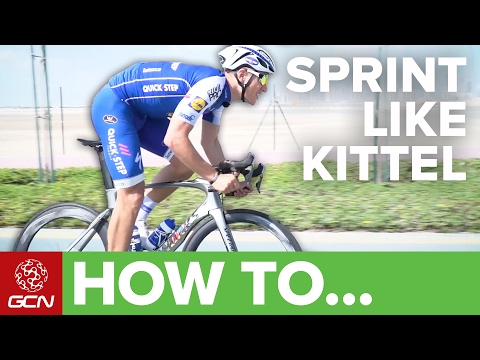
GCN // Ultimate Sprint Training Tips With Marcel Kittel:
https://www.youtube.com/watch?v=02EgJPUsEjQ

Eurosport // how to win a sprint:
https://www.youtube.com/watch?v=uR7aV_O3KKg
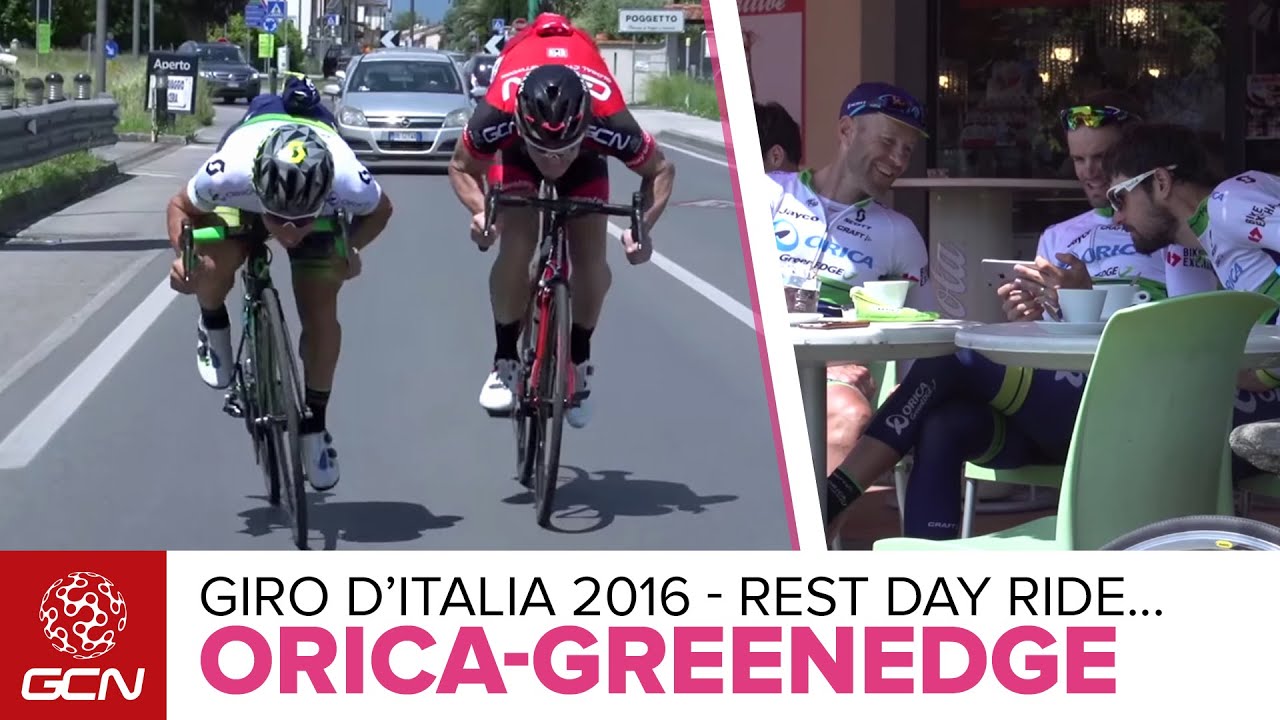
^also doesn't hurt to be aerodynamic as f*ck


https://www.youtube.com/watch?v=IsB_Ad_0p9g
Let's face it – most of the miles a lot of us are putting in right now are indoors.

There are of course all of the downsides to indoor training: it can create bad habits, you can get sloppy with your posture and handling if it isn't on rollers, it makes you a softie in general because you're not braving the cold, etc…

To me though, indoor training has one suuuuuper rad and luxurious benefit that "real" training doesn't have: the ability to put on a pair of headphones, and listen to something LOUD and FAST. This is a total treat to me, and is the complete opposite of the experience I have when I'm out on a three day bikepacking trip in nature – often I find on those rides that one or two songs will rattle around in my head over the course of the day, and they sort of become mantras.

My listening habits generally follow this pattern for indoor training sessions:

1. warmup
2. something uptempo but pretty chill
3. intensity goes up one notch, starting to feel the burn
4. music gets faster, more energetic, positive, and loud
5. music takes a dark turn
6. pure aggression to finish as hard as possible

It varies depending on the effort - i.e. for an FTP test I'll typically just put on Slayer and call it a day. Here's what I currently have in rotation:

https://open.spotify.com/user/finoradin/playlist/1i7cKJDW93l4Shv8Ddd1Ya

Curious to hear what you all like to listen to while suffering indoors.

I subconsciously drift my cadence to match the bpm of the song playing and a lot of "workout" genre songs (EDM or historical equivalent) seem to hover around 120bpm, which when each leg follows along halves that and produces a 60rpm cadence - not good.  

Standard rock fare ranges from 70-100bpm which is more in tune with what you generally want for cadence, but I can't get pumped up on rock as training music.  There are certain 90s era skate punk that are pretty spot on, but there's only so much Green Day, Blink 182, Reel Big Fish, and Save Ferris I can take in one sitting.

I eventually found that I perform my best on indoor trainers when the drivetrain is audible or with white noise in the background, stuff that I don't have to focus on and will not match cadence with.

Someone should chime in with Vlad's choice of music during computranier sessions.
Mostly this


At the start of cyclocross season, started to collect a few songs to make runs more bearable... lately been playing it when riding zwift indoors.

usually play them in shuffle

https://open.spotify.com/user/groovylab/playlist/3ZRzb493egHziZfpgl1qYI
That feeling when you're hitting that 3rd interval, that 5th hard effort, you've already done a couple, you're beat, you've got other things on your mind like work and money and family, people are already talking about racing and you've got three more minutes at this power level, and 2 more intervals ahead of you, you're keeping in mind that if your effort drops by 10% then you are simply not holding that level so you're making a calculation for what a 10% drop looks like and you look up realizing you've dropped 20% and so you just plain stop because your legs are burning and they're swelling and you're breathing hard and you're sweating.  So you just stop.

The gears click easier, your cadence shoots up, your power drops down.  
And you feel awful.  You gave up.  You're not supposed to give up.  These intervals are in your future, you'll have to do them.

It's easier now, and you don't know that stopping was worth it.

Yeah.  Well, we don't talk about that.  It happened.  It happens to all of us.  
We move on.  Those intervals are in our future.  We work up to them.  We get our head straight.  

Understand this.  Things in our lives don't get in the way of our cycling focus.  Our Cycling Focus puts things right in the rest of our lives.

Rest up.  Try it again.  Keep trying until you hit your goals.
We don't give up.
Character is defined by how we behave when things are difficult.
This is difficult.
Back at it tomorrow.
Just checking in.

We've got more crap weather on the horizon.  Cold temps, and then warming to the 40s, 50s and rain.  It looks like this is how things are going to be.

At least with winter, hard weather is understandable and a warm day is a gift.  But now, with the days getting lighter and actual hope blooming, finding motivation takes a different turn.  Instead of simply pushing through the weather, as we do in winter, we're now battling ourselves, pushing through that hope dashed by a cold front.

Well then, change up that type of motivation, and change our reactions to it.

Continued bad weather, have to get on the trainer yet again, nervous that you're behind in miles and time because of a cold month?
Use this time to your advantage.  Not all bike fitness comes from the bike.

Cross-train, man.  How's that core workout going you started in January and then stopped. . . in January?  Yeah, you thought I didn't see that?  Jump on it again.  How can you be disappointed in bad weather when this is yet another opportunity for you to do crunches, planks, and all sorts of menacing, gut-burning workouts?  Rain?  Yes, squats!

Yoga. Stretching.  These are things you need to be doing anyway.  This is a good opportunity for that to happen again.

Scheduled for a 4 hour ride?  Hit the trainer for an hour, hour and a half, then use the rest of the time to do a core workout, stretch, and try that homemade Gel recipe.

This is also a great time to re-check your goals.  You can broaden some, and narrow others.  Add to them, and check off those you've already met.  Did you have a February goal to get on the bike at least 15 times?  That's not a big one, but by the 14th ride on the 27th, you know what to do tomorrow.  Set one for March, also.  You've got a few more days.

Ugh, so many other things to do with that time!

Raining?  Check your equipment.  Strip it down, clean, regrease, new parts.  

Come May, June, when you're doing time in the saddle, and enjoying riding, it will be because you're limber, your core is solid, and your bike is rebuilt.

So close, man, so close!  One more day!  Then it's here.
Keep at it.
Get outta my head, Bruce! Ha.
+1 to so much of this.

- Check your bike. Now is the time
- Everyone is lacking outdoor (read: long rides) fitness including your competition
- drop and give me 20! Pushups and burpees are good for you

Lastly; SLEEP. Remember training is how you click the "order" button on Amazon for fitness, but sleep is when it gets delivered.
I read through the forum and watched those sprinter videos but not seeing anything on technique. So thought I would pose my question to the group. Basically when I sprint and really push it my bike comes up off the ground with each pedal stroke. clearly coming off the ground is counterproductive bc you lose traction. so is there such a thing as sprinting too hard, do I need to work on my pedal stroke, or is there a different answer all together? 
Can we assume that when you write "my bike comes up off the ground" it is only your front wheel?
its the back wheel, from pulling up. 
same thing happens to me, we just need to ... do something differently. when you figure it out let me know!  

when i'm concentrating on not doing it it doesn't happen but when i'm just going all out, i feel the rear wheel hopping off the ground.  i think it's from having my weight shifted too far forward
I think that's right, weight too far forward. but pedal stroke could also play a part. hopping from continuing to pull up at the top of the pedal stroke? not sure tho. 
its the back wheel, from pulling up. 
Is the nose of the saddle scraping your butt?

If not, you need to work on having your body further back.  keep going back until you start to feel your saddle on your ass.

you also might be in too big a gear.  

A few things to try.

first, big gear sprints while seated.  In the drops, big ring, maybe a 13 in the back.  starting at 6-10mph.  it takes work to hold your body down.

second, start your standing sprint from higher cadence.  Like 90rpm and shooting for 120rpm.

third, play around with hand position on the drops, both standing and seated sprints.  move your hands toward the brake levers for some, down to the flats at the bottom of the drops for another.

If guys like Greipel can hold their rear wheel down, I'm sure you can figure it out.