May 24, 2019 at 03:25 PM
I remember there was talk of going to the velodrome to work on sprint trains. Is there any plan to do that sometime soon? It might be fun to do with FBF coming back around.

Yes. I was the one talking about it, I think.RobertMullen said:I remember there was talk of going to the velodrome to work on sprint trains. Is there any plan to do that sometime soon? It might be fun to do with FBF coming back around.

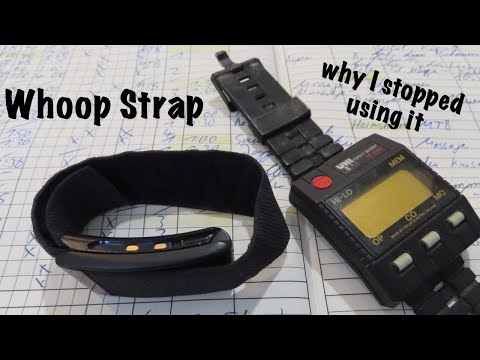
A few people have asked me about the WHOOP band that I have been wearing. I am a bit of a geek for data and have been wearing a WHOOP band for 24/7 since January and wanted to give the club my review of this interesting performance device.
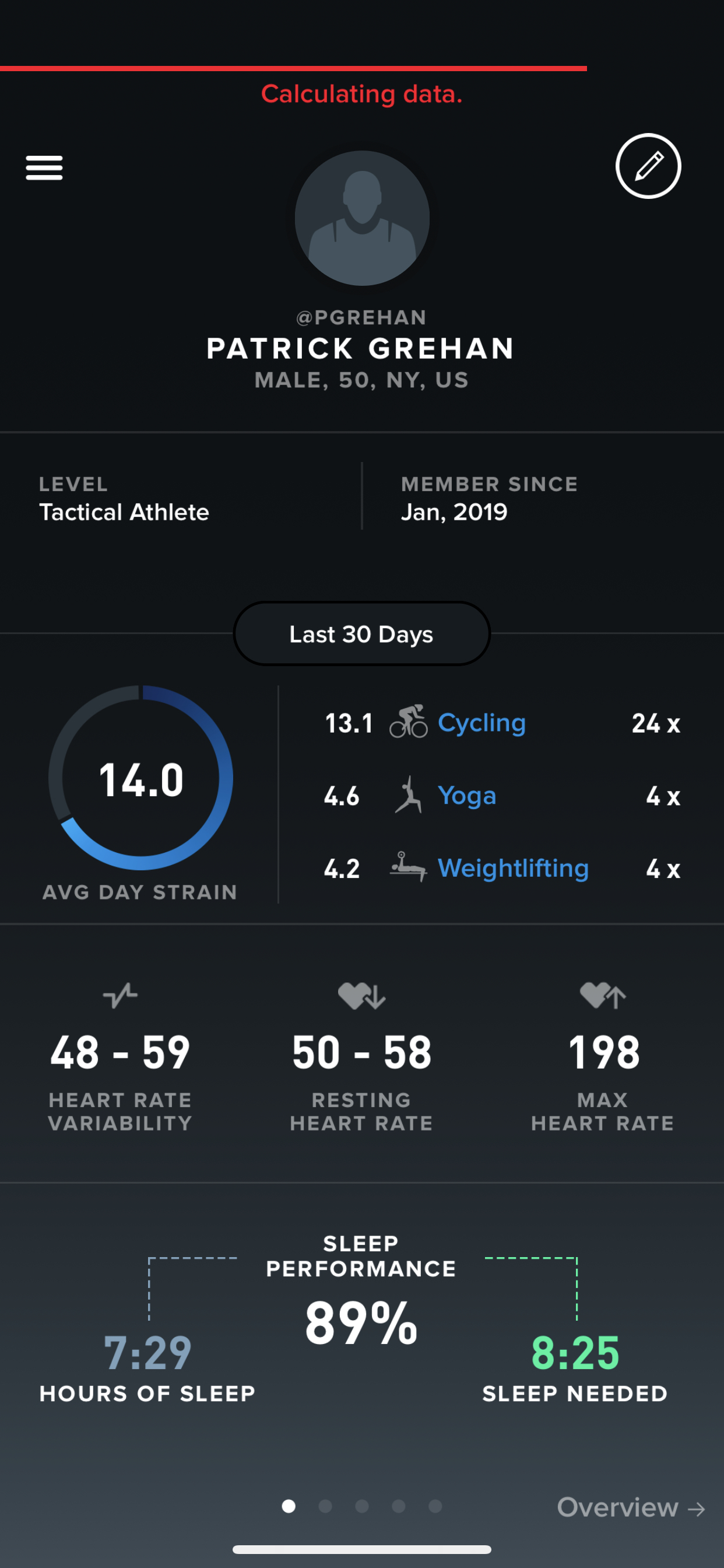
First, what it does. The band looks like a Fitbit, but has no screen. It simply measures heart rate and heart rate variability (HRV; the time between your heart beats) and provides you with loads of data on their app or website. While it will give you a measure of strain, we already get that with our heart rate monitors and power meters. One benefit of the how it measures strain is that you wear the strap all day so you also get so see how much strain you take on at work, in the gym, and other everyday activities.
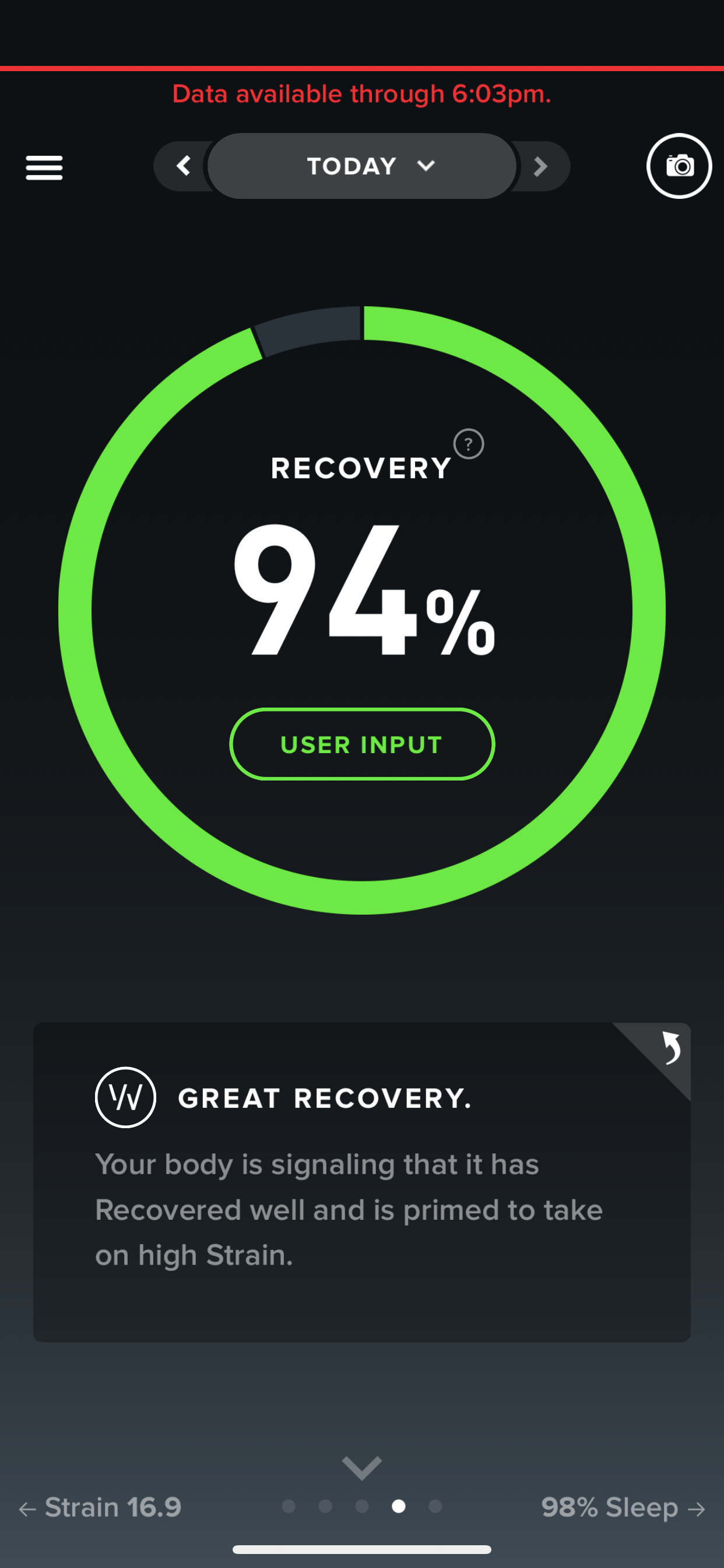
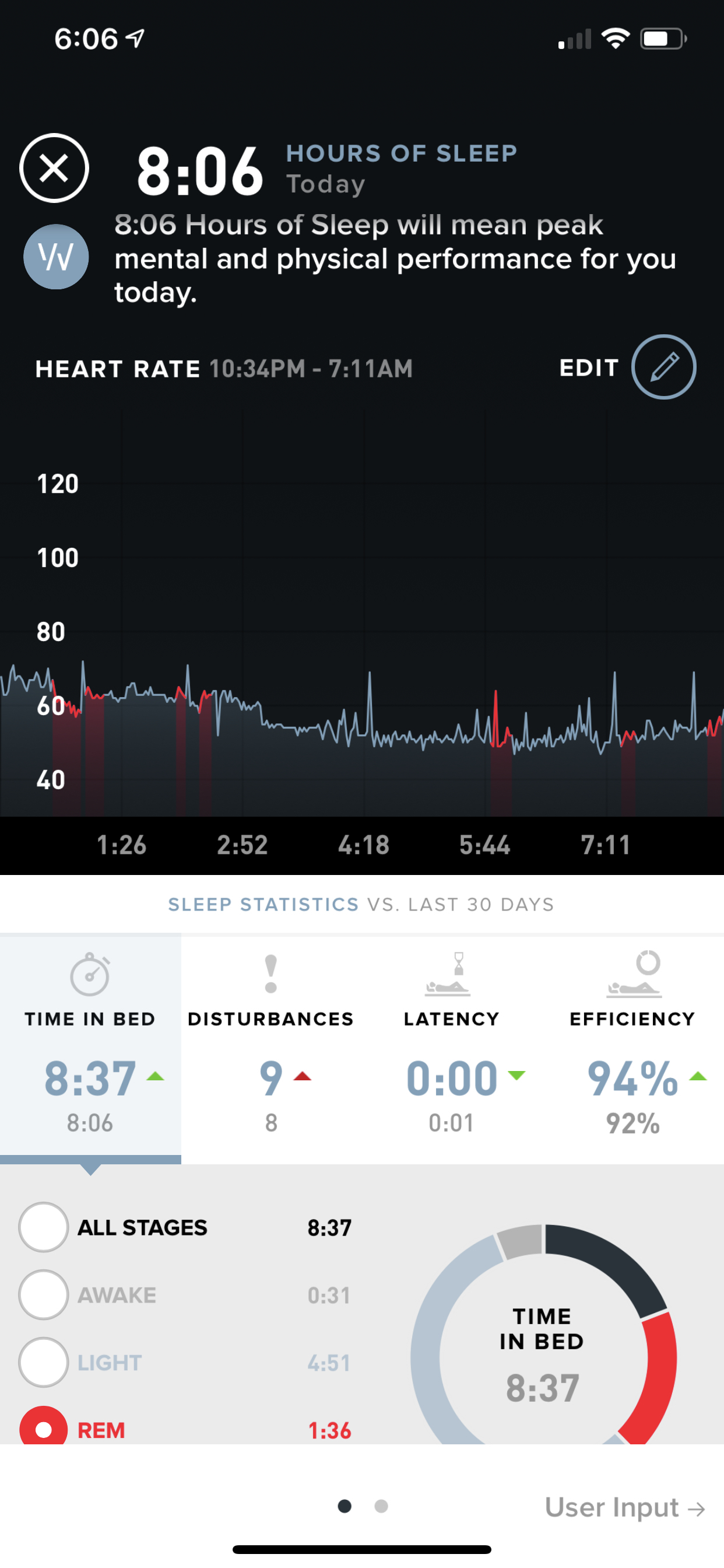
What really sets WHOOP apart is that it measures something that no other device (that I know of) does: Recovery. Specifically, it evaluates your sleep and how rested you are for your next workout each day. I like being able to see the quality of my sleep. Not just how long I slept, but how often did I wake up? Or how much time was in deep sleep, REM sleep, light sleep? I find it useful to see how restful or fitful my sleep was as it does not always match with my impressions in the morning. Each morning the app gives you a metric based on your sleep, your resting heart rate and your heart rate variability while asleep.
The main recovery metric is presented as a range from 0-100, but is simplified as categorizing your recovery as green, yellow or red. Green means you are well rested and will get maximum benefit from a hard workout (or are ready to perform well at a target event); yellow means you are somewhat fatigued and may want to adjust your training plan based on your goals; and red means you are poorly recovered and would be well served to let your body recover by reducing training load. As the season has progressed I see I am able to do hard workouts for more days in a row and still stay “in the green.” Note that I have found these categories to be pretty informative, but they are best examined as a multi-day trend in the context of your current training plan/racing. If you are in a stage race you might drop into the red, but that wouldn’t mean that you should stop your race (unless you are getting really sick). A couple of times I was surprised to be “In the red” only to discover later that day or week that I was coming down with a cold. The band has helped me become more attuned to my recovery.
So what is HRV? You can look it up, but essentially our hearts do not beat like a metronome. The sympathetic and parasympathetic nervous systems (which regulate your body’s “fight or flight” and “rest and relaxation” responses, respectively) directly impact heart rate variability. Somewhat surprisingly (to me) is that the more stressed you are, the less variability between heart beats whereas the more relaxed you are, the more variability between beats. The reason this has athletes using the WHOOP band is not just to check how recovered they are, but because research conducted in the 2000s demonstrated significant performance improvements when athletes trained hard on days with more HR variability (more recovered) and trained easier on days with lower HR variability when compared to control groups that followed a standard training plan.
I picked up my WHOOP following last Cyclocross season. Last season I used Tim’s polarized 80/20 training plans. I was training fewer days with intensity (although my high intensity days were definitely high intensity) and riding more days at endurance pace. Not only did I find myself as fit if not fitter than prior CX seasons, but I was able to race from September through December (my last race was on New Years Eve) without getting burned out, which had been a problem in the past. This got me to pay closer attention to recovery on the bike (endurance and active recovery) and off the bike (yoga, massage, etc). The WHOOP strap helps me tweak my training plan so that I feel fresher when I want to and so that I can strike a better work/racing/family balance. One interesting thing is that you can record things you do before sleep and see what impact they have on sleep. For example, the app will give you feedback how (if at all) drinking in the evening or having caffeine late in the day impacts your recovery.
So, I recommend the strap if you think any of the above data would be useful to you. A couple of details. First, its a subscription service. Generally you buy the band for $180 and get a 6 month subscription (or $120 for 4 months) and then afterwards pay a monthly fee ranging from $18-30 depending on whether you pay month by month or make a year commitment. Is it worth the money? I think of it similar to a power meter. We can train and race and get stronger without one, but having the data can help us better understand our bodies and get te most our of training.
One thing I have to bring up is that I have my questions about the reliability of HRV taken by itself. I like that WHOOP bases their recovery metric on several pieces of data as I think HRV data tends to fluctuate during the course of your sleep (I warned you that I am a geek for data). A few years back I tried out another app to record HRV and found I would get different results even when I measured them right after each other. It is my impression that HRV is likely to change based on when it is taken. The differences may no be huge, but I bet they are large enough to that it wouldn’t make sense to make detentions on that number alone. Therefore, its most useful when looked at with other data and as part of a several day trend in the data. There is a VeloNews podcast in which they gush about the WHOOP and interview Mountain Bike World Champion Katie Courtney, who uses WHOOP and makes a similar recommendation. Jeremy Powers also gave an interesting podcast interview recently on the WHOOP podcast. He was using it last year when he was coming back from serious medical issues.
If you decide you want to purchase a WHOOP, you can use the following link and get $30 dollars off your purchase. Full disclosure, I get a free month if you sign up with my code. https://www.talkable.com/x/EjkyAI
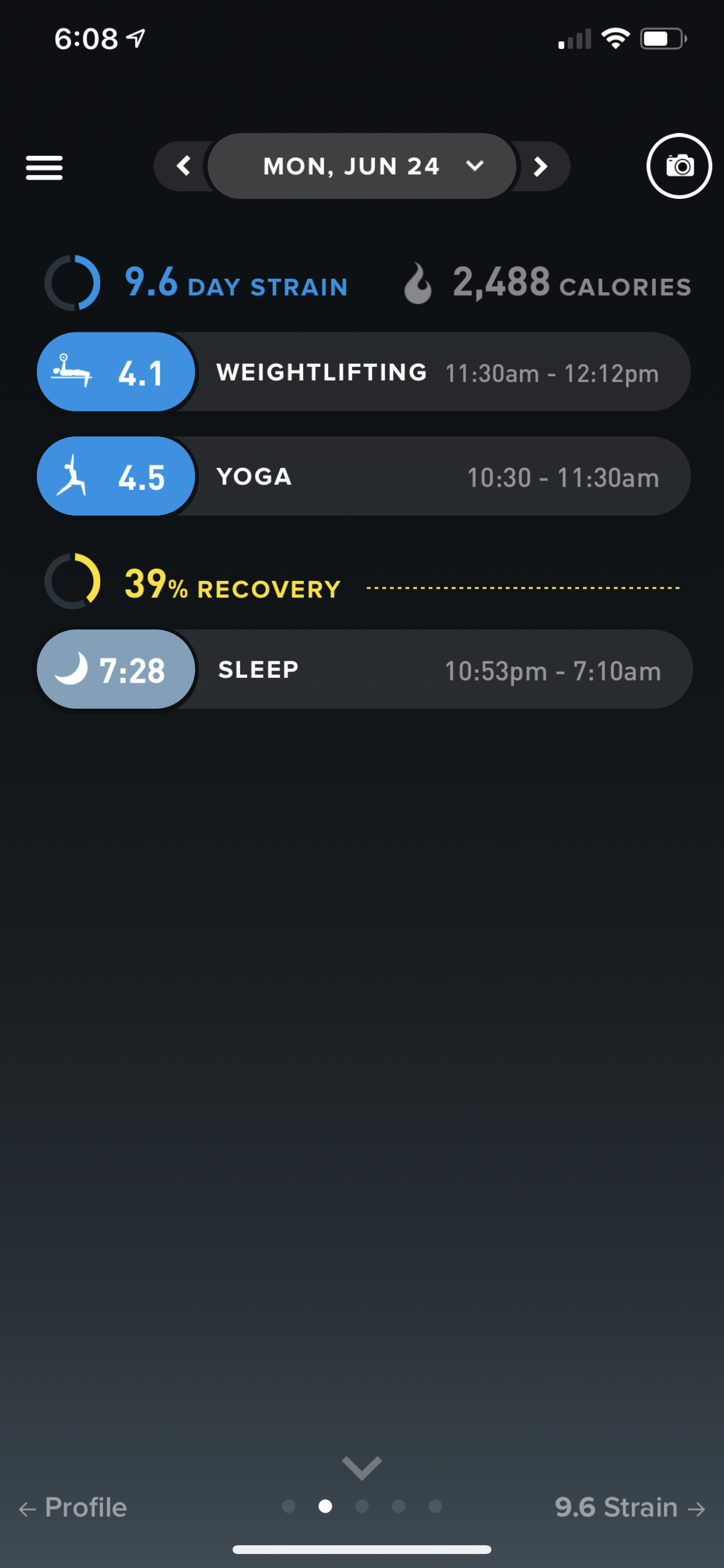
Here are a couple of iPhone screenshots:




awesome. amazing in this world of super specificity and data, most pros just go out and ride long and hard. let's go ride bikes!Mark Taylor said:

Huge #YMMV on this one. It is true most pros do nothing like the specificity amateurs do but they also average 200-300% of the volume.eloy said:awesome. amazing in this world of super specificity and data, most pros just go out and ride long and hard. let's go ride bikes!Mark Taylor said:
For sure! Didn't mean to imply otherwiseMark Taylor said:While i agree with Jules, i think its still important for even amateurs to have FUN
This is where powermeters combined with a good interpretive program really make a difference.Jules said:
Figure out what twenty to thirty hours of endurance is when translated to 8-12 hours and bring your asbestos pants!
You now have the ability to build a custom plan leading up to your goal event with Plan Builder. This has been added to Early Access and is ready for beta testing!
Cyclists rarely have a single event they are working towards, and the amount of time to their goal event varies widely from person to person. Training plans exist for just about every cycling discipline, but only account for the ideal scenario in which a single goal event is targeted in the future. Until now, plans had to be pieced together for each event.
Plan Builder allows you to build out a custom plan leading up to your goal event(s). It takes into consideration the unique demands of your goal event, how much training stress you can tolerate, and what your schedule is like when building your plan. The resulting plan will automatically be applied to your calendar so you can start training! Note: Plan Builder is currently only available on the website, but is being added to our desktop apps now.

You can enable Plan Builder access by visiting https://www.trainerroad.com/profile/early-access 722. From here, select “Enabled” for the Plan Builder feature, and you are all set! You can turn off Plan Builder as well, and we encourage you to share any feedback you have about the new feature!
Launching Plan Builder 245 will walk you through a series of questions needed to build your plan. These questions include how much time you’ve been training recently, what volume plan you’d like, and your experience level.
You’ll then enter any goal events for the year, pick your training days, and check out your plan. Your custom plan is designed to make you as fit as possible for your goal event(s), and is easily added to your calendar so you can start training!
I tried looking at your document. The download didn't work.PatrickGrehan said:
I can see in the training behavior chart where I was recovering from injury (and therefore not training optimally) or where I was climbing the alps with Jeff and Anthony (and therefore overtraining).
 https://www.youtube.com/watch?v=IfthTwzcoGU

 https://youtu.be/XzQJzDzXBG4
 https://youtu.be/8ZBAoKh89Oc