Road & Bridge Conditions-H20, Dirt, Glass, Paving, Closures, etc
I hear there are going to be public meetings scheduled. When I find out about them, I'll get word out.JohnMalcolmson said:^ EVERYONE in the club should fill this out if they value being able to ride/race in CP. It's an ultra biased survey—cyclists/scooters are lumped together and questions are stacked around pedestrians getting priority.
There's a bit in there that says they are planning to make sure that the roads are fully paved over the weekends. Something like milling the road Monday-Wednesday then pave Thursday-Friday.mugwump said:Any official word on how this will impact riding and racing for the next five weeks?

Team,
As you know yesterday the Prospect Park Alliance presented the new safety study, done by Sam Schwartz (a consultant)
You can find the actual presentation here: https://www.prospectpark.org/wp-content/uploads/2023/03/Prospect-Park-Drive-Safety-Study_March-2023.pdf
The survey monkey to provide feedback (consider reading my notes below before submitting) https://www.surveymonkey.com/r/FLRJBZ6
The PPA release (which includes the links above): https://www.prospectpark.org/park-drive-safety-study-roadway-improvements/
I represent the Kissena Cycling Club and cycling interests in the Prospect Park Alliance Community Committee and the Park’s Safety task force. Stephen Aschkenes (KCC’s President) and I joined Monday’s presentation
Won’t get in the all the notes from the presentation, but here are the quick short term highlights
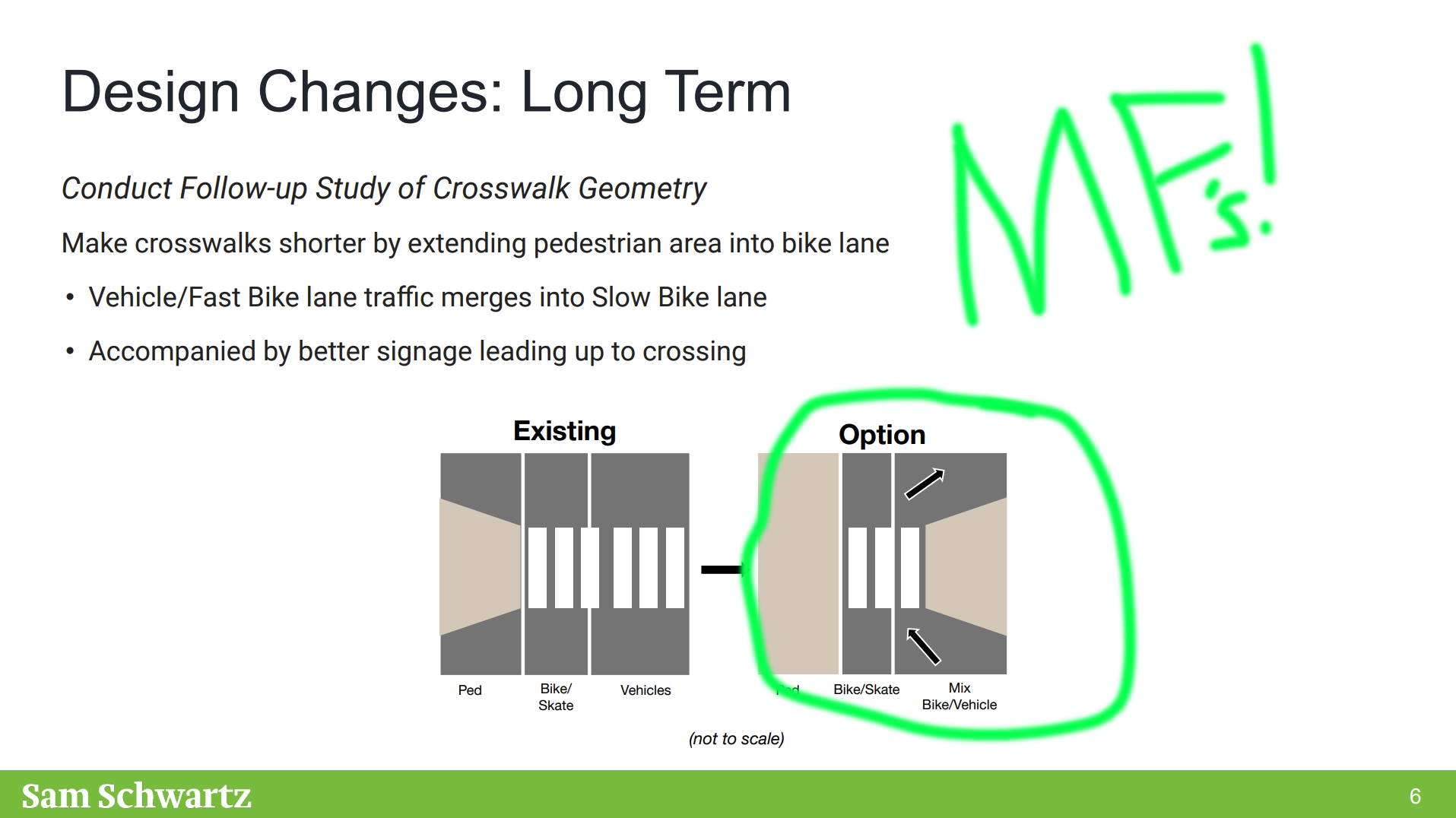
One of the new recommendations is adding a new pedestrian lane on the right size (outside perimeter) of the roadway
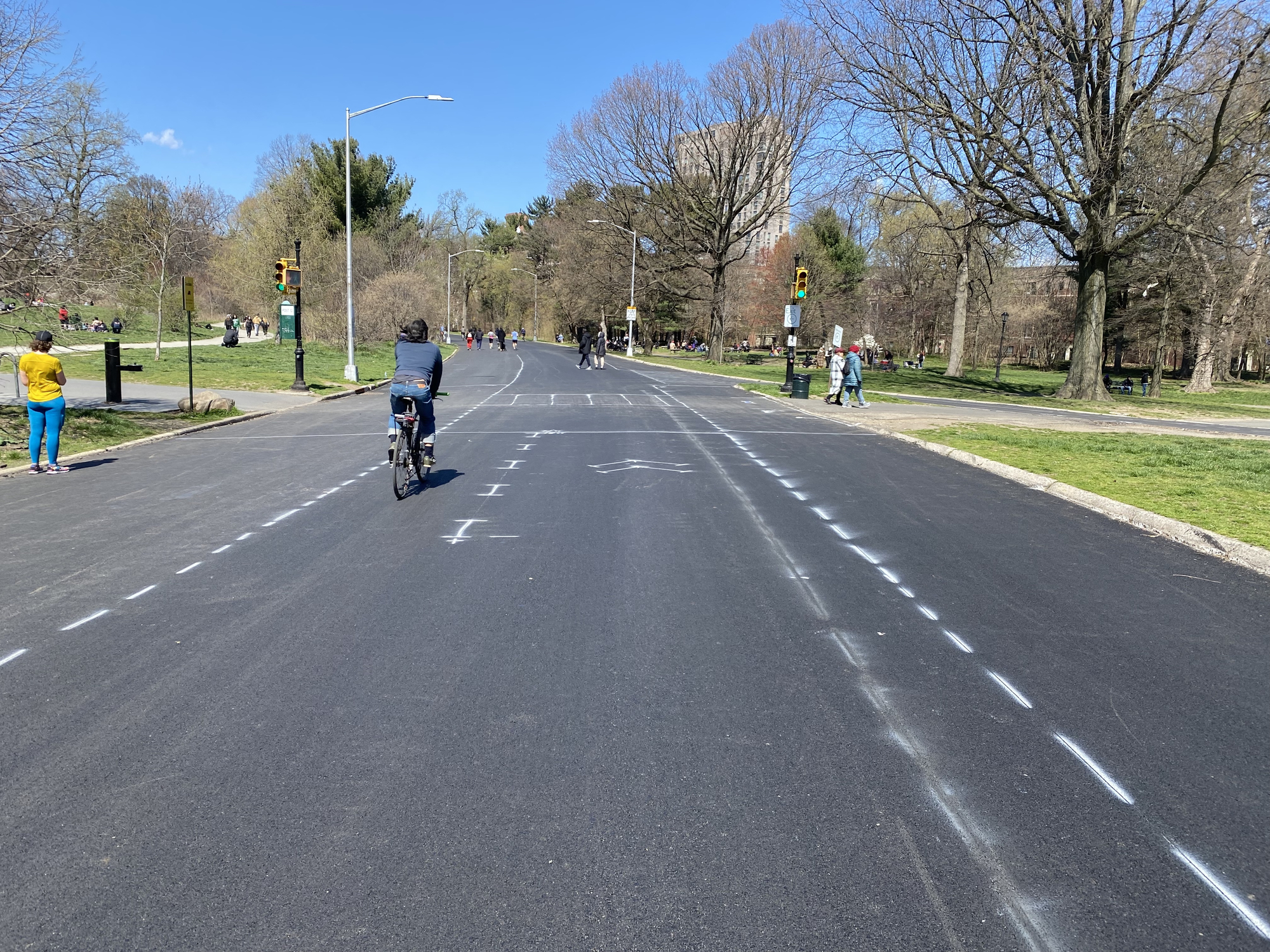
The bottom part of the roadway will be repaved next week (from the Parkside entrance to GAP)
The DOT plans to pilot the new right side pedestrian lane on this repaved section
Most of the community committee expressed concerned on this idea
It will likely cause confusion
The pilot is only for half a lap, adding confusion
Pedestrian on the outside perimeter, might cross the bicycle lane to the inside pedestrian at any point, rather than how it is now at marked cross walks
A good portion of the pilot section, actually has a sidewalk on the outside perimeter a foot or two from the roadway – this is of particular concern for me, as it could be an example of how unfamiliar the DOT is with the park.
Aside from the outside perimeter pedestrian lane, there was a call from reinstating and reinforcing Kissena’s and CRCA’s Park Riding Protocol. Especially about having recommended training hours. I will reach out to CRCA to coordinate.
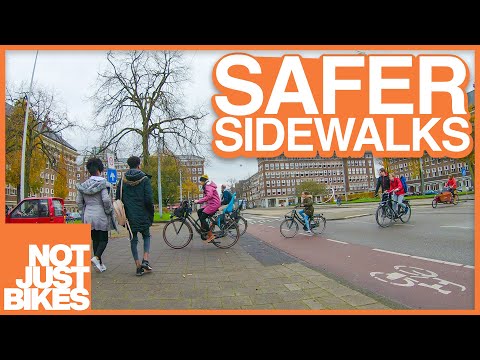
https://www.youtube.com/watch?v=9OfBpQgLXUcThe one good thing I see is maybe at the pinch points, racers will be less likely to hit the curb—seen some horrorshow results from that.
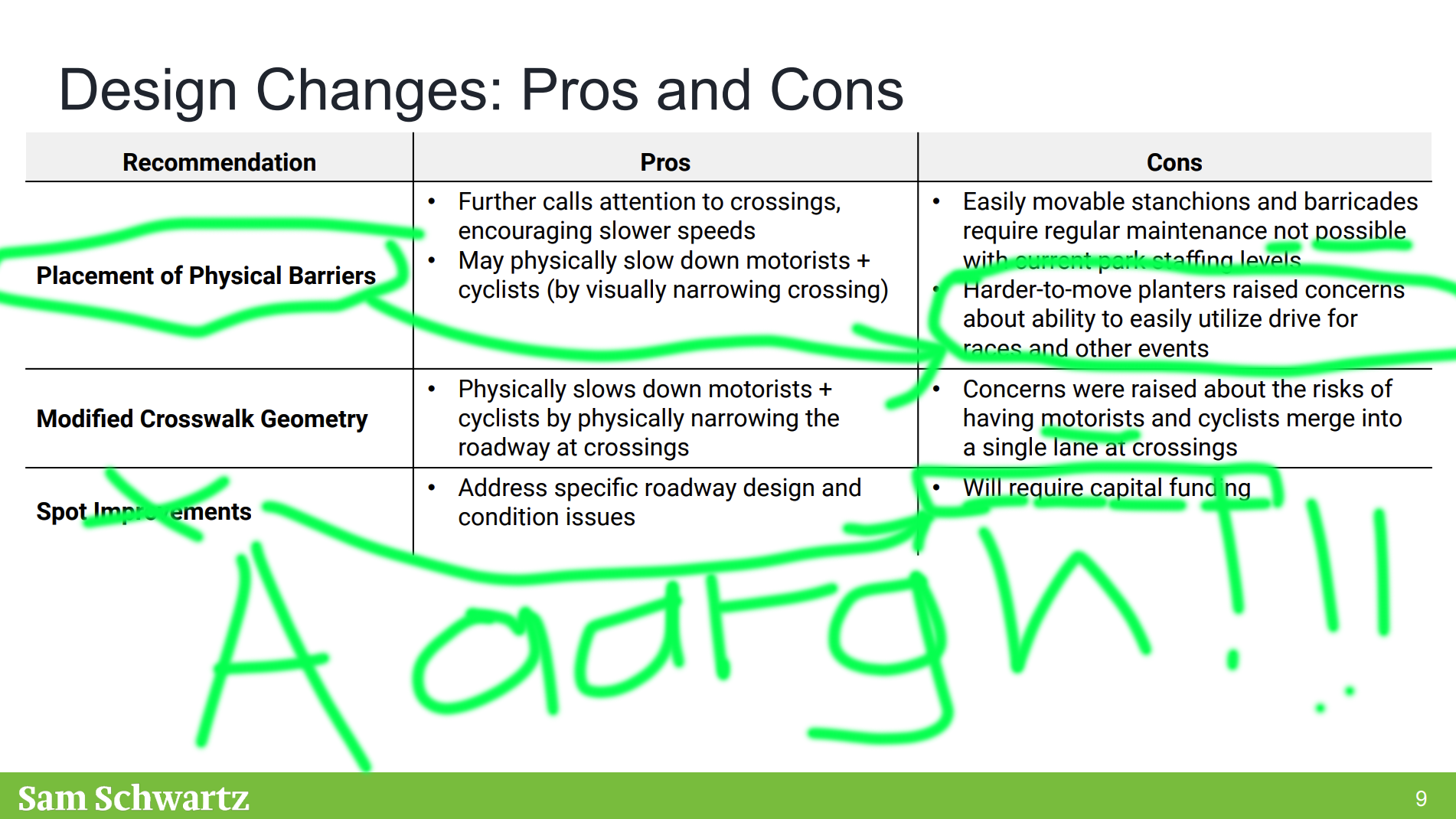
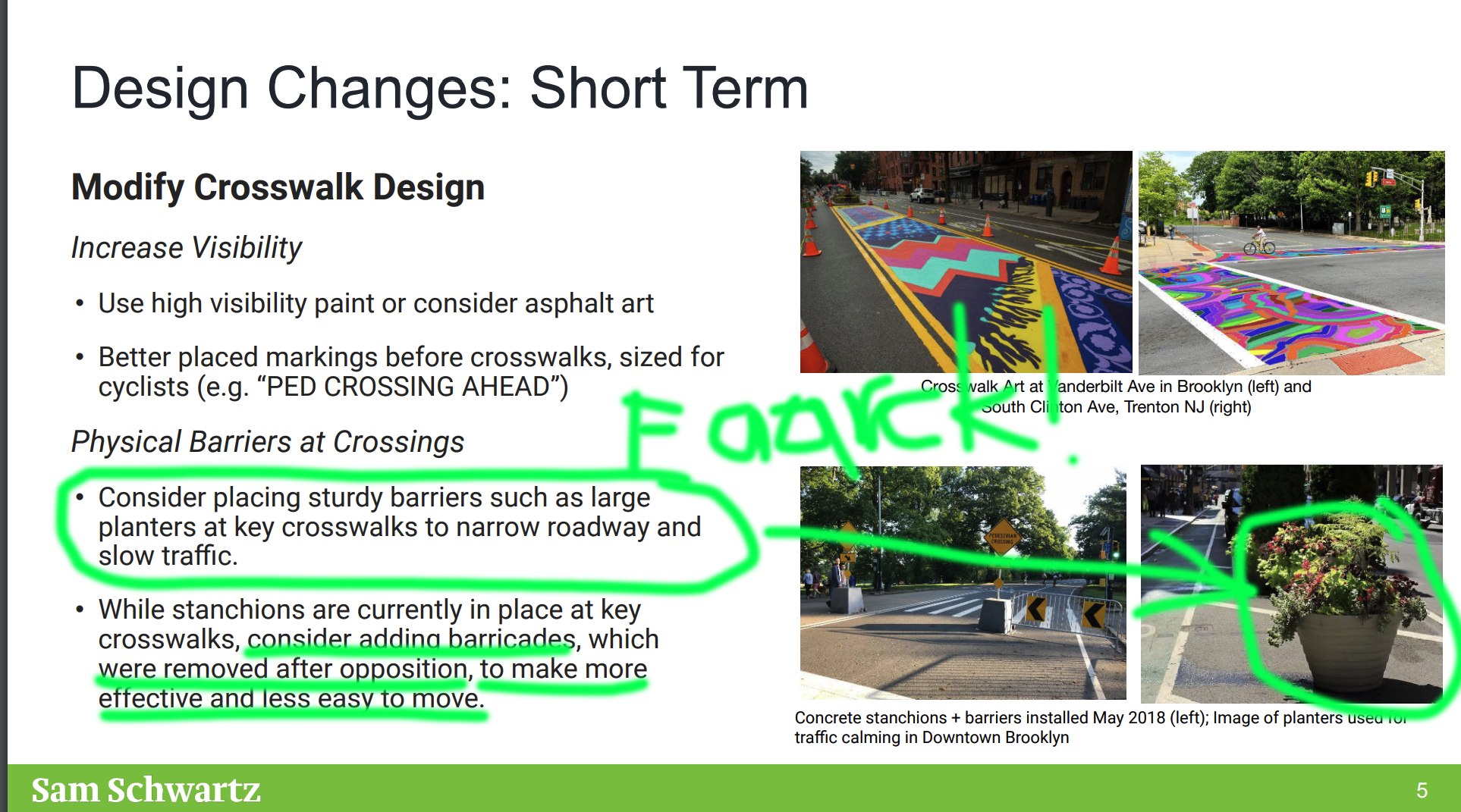
The study seems to make the point, that they heard us on the physical structures.
Like I mentioned, there is a lots of nuance to this. For example, PPTC president pointed out that the "safety study" did nothing to help the issue that EMT vehicles can't easily find accidents in the Park -- there are supposed to be numbered light post to resolve this, but somehow it was not part of the study.
Another crucial point is the DOT pilot was decided before being shown to the Community Committee (meeting Monday night, press release Tuesday morning) -- had they given us time to respond, they might need to consider something else.
I spoke with a park worker this morning, a guy who came out to see Tom Mains. He said they weren't consulted at all. He said the other park workers think this is terrible for many reasons. It makes it harder for regular park vehicles just doing their thing. It makes it harder for emergency vehicles. It makes all events more confusing. It makes it harder for vehicles to safely enter and exit the park.
I just read the official press release from the DoT and it makes it seem like they took everyone's input, but what you're telling us is that this was presented as a fait accompli. Which undermines their message-and strikes me as a place to push back. Along with everything else.
All,
The park worker and Tom said the repaving should be done in sections. They mill for two days, pave for three days, leave for the weekend repeat. There should be smooth pavement on the weekends, just no line paint. I'm taking that's a good thing considering.
https://www.nytimes.com/2023/03/02/nyregion/central-parks-drives.html
Looking at the proposed--soon to be real--"pilot" plan, it strikes me that perhaps one of the reasons for it was so peds could go from GAP down to the lower part of the park by staying on the outside and vice versa. As you point out, the lower part already has a sidewalk paralleling the road much of the way.
So, was there any discussion of making the paths more obvious (or signed better) through the Vale of Cashmere and the Natural Exploration Area? Or is the point to leave those untouched? I know there are routes through, but one goes close to Flatbush and the other goes under the Endale Arch; some people lack the kind of vision necessary to take those.
For those who haven't seen, here's a map of the park. https://www.prospectpark.org/visit-the-park/park-map/
word on the street that a regular park user that works at Sam Schwartz, warned against the right lane, and the DoT decided to put it as the path forward.
I'm not sure if escalating this to the city Parks or DOT would make sense. I think it will likely get there eventually.
I'm personally very worried about being able to race in the park if they do this. It is going to be very dangerous. We will have less space for racing and pedestrians on both sides of us. The current plan is to only put the right lane on the east side of the park. While I believe this is a really dumb thing to do it may help us find a solution to race. With the lane only in half the park people may be discouraged to use it since they will have to cross the road when they get to the other side of the park. That, coupled with the sidewalks already in the park may make that lane less popular.
I don't know what options we will have or may be able to work out with the Alliance with regards to racing but we should keep communicating with them to hopefully find a solution.
Thanks, Tom, your comments are generally correct. I'll add that the Prospect Park Alliance, and almost every cohort that is part of their Community Committee generally agrees with you.
I plan to spend a few minutes tomorrow (3/13) and write you a more thoughtful note, and likely include @StephenAschkenes (Kissena's President) & Emily Singleton (CRCA's President) on how we can respond, and reach out to the alliance, and put our best suggestions and foot forward.
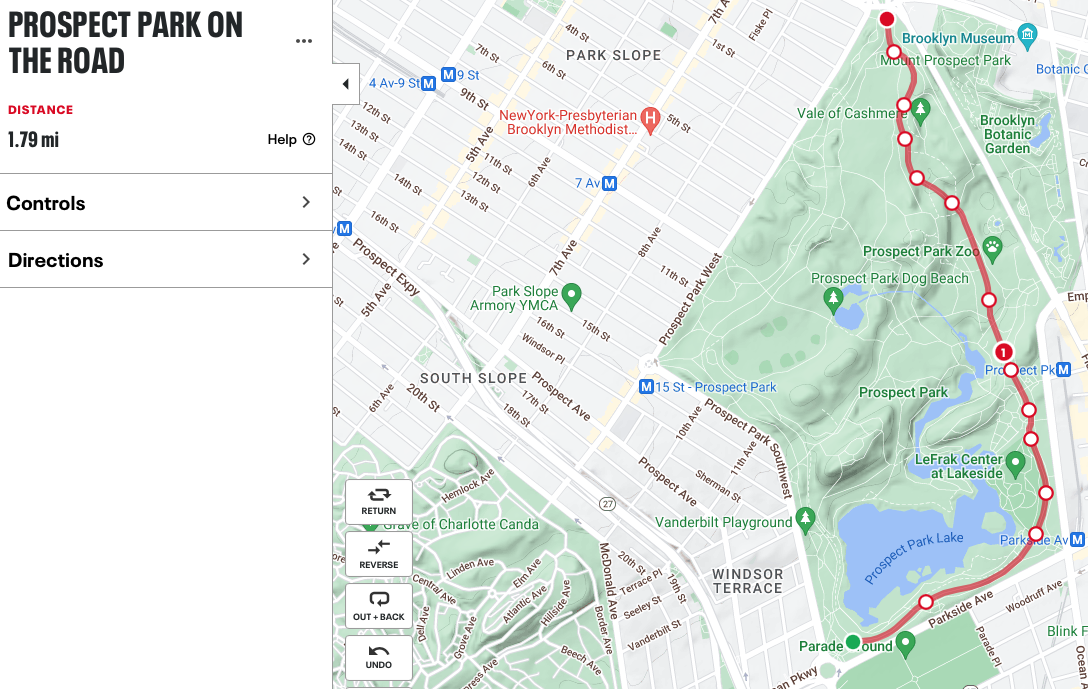
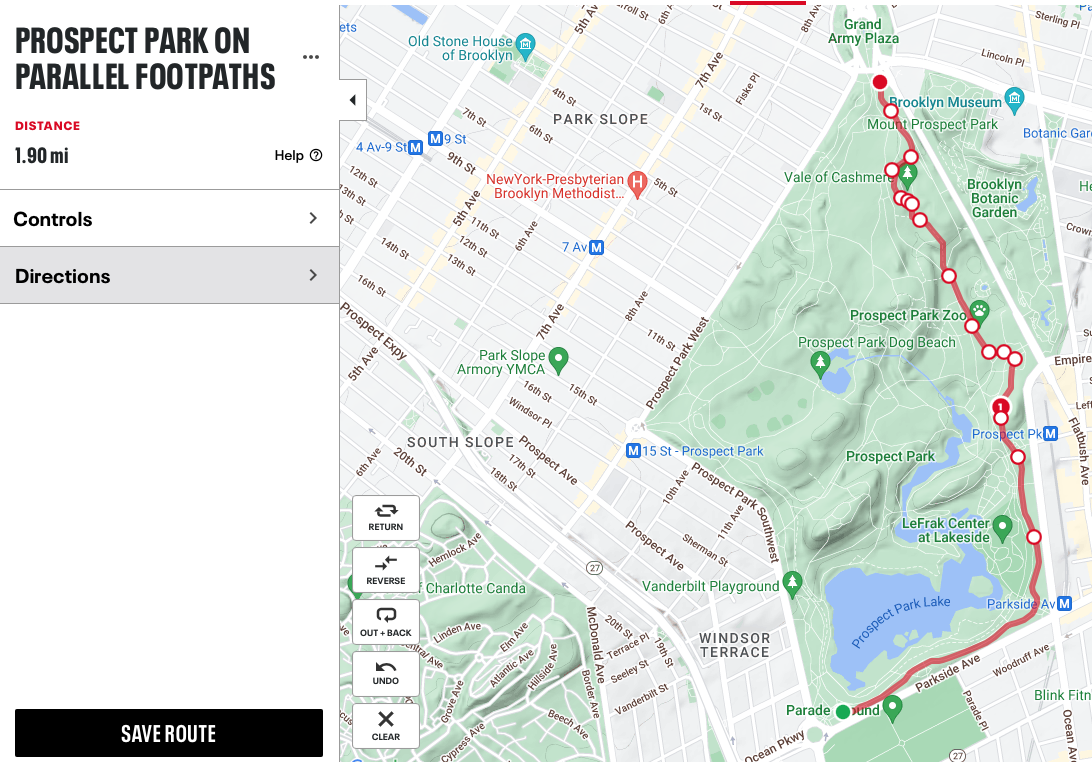
The answer. .11 miles. That is, that if you walk the road, the distance is 1.79mi and the existing pedestrian paths, most of which are within several feet of the road, is 1.9mi. The existing footpaths only diverge from the road twice, once in the woods on the hill, but the other is within sight of the road.


From: "Aliaksandr Kochatau" <mail@BikeReg.com>Subject: Defend Prospect Park Drive for bicycle racing and training!Date: March 13, 2023 at 5:05:40 PM EDTTo: mugwump@panix.comReply-To: pcdocstar@yahoo.comGood evening everyone.
As you know, Prospect Park is undergoing a plan than can potentially eliminate bike racing. We are concerned Central Park can be next.
Prospect Park is a unique place in Brooklyn for cyclists to race and train. All other locations are either too short or too narrow for safe group rides.
Parks has created a public survey that offers little for the future of ridding and racing.
In the description DOT mentioned that Prospect Park narrowest spot is 35ft wide, but Thursday I measured myself 30ft (109”+124”+126”) by Coney Island Ave entrance. You all know that bottle neck on the bottom of the hill.
NYC DOT is pushing at their IG account for adding 2nd jogger’s lane to the other side of the road, sandwiching bicycles in between. Only Rebecca Zack from DOT loves that idea according to comments.
Prospect Park Alliance is more reasonable and offering another option just to make joggers lane wider. The problem with this design is that it leaves only 16ft for both: Park trucks and bicycles. Standard street car lane is 12ft wide. If a truck is driving in the middle of the combined lane, bicycles will have only couple feet on each side to pass without getting into the jogger’s lane. Narrowing space also reduces a bicycles chance to swerve and avoid hitting people who cross or appear in the lane unexpectedly.
At this moment bicycle racing community is represented only by Kissena Cycling Club and NYCC at Prospect Park Drive Safety Task Force (Look at Page 17) who are going to make a decision. But they included a bunch of running clubs, horseback riders, dog owners, hikers etc. You know right away what decision they’re going to made.
In order to protect the Park from decisions made without full input from all cyclists we need you to do the following:
- If you have officially registered bicycle (speed skate) organization in NYC (club, team, bike shop etc) you should ask NICELY to add your organization to Prospect Park Drive Safety Task Force by sending email to community@prospectpark.org. It’s not Prospect park idea, there are bicycle haters on top of them!
- Everyone should complete Prospect Park Alliance survey here
- Post a comment and like other comments at this NYC DOT Instagram post
- File police reports for every incident and complaints at 311 for Parks (screenshot attached), DOT (screenshot attached), Brooklyn Borough President and NYC Mayor websites about poor road design as soon as park will make those lane changes. This will prevent them from expanding that project to other parks and hopefully restore original Prospect park road layout.
- Notify me if you have any suggestions or additional information about this situation.
We will only succeed if we are a unified voice with an organized message
Alex Kochatau
Umm... "Prospect Park is undergoing a plan that can potentially eliminate bike racing. We are concerned Central Park can be next..."?


I organized and hosted a call, today, CRCA, NYCC, Jon Orcutt, and Tom Mains. The goal to align on how to respond and next steps. I'd save you all the details, but here are the quick takeaways:
The study’s Option B is preferred.
Avoid unnatural pinch points. They make the park more dangerous.
Avoid physical things, like planters or dividers, they make the roadway more dangerous.
We should ask our cohorts and members to answer the survey accordingly: https://www.surveymonkey.com/r/FLRJBZ6 .
Eloy will reach out to CRCA, NYCC, et el to revisit a Park Riding Protocol document
Jon will write a document to the Park’s commissioner, we should all sign.
Hope this helps, please let me know any comments.
@DavidVibert your social media posts were good, thanks. Let's coordinate future posts, it would great to be very aligned on language and priority. Thanks.
At Sunday's Prospect race, the newly-paved sector was the wettest part of the race. There seemed to be puddles on that section of the course, whereas other sections were damp or dry.
Chatting with Michael Cumming after the race, he suggested that fresh asphalt is more slippery than older asphalt. It's an interesting possibility, and the limited evidence from Sunday suggested something was up.
While I can't find conclusive evidence, I found both bike and motorcycle forums where people asserted the same.
The idea is that asphalt has some oil in its composition, and possibly more gets laid down when the asphalt is rolled. So, as the asphalt is cooling, some separated oil thus rises to the surface, and the rain comes, getting into small cracks forcing more to the surface. A few rains and/or a few weeks should take care of it.
Here's a statement from a physical science professor.
"Where a road is newly paved, the nice black surface seems to invite fast driving. But fresh asphalt is still releasing oil. When a rain shower occurs, oil rising on the water makes the road even more slippery than it does on an older highway. In every case, the start of precipitation should be a warning sign to motorists."
https://www.gainesvilletimes.com/columnists/rudi-kiefer-oil-water-make-slippery-mix-roads/
Fresh asphalt typically holds more moisture than old asphalt because it has not had the chance to fully cure and harden. During the curing process, moisture can be trapped in the asphalt, which can affect its overall strength and durability. As the asphalt ages and hardens, it becomes less porous, which means it can hold less moisture.
Additionally, old asphalt has had more time to weather and be exposed to the elements, which can lead to cracks and other forms of damage that can allow moisture to penetrate and accumulate within the pavement. Therefore, while fresh asphalt may hold more moisture initially, over time, old asphalt may be more susceptible to water damage due to its increased porosity and potential for cracks and other forms of damage.
Yes, new asphalt can be more slippery for bicycles when wet compared to old asphalt. When asphalt is freshly laid, it is smooth and has a high degree of surface friction, which can make it more slippery when it is wet or covered in other types of moisture, such as dew or frost. This can make it more difficult for bicycles to maintain traction and control on freshly laid asphalt surfaces.
In contrast, older asphalt surfaces have had more time to weather and develop a rougher texture, which can provide better traction for bicycles and other vehicles, especially in wet conditions. This rougher texture can also help to displace water from the surface of the asphalt, reducing the risk of hydroplaning or losing control due to wet conditions.
However, it's important to note that even old asphalt can be slippery when it's wet or covered in other types of moisture, and cyclists should always exercise caution and adjust their speed and technique accordingly when riding on wet or slippery surfaces.
River Road is mostly closed for the near future.
- Beginning March 30, 2023: Henry Hudson Drive CLOSED TO ALL USE (vehicles, bicycles, pedestrians) from Englewood Picnic Area to intersection with Dyckman Hill Road for construction.
- Dyckman Hill Road (Englewood Cliffs park entrance): Roadway is CLOSED TO ALL USE (vehicles, bicycles, pedestrians) until further notice. Dyckman Hill Trail (yellow markers) remains open to hikers.
- Henry Hudson Drive from Englewood Picnic Area north to Alpine circle is closed to motor vehicles until further notice. (There is no vehicle access to Undercliff Picnic Area during this time.)

I guess these lines (Parkside entrance) is what they'll do this entire section? It's really really narrow.
In case you didn’t know already, the Central Park Conservancy is working with Sam Schwartz Engineering (same group that came up with the Prospect Park plan) to figure out how to improve the drives.
At this point they are soliciting opinions from the public on what problems exist and might even be receptive to how to make the drives better.
So, they have a map online that you can mark up. Basically, click on a spot and it opens up a box. I often choose “other” and then try to title my post something evocative.
Here’s a link to the map: https://map.proxi.co/#command-center?topic_id=63ed330759b14092a1cf4070&topic_key=Dgsbdu8mlWQc6CqLwocGCHsFXVixnx
As an example, I placed a marker on the map which goes to the west drive by the crosswalk and light at about West 102nd.
category: “other”
Title: "Crosswalk and light should be removed”
point description: "The crosswalk here is terribly positioned. It should be removed. The folks walking east, up from the pool are hidden from cyclists who are heading south on the Drive thanks to both a curve in the road and shrubs. Pedestrians should be encouraged to go under the road and utilize the Loch path. It's prettier and easier than crossing the Drive. And, as a long-time pedestrian, it's no slower to get to the fields via the Loch path than it is taking the road."
email: I recommend putting in your email address, as you’ll get a link to your comment emailed to you and you can then save it, or edit it, or both.
FWIW, since I’ve been banging on and on about the archways, you can see a map of most of the archways here:
https://www.centralpark.com/things-to-do/attractions/bridges-and-arches-of-central-park/
and there’s a list of the archways and bridges here:
https://en.wikipedia.org/wiki/List_of_arches_and_bridges_in_Central_Park
have at it.
NYC posts real-time air quality info here: https://a816-dohbesp.nyc.gov/IndicatorPublic/beta/key-topics/airquality/realtime/
The EPA has a website that seems to pool similar information here: https://www.airnow.gov/?city=New York&state=NY&country=USA
https://www.centralparknyc.org/activities/events/central-park-drives-study-open-house
I'm signed up.