Kissena Forum Archive

Training to Race: Faster, Stronger, Awesomer

2133 comments · 23940 views
Warning No formatter is installed for the format not-found
Gwynna, you can always work on cadence to keep things from getting boring.  Knowing what is comfortable for you and then pedaling in a gear too small or too big will keep your concentration up and expand your comfort level.  Some even try to keep a steady speed/power and then shift gears somewhere between every minute to every five minutes, and going over a wide range of cadences, like from 80 to 110 rpm.
Warning No formatter is installed for the format not-found
I never understand why people think hill repeats on river road are a good way to train for races with 20 min plus climbs.

My experience is that climbing comes down to strength to weight, period. Train for the amount of time you want the climb to take on any road where you maintain a steady effort. If you are fast for 20 min on a flat road, you'll be fast on a climb. Or, as fast as you can be at your size.

My evidence: this past February when we out to California I smashed my power records on every one of the climbs we did - and I did it after doing nothing but suffering on the trainer and in the park for 4 months. And I was very light.
Warning No formatter is installed for the format not-found

Well, everyone has their idiosyncrasies, I suppose. And form and especially confidence, I think, make a difference. But strength to weight is the biggest factor for climbing. If you've optimized that factor and still aren't climbing well, then look at other stuff.

Now, if you're getting dropped on short climbs like Alpine or Bradley, then it certainly makes sense to do short climb repeats. 

But if you're training for a 20, 30, 40 min+ climb at a stage race or something, its a different question. We don't have those climbs around here. So the question is do I train by doing 5-7 minute hill repeats, or do I focus on being a beast for the 20, 30, 40 min I need, and being as light as I can?

The 5 min climb is an anaerobic effort. The 20 min + one is a threshold effort. Those are two very different things. But I still see riders training for Tour of the Catskills or whatever by repeating Alpine.

 
Warning No formatter is installed for the format not-found
@Gwynna you can test the theory with some ease at Ride Brooklyn. Just hop on one of their computrainers and experiment with a wheel block that tilts your bike back and simulates the climbing position vs a "flat" setup.

You'll know very quickly if you really are putting out significantly less watts when you tilt uphill or if it's just perception.

I'll bet you one pack of gu that your threshold is the same for both.

Case in point; in all the literature anyone has read has anyone ever seen reference to different thresholds for climbing vs flat...?

Watts are watts and unless you are overgeared your heart & lungs don't know or care what direction your wheel is pointing...
As someone in Gwynna's climbing boat, I can claim it's not about the incline. Putting my front wheel on a block won't replicate my suckage on a climb. For me, it has everything to do with the intra-pedal-stroke resistance profile when climbing. The simplest way I can express it without referencing Newton is that you lose more and more momentum between pedal stomps with increasing incline. It is attempting to resist this phenomenon that makes my legs so obstinate. On a flat, when each pedal stroke's resultant momentum is well preserved, fought by the wind and not much else, I can put out more power for longer.
@Jeff unless you are talking about the *really* steep stuff, you'll have to show me the power file. You may not go as fast as you like uphill but you are going as strong.
I'm pretty sure that watts tend to go up on a climb as opposed to flat. ?
it is a good thing you didn't reference Newton as he would probably roll over in his grave.

are you trying to say that you have gaps in your power output? but don't you have two legs? even of you were peddling squares, the live spot for one leg would fill the dead spot for other leg.

but I don't think Newton cares about that. I think he would simply add up the vectors. one vector facing forward up the hill (corresponding to your peddling) and one vector pointing backwards (corresponding to the component of gravity that pushes you backwards). the backward vector doesn't care whether you are peddling or not. it doesn't get bigger during your dead spots or lesser during your live spots.

power =force x distance / time. gravity exerts a negative power. you exert a positive power. as long as the later exceeds the former, you will move forward. #highschoolphysics

I think it is power/weight ratio. I think your bones may be too dense.


What the hell's a vector?  Anyway, I agree gravity is a negative asshole that needs to be punished. 

http://www.youtube.com/watch?v=fVq4_HhBK8Y
^time to cook up an airplane badge?
In the 1972 Porsche 914 I drove in high school, the peak horsepower of that mid-engined demon was at 4000 RPMs and I think it was around 110 HP. In the 1988 BMW 325i I drove in college (which actually had a 325e engine) I think the power curve topped out around 3200 RPMs (the "e" engine was tuned for torque at lower RPMs) and probably could hit around 200 HP. In fact, I'll bet if you looked hard enough, you could find the published graphs of power versus RPMs of those estimable vehicles on the internet. You'd be in stark disagreement with industry by claiming that watts are watts.

Ryan, you're illustrating my point perfectly. A climber thinks his power is higher on an incline. 
Jeff I'm not saying power is higher, necessarily - I'm saying it's easier to measure higher because of the steady state an incline forces.

If I have a 20 minute test to do ill measure higher on the incline than I will on the flat.
@Jeffrey White- No fair!  I drove a green AMC Pacer in high school.  (And like Gravity in Stokes' example, it  had negative horsepower across the entire powerband.)
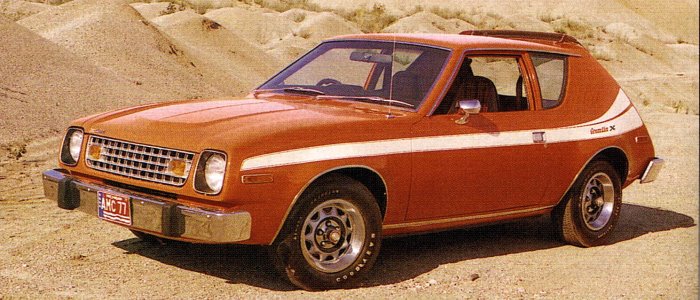
Hey, I had AMC Gremlin that I bought from my advisor in grad school. We dubbed it the racing pumpkin. But I made a point of not challenging it with any sort of incline.

image
@Stokes-Wow!
Hmm, that's an idea. The bike on the trainer doesn't currently have cadence set up, but I've been meaning to put my GSC10 on there. I don't have power at all. :(
You don't need to invest in tech if you have a speedo or a HRM.  Just shift gears and maintain a constant speed or heart rate.  
All I have to say is this is what I drove in H.S (that was my color too).:

image

oh, and it was a diesel. 

To get back on point, it is the power to weight ratio that matters for climbing. It's why Cancellara will do fine on the flats (tons of power all day long) but won't win any stages when the road tilts up. Weight isn't a significant issue on a flat course. Once we're talking about going uphill it is the ratio that matters most. Hence my car motored along nicely on flats but couldn't do a thing on the hills. 
My high school hoopty....a 1987.5 (mid year roll out) VW GTI 16V....maybe not dependable, maybe not safe....but definitely the greatest car I have or will ever own.
Warning No formatter is installed for the format not-found

Mine. Courtesy of Google images:

http://bringatrailer.com/wp-content/plugins/PostviaEmail/images/1977_BMW_E21_320i_California_Survivor_Blue_Plate_For_Sale_Front_resize.jpg

Great car. Replaced by a Rabbit (nowhere near as nice as Yack's)

Then a Scirocco:

http://upload.wikimedia.org/wikipedia/commons/9/97/VW_Scirocco_front_20080703.jpg

Then an Audi 80

http://files.conceptcarz.com/img/audi/1990_audi_80_01.jpg

Then and Audi 90

http://carphotos.cardomain.com/ride_images/4/421/4881/38552440002_large.jpg

Then an A6 Avant (really an Audi 100 wagon)

http://imganuncios.mitula.net/1996_audi_a6_base_san_diego_ca_97950072214423712.jpg

Then the current car: 2008 VW Passat (newly chipped = funner). Picture is of the car new - never prettier!



as moderator, i'm moving this to a new thread called "pictures of my car(s)"
I was always fond of this...


OK, This was my first car (really! I still have dreams about it)

Although the bike fit in the 'back seat' with both wheels removed, after a while, I had to replace the convertible top with a hard top.
Imagine this car with a bike rack on top!


image
automotive nostalgia aside, i'm confused about how car engine+transmission output informs climbing hills on a bicycle.  please edify.  watt am i missing?
^it has confuse.  Just post car pictures.  It's like a mini Jalopnik in here...
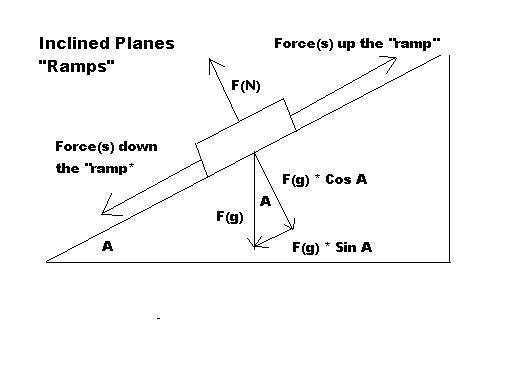
@Brendan. Are you kidding? My father had an old Dodge Dart when I was a kid (with a push button transmission). Four adults piled in to carpool to work. There was a particularly steep hill near one of their houses (probably 15%). On some occasions when they didn't manage their momentum well, they had to actually get out and push the car. This is all about power/weight ratio. The ability to change into a low gear certainly helps, as it allow the engine to turn over at optimal rpm while driving the wheels more slowly (same is true for a bike). But the bottom line is that the car engine produces power (watts) in the forward direction. Gravity produces negative power in the rear direction. The steeper the hill, the closer the downward vector is to gravity and therefore the more powerful the backward pull (F(g)*sinA, where A is the angle of the hill). Likewise, the heavier the object (4 guys in the car), the larger the force of gravity (F(g)). Therefore both steeper hills and heavier people need to produce more power to sustain forward movement. There is also friction (both from road and wind) involved, but the corresponding forces become trivial when the road gets steep.

image

My Fiat 850 had a low, aerodynamic profile and cruised very well on the flats (nice handling too). But the 850 cc displacement didn't do so well on the hills, especially with two people in the car. This had nothing to do with the design of the transmission or the tuning of the distributor (though I frequently had to get out to optimize it). It was all about power/weight ratio.