Kissena Forum Archive

Training to Race: Faster, Stronger, Awesomer

2133 comments · 23940 views
Interesting point I heard on the cycling podcast from the guy at SIS , that maybe the reason why younger riders have excelled this year is because they have to work less hard to get to race weight ,
There seems to be a popular thought that as younger riders, from the age of 14/15 are exposed to more professional training regimes, their development at 16/17/18 is accelerated versus prior generations. No idea how this could be validated. 
Doubtless anyone’s training would be accelerated if they were old enough to manage the load; the question is does this change the ceiling, and if so why?
There seems to be a popular thought that as younger riders, from the age of 14/15 are exposed to more professional training regimes, their development at 16/17/18 is accelerated versus prior generations. No idea how this could be validated. 
Doesn't pass the smell test.

1. they are competing against people who have been exposed to more professional training regimes for ten years or more.  

2. The pros of 20 years ago were also exposed to the best training advice of their day when they were juniors.

3. There is always the matter of understanding how an individual body reacts to training.  It's not just "ride 350w for ten minutes" or whatever training routine is prescribed.

4. While it might be easier to see both overtraining and undertraining with all the metrics that can be utilized, you still have to respond to that information.  And I bet kids today are, as a group, about the same at that as when we were all kids.

5.EVen with radio communications in ones year, a rider still has to be able to have a tactical sense of what's happening, what will happen, and who to watch.  If anything, I'd expect that younger, less experienced riders would tend to waste more energy in the pack than older, more experienced riders.  And after four hours, that kind of energy difference could be critical.  

All told,  all things being equal,  it would mean that younger riders  aren't getting dropped as quickly, not that they are dominating.

At the same time, there has always been a 'youth movement' around.  Some years, it's more apparent than others.  Ironically, I think there was one going on when MVdP's dad, Adrie, was coming on the scene. Him, LeMond, Fignon, Anderson, Roche, Millar, Delgado, and others were also winning big young.  

And maybe we're too busy looking at the exceptions rather than the rule.
In the interest of sharing (and motivating myself through shame) here is my tale of the tape from yesterday's race/ftp effort.

http://tpks.ws/M5MJNFKXSALVLTI4FEYTRMETSU

I did 303 watts for just over 20 minutes, with some shit pacing because I started thinking it was a race (first minute 400, first two minutes 360).

That gives me an FTP of 285. I'm about 75kg right now, so that's 3.8w/kg.

Let's see how long it takes me to get to 4.0, and then higher. My budget is usually under 8 hours/week.
There seems to be a popular thought that as younger riders, from the age of 14/15 are exposed to more professional training regimes, their development at 16/17/18 is accelerated versus prior generations. No idea how this could be validated. 
This type of theory has always been a way to obfuscate, this is code for doping.


As JP points out, younger riders have historically been dominant. And that is only logical. I want to offer the other side of the coin from my comment above. 

Younger riders should generally be able to ride stronger, recover faster, etc... They also, like Pogacar, are often underestimated and get a free ride. Bernal, Ulrich, Cunego, are quick examples that come to mind. In other words younger riders winning suggest less doping, older riders winning suggests more doping.
I don't disagree and whenever people laud kit & training as the secret to super human performance the warning lights start to blink furiously...However seeing as this years big winners (Pogacar & TGH) are both under 25, do we therefore think that the levels of doping are currently low? 

The cynic in me says that whoever is winning is likely than not engaging in something which is at least, rule bending in nature...
I don't disagree and whenever people laud kit & training as the secret to super human performance the warning lights start to blink furiously...However seeing as this years big winners (Pogacar & TGH) are both under 25, do we therefore think that the levels of doping are currently low? 

The cynic in me says that whoever is winning is likely than not engaging in something which is at least, rule bending in nature...
I don't think younger riders winning means less doping. It seems like there are just more younger riders in the peloton (I'd love to see data on this) because teams are incentivized to make those bets. Older established riders are more expensive, and have fewer years (and more injuries) to produce, so we've seen recruiting tilt younger over the years.

Higher proportion of younger riders in the peloton would mean more younger winners all things (including doping) being equal. 
Here is a statistical analysis I did on the 2020 TdF based on a list of riders and their ages. I realized halfway through that this might not actually be useful (to this discussion or my life) but it was kinda fun.

https://docs.google.com/spreadsheets/d/1QC0tDX1ZNInz7owy1FoPd1qPXmqYEYA6Y7ELvlRVDfE/edit?usp=sharing

1) The average rider age was about 29.27
2) There are more riders over the average age of ~29 than there are younger (80 younger, 85 older).
3) There were no outliers in the data set (Though Valverde is close I think).
4) The data is fairly normal if not skewed a bit right. 
FWIW ,Cant really claim Bernal, Ulrich, Cunego, were dominant 
Ulrich and Cunego's early Grand Tour outings were a bit more impressive than Bernal's.  Bernal had two good days and no bad days in the 2019 Tour.  Of course, that's what mattered.  

Ulrich was certainly doping and leading Team Doper of the peloton in '97.  Cunego is a bit harder to suss out.  When he won, it was alleged he had a naturally high hematocrit, like 51, but....
FWIW ,Cant really claim Bernal, Ulrich, Cunego, were dominant 
You are right. I think my point was a bit more about how they were somewhat underestimated, and allowed a bit more leeway than more experienced favorites.

If I remember Cunego's Giro win, everyone was busy and scared watching teammate Simoni, and Cunego just rode away with the race. Similar for Ulrich, everyone expected Riis to destroy the Tour, and Ulrich just rode away. Parallels for Pogacar & Bernal. 
Here is a statistical analysis I did on the 2020 TdF based on a list of riders and their ages. I realized halfway through that this might not actually be useful (to this discussion or my life) but it was kinda fun.

https://docs.google.com/spreadsheets/d/1QC0tDX1ZNInz7owy1FoPd1qPXmqYEYA6Y7ELvlRVDfE/edit?usp=sharing

1) The average rider age was about 29.27
2) There are more riders over the average age of ~29 than there are younger (80 younger, 85 older).
3) There were no outliers in the data set (Though Valverde is close I think).
4) The data is fairly normal if not skewed a bit right. 
That's great! Where did you get the data from? I'd love to see WT points superimposed on that, along with tenure in the pro peloton.
Jules said:
Here is a statistical analysis I did on the 2020 TdF based on a list of riders and their ages. I realized halfway through that this might not actually be useful (to this discussion or my life) but it was kinda fun.

https://docs.google.com/spreadsheets/d/1QC0tDX1ZNInz7owy1FoPd1qPXmqYEYA6Y7ELvlRVDfE/edit?usp=sharing

1) The average rider age was about 29.27
2) There are more riders over the average age of ~29 than there are younger (80 younger, 85 older).
3) There were no outliers in the data set (Though Valverde is close I think).
4) The data is fairly normal if not skewed a bit right. 
That's great! Where did you get the data from? I'd love to see WT points superimposed on that, along with tenure in the pro peloton.
Thanks! And yeah that would be really neat. I feel like years in the world tour would be an interesting stat to cross reference.

 I used this list: 

https://en.m.wikipedia.org/wiki/List_of_teams_and_cyclists_in_the_2020_Tour_de_France


Edit: woops, meant to delete the first sheet on my lil spreadsheet. That just had average age of riders on each team. 
Nice find. Also there is this and this

https://www.procyclingstats.com/statistics/start/birthdays

https://en.wikipedia.org/wiki/List_of_2019_UCI_WorldTeams_and_riders#References
https://www.velonews.com/training/seven-habits-of-highly-successful-masters-cyclists/

Seven habits of successful masters cyclists

  1. They ride in the morning.
  2. They follow a training plan, using a power meter
  3. They rest when rest is needed.
  4. They win in the kitchen.
  5. They recover well.
  6. They are year-round athletes.
  7. They enjoy training, working hard, and setting goals
I see Jules shared tips from Frank Overton above.

I think Frank, head of FasCat coaching, has a bunch of good stuff  on his website and I do get his email newsletter.

The one that arrived today suggested something called "Pigeons Pose" for better cycling.

"#6 Yoga Yoga trains your brain to be mentally tough which will come in handy during your challenging event. Just breathe! Side effects include a stronger core, more flexibility, better power production and improved bike handling. I think the pigeon pose will put 10 years back on your body. Goto a class and if that’s not possible, try YogaGlo (they even have a cycling class series)."

Does anyone do it?  thoughts?  

https://fascatcoaching.com/tips/ten-ways-to-improve-your-cycling/
mugwump said:
I see Jules shared tips from Frank Overton above.

I think Frank, head of FasCat coaching, has a bunch of good stuff  on his website and I do get his email newsletter.

The one that arrived today suggested something called "Pigeons Pose" for better cycling.

"#6 Yoga Yoga trains your brain to be mentally tough which will come in handy during your challenging event. Just breathe! Side effects include a stronger core, more flexibility, better power production and improved bike handling. I think the pigeon pose will put 10 years back on your body. Goto a class and if that’s not possible, try YogaGlo (they even have a cycling class series)."

Does anyone do it?  thoughts?  

https://fascatcoaching.com/tips/ten-ways-to-improve-your-cycling/
The pidgeon stretch is the #1 stretch for cyclists that I see recommended - consistently for the past 10+ years. FWIW I tend to agree it's the most useful but my own core/stretching routine consists of typing answers to posts about it...

#ymmv
https://www.trainingpeaks.com/blog/can-smiling-make-you-faster/

Definitely maybe...

"What does this have to do with your face? In short, if we can decrease the amount of pain that you perceive, you will be more likely to win this “mind-battle” and push past your limits. 

"Fascinatingly, your smile does not have to be genuine to elicit a response from your body. A study in the 1980s had participants hold a pen in their mouth, either with their teeth or their lips while watching a series of cartoons. 

"By holding a pen in the teeth, the muscles used to make a smile were contracted. When held in the lips, the smile muscles were inhibited. Participants were not informed of the purpose of the study. The results showed that the participants who held a pen with their teeth found the cartoons to be much funnier than those who held the pen with their lips. Simply by contracting the muscles used in a smile, the participants’ mood was improved."

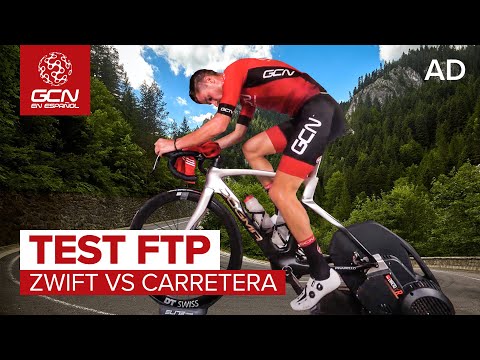
Two field test for me this year one month apart. That's a banner announcement in & of itself but I wanted to re-plug the Ramp (Conconi) test if the standard twenty-minute TT makes you keep your distance.

Zwift has a built in Ramp test and it's all over & done with in under 45 minutes (unless you're an absolute Unit...)

#ymmv
I don't know if a core temperature thermometer that is worn on the outside can be trusted.  But maybe cutaneous skin temp can?

Regardless, I find this an interesting product.

https://corebodytemp.com/

Though I'd guess it would mostly confirm intuitions, and possibly get people to possibly refine their cooling habits.  Not that you can necessarily do it when one is racing and can't grab an extra bottle.
If any one knows any lady racer or rider who would like to try out the track:

Pujol compares FTP tests in real life (20 minutes) vs. a ramp zwift test
This is in Spanish, but you can use captioning as subtitles:
https://www.youtube.com/watch?v=ye7lef5Iuvk
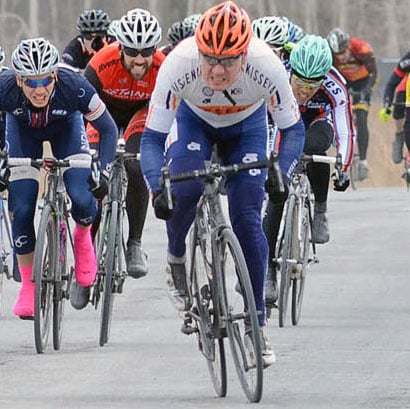
He explains that it felt harder inside and couldn't reach his max, but unsurprisingly the actual numbers are basically the same (and Pujol still generates pro numbers)
btw, he does the real life test at Alto del Gamoniteiro. Where the Vuelta finishes tomorrow. 
Sounds about right.  I like to do the ramp test when testing indoors and an 8-minute test for outdoors.  I've always found them to be within ~5 watts of each other.
https://www.youtube.com/watch?v=kuaV7kyCII8
Probably the most important 25 pages you can read on training.

https://www.howtoskate.se/_files/ugd/e11bfe_b783631375f543248e271f440bcd45c5.pdf
I got as far as Mon 7h biking at 260W... it is a great approach though. Refreshing.

I did read it.

I loved his idea that children sport should remain unstructured. I also relate to him on the heavy cream drinking. Doesn't yield the same result on me though.
Not sure if this is the right thread, but I'm looking fot recommendations for good spots to go an FTP test outside.  I typically train in CP or PP, but the ups and downs as well as the park traffic make them less than ideal for a 40-60 minute effort. I'm looking for a, more or less, traffic-less loop in Brooklyn or Queens.  

Right now I can only think of the velodrome or Flloyd Bennet, but idk if road bikes are allowed at the velodrome or if FBF is even open.