Kissena Forum Archive

Bicycle Tech/Gear Discussion Thread

8105 comments · 108281 views
@mugwump
" much like the extra time it takes to fill install tubeless tires and fill with goo"

This is not my experience at all , its super easy 


It's not that it's easy or hard, but if you have to check the goo every month and replace it every three-to-four months, that's probably about the same time investment as getting a flat or two in that same interval.
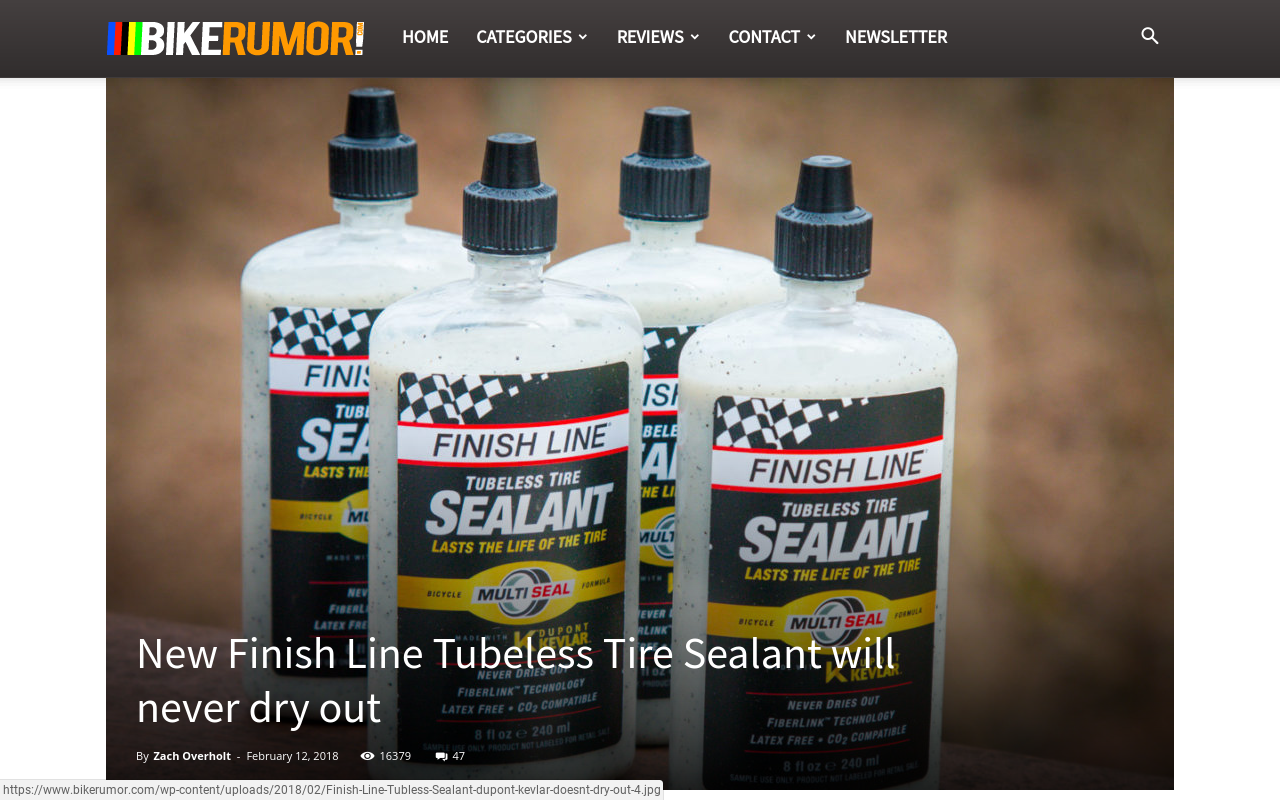
burp..https://www.bikerumor.com/2018/02/12/new-finish-line-tubeless-tire-sealant-will-never-dry-out
https://www.youtube.com/watch?time_continue=4&v=_s4QmrRrH4U

twoyacks said:
they don't flop around in turns when the pressure is low and have yet to get a flat.  
This is awesome!!

What is low pressure for the Yacks?

well...the valve on the Lezyne is not to be trusted...says 50 psi but I can push down with my thumbs and they flex nicely.  I'm thinking the Schwalbe X One All Arounds should get much of the credit here as they are totally GNAR !!!
And I've got my eye on this with the team discount...maybe this summer as it checks all the boxes and seems to be built for what I like to do = drive directly through the woods...any woods trail or no trail

https://www.giant-bicycles.com/us/toughroad-slr-gx-0

twoyacks said:
well...the valve on the Lezyne is not to be trusted...says 50 psi but I can push down with my thumbs and they flex nicely.  I'm thinking the Schwalbe X One All Arounds should get much of the credit here as they are totally GNAR !!!
Sorry to report that 50psi is not low.  Lots of us ride 28psi on tubed tires in cx.

I think the issue is your bike handling skills, not tubeless tires.
Again its not actually 50...that's what the pump gauge is telling me.  Can't be 50 if I'm pushing the tire down about an inch?  I'm thinking the lack of a tube is confusing the gauge?  Also is tubeless psi comparable to tubed psi?
Finally, JP my bike handling skills rival your pony tail in their flair, panache and sheer beauty

mugwump said:

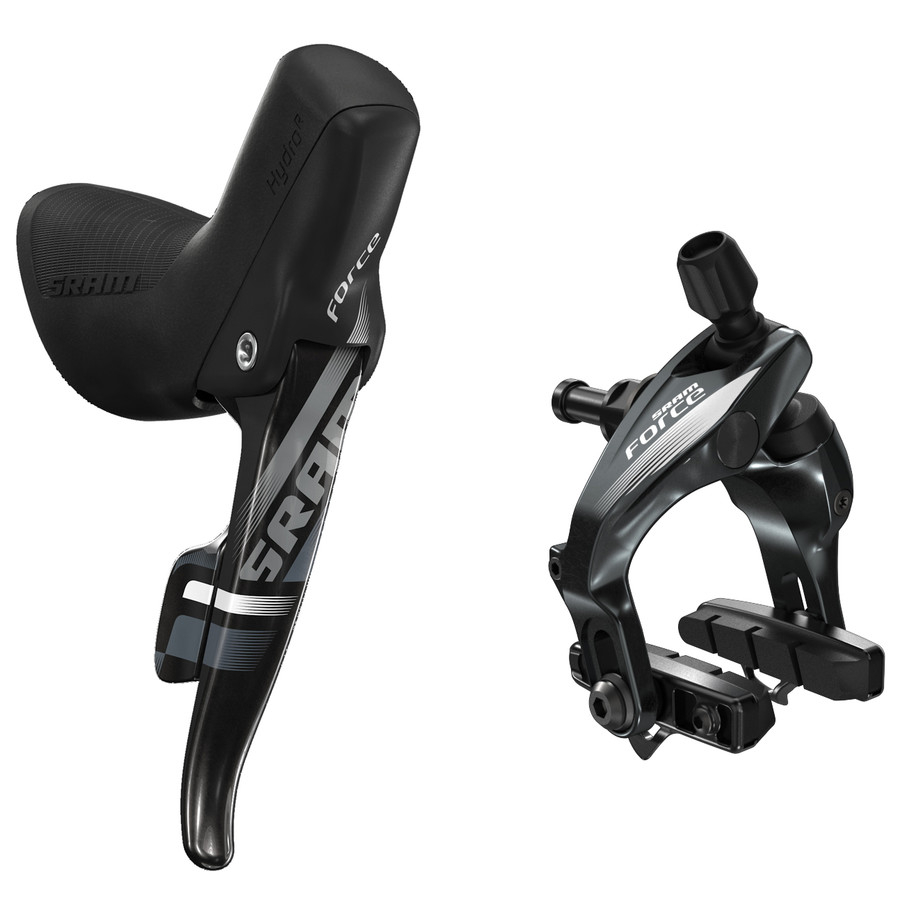
Geometry and heat.  Effective braking is caused by friction and friction produces heat.  Assuming all things are equal, the force needed to stop a 160mm rotor in a given distance versus stopping a 622mm rotor has to be greater.  When I look at rotor disc pads, they look like they have way less surface area, to boot.  As such, it would also stand to reason that the heat produced from rotor disc braking is greater, possibly much greater.  And that heat has to go somewhere.  

Rotors are steel and steel stays hotter longer. and as there's less surface area to the steel and a smaller circle, it has less time to cool.  That means the heat then gets transferred to the pads.  Resin pads can evaporate, and when they start in this process, it will feel like you have no brakes.  Insufficient heat shielding means that heat goes to the fluid.  Which, if it boils, and it can, will then expand the fluid, and stop the bike for you.  Until you pump the brakes, then nothing, momentarily.  This is why they recommend pulsing brakes, not dragging them.
ah, JP, i simply must take the bait on some of these comments! if the argument is that disc brakes require more "force" to stop than rim brakes, i am both not buying it and also not agreeing that it's a problem even if it's true. 

we are not jedi and none of us use "force" to stop our bikes--we use brake levers.  the whole thing works as system.  we can't skip right to "force needed to stop" by way of "assuming all things are equal" because that's ignoring all the important differences in these completely different braking systems.  hydraulic disc brakes use hydraulic actuation (a great force multiplier) to move 2+ pistons .5-1.5mm that move pads onto a rotor.  rim brakes drag a cable in a liner that pulls a lever that presses two arms with pads 2-3mm into a wheel rim.  two completely different solutions to the problem of stopping a bicycle that rely on different materials, structures, and methods

it's not very informative to call a 622mm rim a rotor and compare it to a 160mm steel disc brake rotor.  even if the "force needed to stop a 160mm rotor" is greater than this imaginary 622mm rotor (oy, how heavy a steel rim would be!) the hydraulic system delivers that greater force with ease. 

we can't just say things like "steel stays hotter longer" as if that's a problem because that ignores all the other elements of the system.  maybe staying hotter longer here is a good thing because it increases the friction coefficient of the pad and makes braking more effective--some high performance car brakes are designed to work at hotter temperatures and high speeds but aren't that impressive for 25mph stop and go traffic.  maybe a traditional rim does heat up more slowly but the rubber pads need higher temperatures to increase their friction coefficient so their effectiveness is diminished?  who knows!  i certainly don't!  

"resin pads can evaporate" is a scary thought but thank god it is just a thought.  i would rank sudden brake pad sublimation dead last on my list of concerns, somewhere after being pushed off my bike by a sasquatch 

the only time i've heard of brake fluid boiling is in hypothetical discussions like this one or in descriptions of SRAM's testing procedures as they developed their brakes and strapped weights onto riders who held their brakes for an entire alpine descent with what seemed like the goal of making the fluid boil.  i have never met a person who has experienced it

we're talking about disc brakes like they're new and unknown...hardly.  cars capable of doing 200mph use DOT 4 brake fluid that boils at lower temperatures than the DOT 5.1 fluid in SRAM disc brakes (here i'm falling into the same trap of comparing dislike things, but le sigh).  the brakes are designed as a system taking all the variables into account

in my opinion, hydraulic brakes require a less vigorous squeeze with your hands to stop your bike.  that's the only force i think is relevant to my braking experience because it's the only one i have to produce  

my pinky comment previously... i meant that i can brake to the point that both wheels lock up with my hands completely on the hoods.  to lock up wheels on my rim brake bikes required moving to the drops to get three fingers onto the lever
mugwump said:
@mugwump
" much like the extra time it takes to fill install tubeless tires and fill with goo"

This is not my experience at all , its super easy 


It's not that it's easy or hard, but if you have to check the goo every month and replace it every three-to-four months, that's probably about the same time investment as getting a flat or two in that same interval.
Check the sealant every month? 
I wasn’t aware you had to do that
what would this check entail?


^I dunno man, everybody knows #bigfoothatescyclists so you're probably running a much higher risk than you know, especially in a such a high density Sasquatch zone like NYC.
Just sayin. 
mugwump said:
@mugwump
" much like the extra time it takes to fill install tubeless tires and fill with goo"

This is not my experience at all , its super easy 


It's not that it's easy or hard, but if you have to check the goo every month and replace it every three-to-four months, that's probably about the same time investment as getting a flat or two in that same interval.
Check the sealant every month? 
I wasn’t aware you had to do that
what would this check entail?


sealant will dry out on a relatively unpredictable schedule, assuming it's stans.  stan's recommends replacing sealant every 2-6 months. https://www.notubes.com/faqs

generally you'll only realize it's gone when your tire drops a lot of pressure overnight OR you get a flat while on a ride that mysteriously won't seal even though it is small enough

most certain way to check is pop off one side of the tire in one small section right at the valve, orient it at 6 oclock so that all the available sealant drips down into it, and assess whether there's any liquid left.  beware: you may have issues getting the tire back on and sealed.

easiest way to check (but least informative, really) is take wheel off the bike and shake the wheel around. if you can hear sloshing, there's probably enough sealant

you don't have to check...you can also just add 1 oz of sealant (1/2 of one of those small stans bottles) in through the valve without removing tire every 3 months or so and you're probably good.  the only risk of too much sealant is added weight

lots of variables: tire porousness, weather, quality of tape job (or if it's UST rim with no holes).  but unfortunately you often only learn you missed the window when you get a flat :(


FOR GODS SAKE...HASN'T ANYONE BEEN LISTENING ???

Seems 50 psi is 50 psi...Patrick verified and Yacks let some air out soooo smooth now
@Brendan Rigby

You started the magical thinking, no?  There is no magic.  At all.    

I'm not sure why you have an issue with "force."  It's a standard term utilized in physics to describe how you get a mass to accelerate or decelerate.

For wheels, the hub is the fulcrum and the distance between the brake caliper and the hub is the lever.  The longer the lever, all things being equal, the less force it takes to decelerate the wheel.  So, yes, A rim brake, a 311mm lever, all things being equal, uses less force to slow a wheel than a 80mm lever.  And because it uses less force, there's less heat generated.  

Bike designers agree.  They put more material in forks, they add thru-axles, add heat sinks, add heat shields, add fluid reservoirs, and they add spokes and cross-lacing for wheels.  All of this is to mitigate the force and heat generated by using a shorter lever.  

You claim that the heat generated by carbon rims is an issue to  you, yet you're ignoring the heat generated by rotor disc brakes.  I think if you're going to worry about heat generated by one, you probably should be equally interested/concerned about heat generated by the other.  They're both engineering/design problems where getting it wrong could have serious implications.

Resin pads evaporating and hydraulic fluid boiling are real occurrences.  Maybe less common than carbon rims softening to the point of failure, but maybe not.    

Your issue with rim brakes and using three fingers vs. one with discs, could be as much a problem with the systems you've used.  Maybe poor design on one and better on the other.      

You switched to sintered pads.  Interesting choice.  If they last longer, perhaps its because they take longer to heat up and get the friction working well.  As they're on downhill brakes, I think that's a possible explanation.  Yet you're using them on a bike that will spend much of its time at low speeds in stop and go situations where the pad/rotor won't have as much time to heat up.  It's interesting that you could be choosing to compromise one performance aspect (stopping) to improve another (durability).  Of course, we all pick our poisons.   

And the switch has other implications.  There's a belief that "bedding in" of pad matter on rotors is essential to good rotor braking performance.  Sintered on one bike, resin on others might necessitate switching rotors when you move those wheels.  

JP I think we've talked about this before but do not agree with you that the heat from a rotor or pad is a material (sorry about the pun) issue relative to the heat from a rim brake. The heat has to travel someplace from the rotor to be a danger - where and how would it travel?

The heat transfer from a rim brake pad is directly into the rim. Heat from a rotor has to travel much farther through various low-heat-conductivity materials (including air) to get to the structural parts of a wheel.

There are clearly many other pros & cons but I don't see how heat from rotors vs rim brakes is even close to tipping the scales in favour of the latter.
ahem...hydraulic rims brakes anybody???  Riggy weren't you on these for a hot minute?

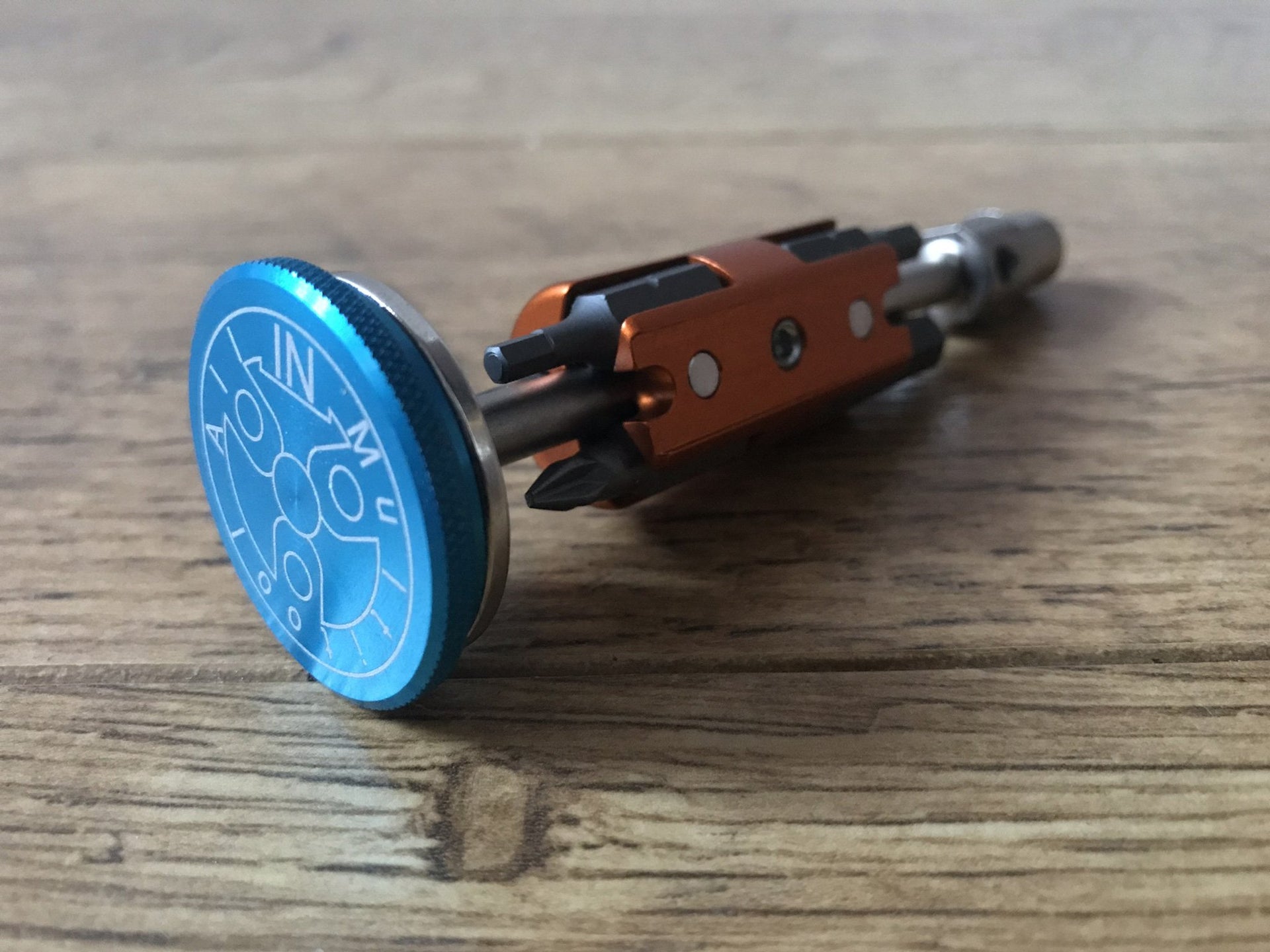
I've mean meaning to share this find. Yes, it's for knobby tires, but still. Super handy. Also, #teamcolor

https://www.allinmultitool.com/


Jules said:

There are clearly many other pros & cons but I don't see how heat from rotors vs rim brakes is even close to tipping the scales in favour of the latter.
I have yet to see any published studies of braking that are sufficiently controlled to demonstrate the rotor discs are definitively better at stopping than rim discs. 
 
You're also mistaken in thinking about the wheel only.  It's about the system.  

Start with the basics.  In order to stop a bike moving at a given speed with reduced leverage, force at the caliper needs to be increased.  That force means more heat.  That force and that heat have to go somewhere. And have to be mitigated somehow.  (you bring up air, there's significantly less surface area on a rotor disc than on a rim, so air will do much less to cool a rotor than a rim)

Bike and component manufacturers have done much of the mitigation work without most people noticing.  But, the same can be written of carbon rimmed wheels.  Likewise, most people are taking neither carbon rimmed wheels not rotor disc brakes to the point of catastrophic failures, so the worry in both cases is largely about a tiny sliver of the user base taking gear to its limits.  

You can bring up cheap carbon wheels, yes a problem in some situations.  But, so, too, are rotor disc brake systems that overheat or pull a wheel out.  The latter has happened enough that there have been quick-release recalls on some bikes and the industry has responded by moving to thru-axles and stiffer forks and to mitigate heat with more fluid in the system and larger rotors (notice how 140mm rotors for the road have disappeared?).  But we can look at carbon rimmed wheels and notice improvements in rim construction, braking surfaces, brake pads.  Brakes, too.   And carbon rims are only a performance improvement for a pretty small sliver of the bike riding public--most will ride aluminum rims, and it is generally believed they stop much better than carbon.

Brendan brought up a problem with his rotor disc setup.  In daily commuting, he's going through the recommended pads, the pads the calipers were designed with, too quickly for his preferred maintenance schedule.  Maybe the issue is heat.  Three weeks seems pretty fast to chew through a set of brake pads.  He responded by putting on pads that last longer, but at a price of what is almost certainly stopping performance for the conditions he's riding in (heat could be a factor here, too).

How much is that drop in performance?  How does it compare to rim braking on aluminum?  On carbon?  Why reduce stopping performance when the complaints about the system he forgave was inadequate stopping performance.

I see just about all products as compromises.  You can assert rotor disc brakes stop better, and maybe they do, but that's not the only issue at stake.  Stopping includes modulating and slowing a bike moving anywhere between 1mph and 70mph and that might entail being not universally better at all speeds--which we already see on different mountain bikes.  For the unknown, possibly marginal, improvement there turns out to be a cost, and Brendan has found it.  His response is telling.  He quickly, and seemingly without consideration of the implications for his safety, he switched out a critical component of his system.  He demonstrated that safety is not the only concern, and not his paramount one.    He decided not to maximize safety, but satisfice.  He decided it was good enough.  

And, as a person who wants to see more people on bikes, I wonder if we should see a an issue with brake pads needing replacement that quickly.  I don't see most people being happy about taking their bike into the shop once a month.  There, too, I wonder if people will be happier for a drop in stopping perfomance when the benefit is longer time between service.  
o  m  g  .... this brake exchange is better than batman vs.  superman argument...  in real life, the only catastrophic failure i have had really was  the wheel popping out of the front fork on cheap 1st gen specialized allez comp with too soft aluminum dropouts without the little keeper tabs.   i have been frightened by rim brakes just not gripping in cold wet weather, but have never actually crashed.  .  can anyone report personal catatrophic failures of either rim or disc brakes in the past 10 years?  lets have a poll!  yay!

1996 called...they want you all to know their brakes stop just fine
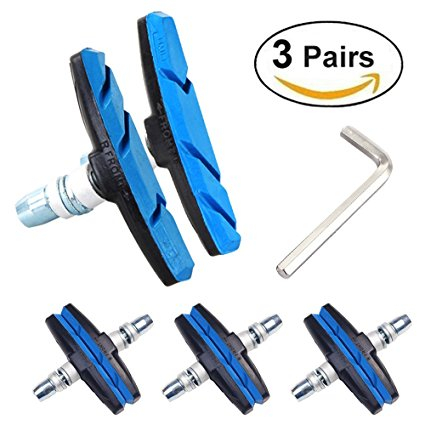
even with these $2 brake pads

o  m  g  .... this brake exchange is better than batman vs.  superman argument...  in real life, the only catastrophic failure i have had really was  the wheel popping out of the front fork on cheap 1st gen specialized allez comp with too soft aluminum dropouts without the little keeper tabs.   i have been frightened by rim brakes just not gripping in cold wet weather, but have never actually crashed.  .  can anyone report personal catatrophic failures of either rim or disc brakes in the past 10 years?  lets have a poll!  yay!

Actually my 1st gen disk brakes basically undid my front skewer without me noticing. I won't say it was catastrophic because I noticed before I tried to hop a curb.
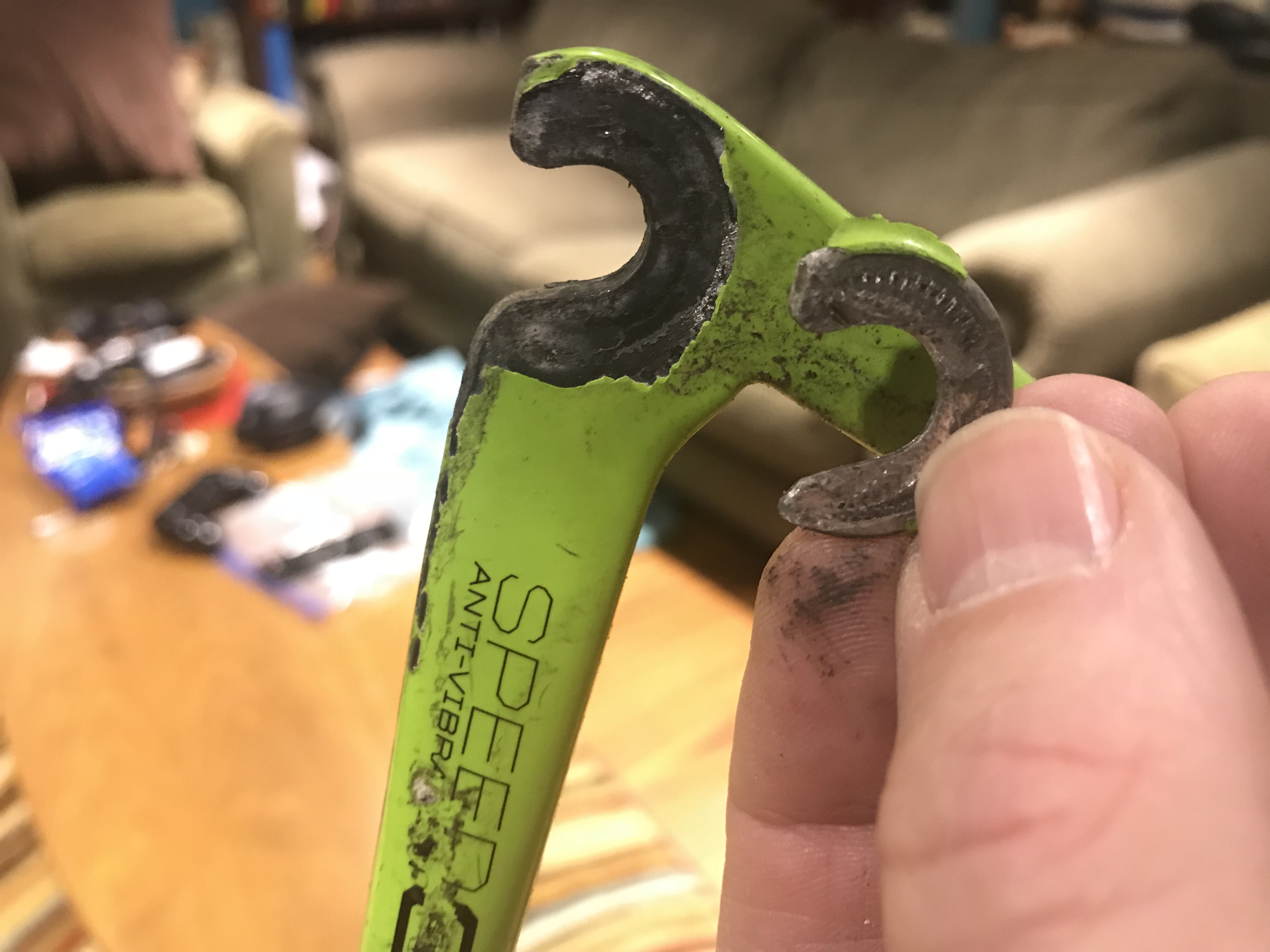
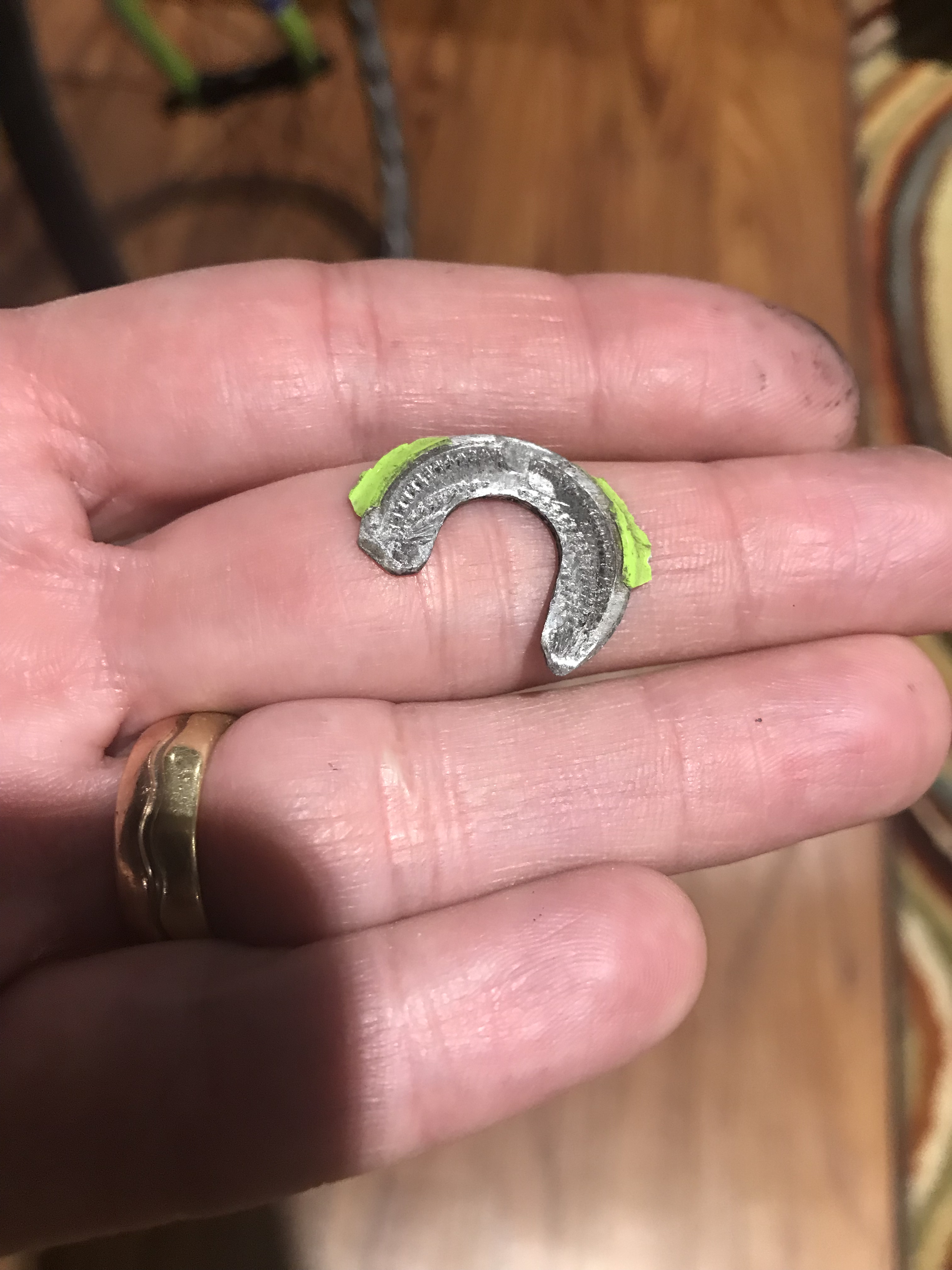
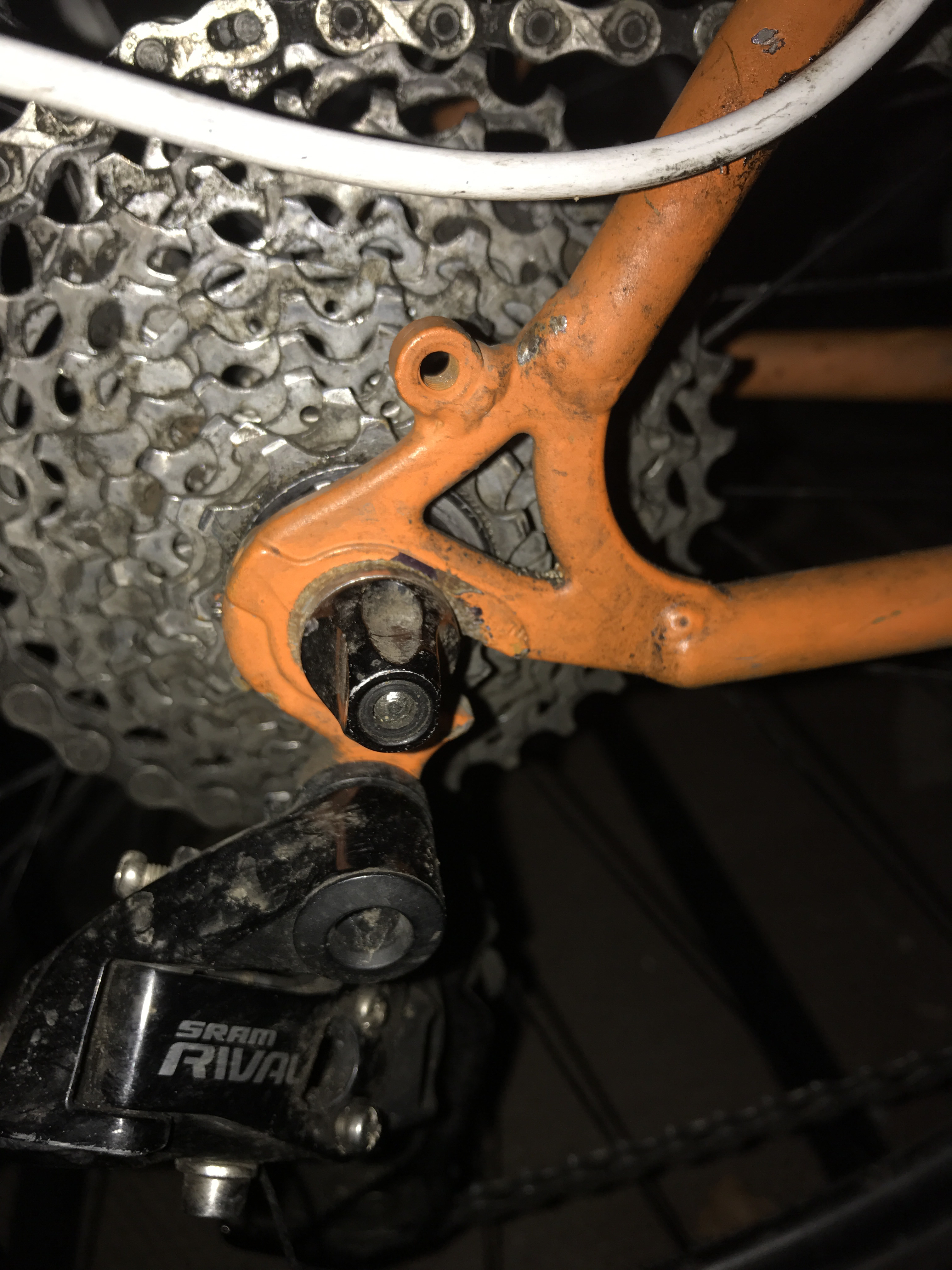
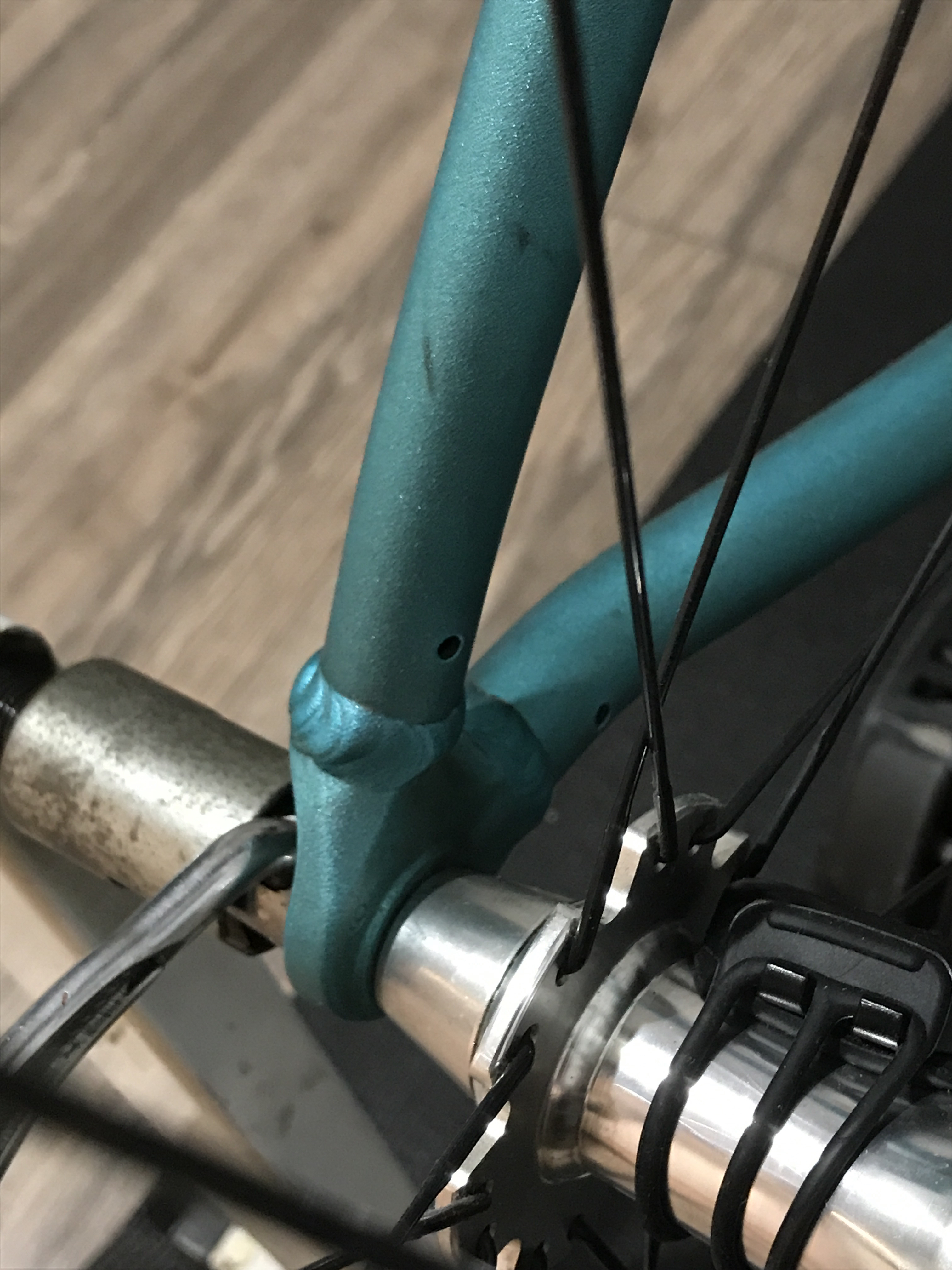
So.... should I be worried about this? I pulled my 2013 cannondale EVO out of the trainer and a bonded piece of the rear dropout broke off (see pictures). Does this impact the structural integrity? Can the piece that broke off be re-glued into place?

Anyone have this happen to them before?


So.... should I be worried about this? I pulled my 2013 cannondale EVO out of the trainer and a bonded piece of the rear dropout broke off (see pictures). Does this impact the structural integrity? Can the piece that broke off be re-glued into place?

Anyone have this happen to them before?


It's time for a Giant Patrick.
Oh snap...you are just making it too easy for me Patrick...so a highly stressed contact point on your 4 year old plastic bicycle has failed without crashing???  I getting the facts straight here?  With seemingly EVERYONES new found love of trainer rides (lookin at u Zwift) I won't be surprised if this sort of things starts to happen with more frequency...unless of course you ride an aluminum, steel or titanium bike where things are WELDED...not glued.  Me's thinks your road race season just got postponed.  

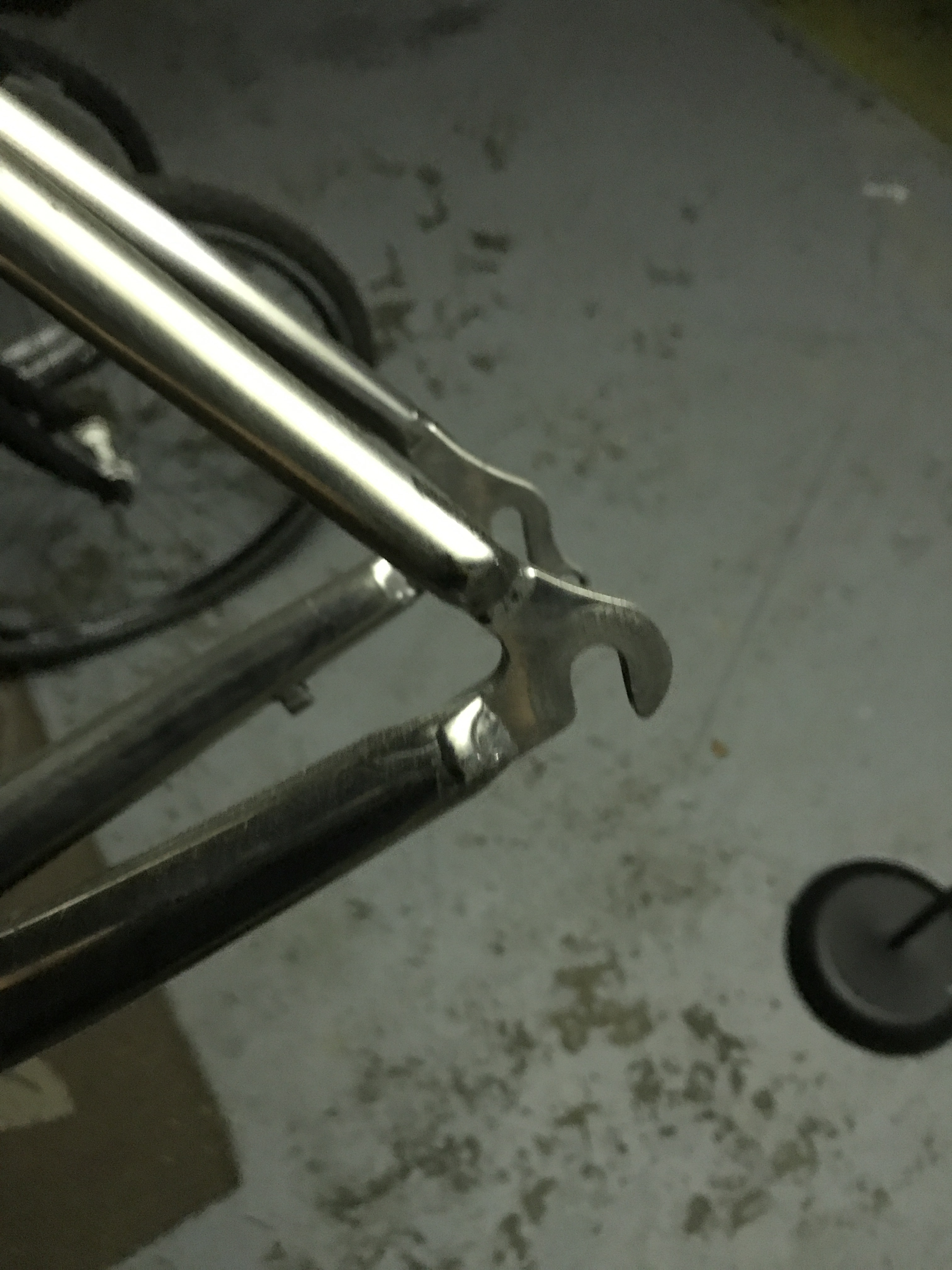
Patrick...in my attempt to verify if this might be an endemic problem I took my camera and snapped some pics of my dropouts...

lets see...titanium Bianchi from the year 2000...the dropouts were actually made from that 6/4 titanium = super tough shit...and oh wait...those dropouts are welded in there (by the most senior welders working in the Reparto Course factory in Milan) and not broken

Hmmm... 1992 Slingshot, salvaged in a state of utter disrepair on ebay and subjected to unknown hardships until I got my hands on her and subjected her to some known hardships.  Steel dropouts welded in Grand Rapids, Michigan and...not broken
2010 Spooky all aluminum and welded in Portland, Oregon by SAPA...there's that word again "welded".  8 years of unmitigated fury thrown at it and many, many miles accrued while she was bolted to a computrainer with a fork mount = no sway = more stress on dropout...wait for it...not broken.  Why? cuz it's a chunk of 6000 series aluminum welded together properly
Looks like your problem may be limited to carbon bikes (by carbon I mean carbon fiber reinforced plastic) with aluminum or steel bits bonded...(and by bonded I mean glued).
Good luck with all that...
As much as I hate to agree with anything Yaks says, at any time or for any reason - I think your bike may be toast. I'd give Paul Carbonara a call and ask his opinion as he seems to do most of the carbon repair in NYC, but yeah. That smells like #toast to me too.

PS I still miss my dearly departed 2012 R3 - lost to busted dropout :(
keep flushing those Benjamins...you huckleberry's never learn.
I think you've got a permanent trainer bike there, Patrick!
yes...with "Anti-Vibration" marketing jibber jabber too...
Patrick see if you can warranty. I think Cannondale has lifetime warranty on frame and that failure is a little embarrassing. So we're not allowed to put supersixes in trainers?