Kissena Forum Archive

Bicycle Tech/Gear Discussion Thread

8105 comments · 108281 views
GregHoge said:
Nice!  Hidden cables were expected given the Propel and Defy.  Honestly, I couldn't care less about the other stuff.  I'm skeptical of those aero gains as well.  You won't feel 2 watts and it was likely only due to hiding the cables.
2w for two small length of brake cable housing seems high.  I'd put it more to the shaping.  But they they probably had at least a few easy things to tick off.  For example, I think that it took a while for bike companies to widen the fork legs at the crown and figure out how to make a fork that didn't feel too stiff because of the rotor disc caliper forces.

All the same, in regards to Matt's comments, I wonder if Giant looked at their competitors and decided they wanted to focus more on light weight--the top version is 6.2kg, and most of the competition is probably in the 7-8kg range.  
Has anybody had issues connecting the Wahoo to wifi
It was working fine while i was away , but cant connect to my home network
I have that issue every now and then. Generally solved by removing it from the network and re-adding it.

Wahoo had a firmware update recently that I think is a bit buggy that may be contributing. After updating I had sensor connection issues, alerts from my phone stopped popping up and my ride wouldn't load into training peaks.
I have that issue every now and then. Generally solved by removing it from the network and re-adding it.

Wahoo had a firmware update recently that I think is a bit buggy that may be contributing. After updating I had sensor connection issues, alerts from my phone stopped popping up and my ride wouldn't load into training peaks.
Thanks for this.  my WiFi hasn't been picking up my Wahoo for months.  I just removed and re-added.  Looking forward to seeing it work without having to communicate with my phone first.  
I changed security settings on the router 
it now works 
but could be a complete coincidence 
Anyone try TPU tubes? Seems like a good race-day wheel upgrade.

The pitch:
  • Lighter than tubeless, with similar performance and ride feel properties 
  • More puncture resistant than butyl 
The downsides:
  • Plastic valve stems can snap
  • Can't use a threaded pump to inflate (so no good as a spare) 
  • Some makes say no rim brakes due to heat concerns 
  • Hard to repair
  • $35 a pop for the Pirelli
  • Stay inflated longer than latex, but only 1-2 days
  
https://www.cyclingweekly.com/products/can-you-trust-tpu-tubes-in-a-pinch-what-to-know-about-cyclings-newest-tube-type-a-deep-dive-on-a-thorny-topic
I bought some Ride Now tpu tubes ($12/tube and come with repair patches) to keep in my saddle bag as spares after a GP Llama recommendation. Luckily I haven't had to use them so I can't report on them other than that they take up way less space. If i ever need to, I'll report back
TPU Tubes have their role -- They are specially good as saddle bag spares, or if you want a really light setup.

For race day, tubeless or latex tubes will have much better rolling resistance -- so if you gonna invest for race day, I would put it there first. 


https://theradavist.com/ridenow-versus-tubolito-tpu-bicycle-inner-tube-review/

BTW , i have used a tubilito before and had issues , Patrick had a similar problem when we were in LA
.I found it hard to get pressure and the tire had a wobble , i just carry a butyl spare now

Bicycle Rolling Resistance did a TPU test.  Not as good as latex, but better than butyl.

Seems like its small size is the biggest calling card.  I think if people are running tubeless, the TPU are small enough to fit in a space less than 1/2 the size of a butyl tube, and that's huge--two TPU tubes fit in less than the space of a single butyl. If they lose air in both tires, they can still finish the ride.  
^exactly the reason I switched to carrying the TPU tubes. I have 2 in my saddle bag with room to spare vs. the 1 butyl tube that made fitting everything else a game of Tetris
I tested the no-flat Tubolito tubes when they came out a few years back and promptly flatted on them in Cunningham. I tried to repair them with their patch kit and that failed miserably. 

I carry butyl + a Park Tool patch kit for redundancy now.
I bought a bunch of RideNow TPU tubes as spares and I think that is really where TPU shines.  They are super small and light weight when compared to Butyl.

That's where the benefits end.  Rolling resistance difference is not noticeably different and, more importantly, they are fragile (at least in my experience).  I had 2 flats in LA with TPU tubes.  I ended up on butyls in both tires by the end of the week.  They just seem to have little to no flat resistance.  This is all on 28mm Corsa Pros that have replaced in the last 3-4 months.

I haven't looked into it, but if they are offered with a thicker material, I would gladly take the hit on rolling resistance and only use them as spares to be swapped out once I made it home.
I've gone over to the dark side and have a disc brake bike in the stable. 

For my cross racing friends - what rotors do you run/like? I have a few different pads I'm going to try out for hybrid road/dry cunningham duty and then swap to sintered for muddy cross races, but haven't really found any compelling reading material around rotors outside of heat sinks.
I'm sure in some deep dark corner of the internet someone has put together tons of different reasons to pick one over the other, but I have Dura Ace rotors on my road bike, generic shimano rotors on my winter wheels (I think maybe what is considered the tiagra level), and standard sram force rotors on my cross bike and can't say I really notice a difference between them (I stop how I expect and want to on all of them). The only real difference is likely weight.

Pad material and rotor size are where you'll see the most difference in feel, stopping power, etc.
I've only used SRAM rotors so far, but yeah when it comes to stopping all SRAM rotors work as expected. I did get the more expensive RED level ones for the race wheels, simply because they weight less. 

The pads are likely going to have much more of an impact. After trying a few different ones, I settled on Swiss Stops either the green or yellow and they are so much better than the generic SRAM ones. If crazy town muddy they wear out quickly ish, but even then the stopping power is superb, and they barely ever make noise even when wet -- even gotten questions like "how are yours so quiet?" 

Different material pads work better or last longer in the wet, but at some point, I stopped caring, just get the Swiss Stops and ride on.

Properly bedding the pads helps too -- To bed them whenever I replace pads I go around the block, speed to say 15-18ish km/h and brake, and repeat about 10 times, first the front only, then the back only, then both just for kicks. I presume it helps to stick to the same brand of rotor and pads, as what bedding does is wear the pad very slightly and leave a tiny residue on the rotor, which makes it stop better.
Second on the Swiss Stop yellow pads for sram set ups as my go to pads for cross.

For Shimano set ups, I like their resin pads. They don't wear too quickly, aren't loud, easy to bed in and don't have the braking feel cliff that metallic pads typically do (that feeling where they aren't biting until they do then they're reallllllly biting)
Awesome, thanks for the info all! Also I'm going to assume best practice is to stay on one type of pad on rotors, i.e. if swapping pads, swap rotors too to match. I'm trying to plan for Rasputitsa which looks to be a really muddy/icy one this year based on the weather reports I've been following this winter.
One last comment, I usually have a pair or two of spare new swiss stops pads on hand, and when those get installed, order new spares, etc... -- basically one more item in our own little privateer service course.
FWIW , I found the Swiss stops kind of a squeeze to get in the caliper
@Mark Taylor same here. I had to sand them down a bit to get them to fit. 

@David Yang i think you’re fine to swap the pads as frequently as you want but I’d just wipe the rotor down in isopropyl alcohol or disc break cleaner and then re-bed when you switch pads 
Tubeless question: I got a small puncture in Prospect today. I looked down after the hill and saw sealant all over my frame. I stopped, rubbed down the tire, removed the object, I think glass, and then held the hole shut with my finger while the sealant sealed it. There wasn’t a loss of a lot of tire pressure, but there was a pretty large amount of sealant spray. But, I was able to get home comfortably and easily without pumping up the tire. 

Will the tire be safe to continue to ride now that the hole has sealed? Should I add more sealant? Anything else to keep in mind?
Definitely top up your sealant since sounds like you lost a bit. Also sounds like the cut in the tire in the tread, not the sidewall so you can put a little dab of superglue in the cut to sure it up that little bit more, but if the tire sealed and can hold the pressure you want, then you're good to keep rolling on it.

Worse case scenario if the tire still has lots of life, you can clean the sealant out, wipe it down with so alcohol, throw a boot on the inside and convert it to tubed (I've never had luck with setting the tire back up tubeless after installing a boot but YMMV)
I'll add that if you like the tire and don't mind the work, you can take the tire off, remove the dried sealant and use a regular inner-tube patch to patch the tire from the inside.  
As suggested above, add a bit more sealant.

If you can get to a rideable pressure, then it's sealed and you need not worry about it much. If it opens again, patching it with a boot or patch is relatively easy. Good luck!
ENVE must be getting lots of questions about hookless rims.  They just added a page to their site about them and blasted out notice via email.

"Hookless rims have no benefit to the consumer, only to the manufacturer.

Hookless rims have benefits for both the consumer and the manufacturer. For the manufacturer attempting to follow the strict tubeless rim dimensions as outlined by the ETRTO (European Tyre and Rim Technical Organisation) for a tubeless road rim, the hookless design allows ENVE to use precision machined molds to create a precise tubeless rim dimension. To manufacture a hooked-bead, you must use soft materials or dynamic tooling that can be extracted from between the resultant hooks. This can result in less consistency of the rim’s critical tubeless bead seat dimension. A precise dimension at the rim’s bead seat delivers a more user-friendly and safer tubeless experience to the end user."

https://enve.com/blogs/journal/hookless-rim-technology-101

I got the email also
Idk about y’all, but my life is worth more than a few watts savings in aero/rolling resistance…
Some of their explanations are very much 'this is a marginal gain that might not even exist but...'

In some ways, it begs a question.  Namely, maybe they could design a process that would involve making hooks in the rim but with better tooling/molding technology.  And when that day comes, we might hear about how it's a redundancy advantage or some such.
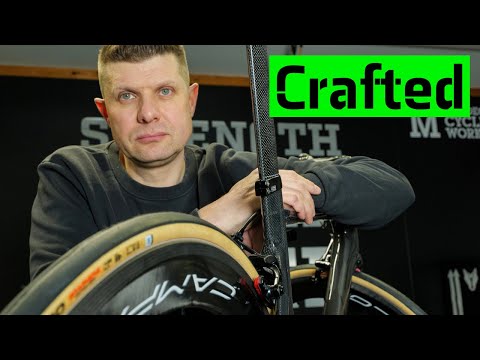
So I never really knew much about campy eps system (the previous version before it went wireless) other than it was difficult to install, but oh my god, what a disaster. It's Italian engineering in such a perfect way; absolutely beautiful to look at and a nightmare to work on. It's no wonder no teams are on campy. It must have been an absolute nightmare for mechanics.

Video for reference: https://www.youtube.com/watch?v=lso7vK9kX14