Feb 01, 2024 at 12:41 PM

Because that was one of the issues that slowed the acceptance of rotor discs at the WorldTour. Ineos didn't want to race the heavier Pinarello, Pogacar didn't want to race the heavier Colnago, and there was a period when the racers would switch to rim brakes for climbing stages. Shedding a half kilo to a kilo for climbing is a tradeoff I bet most WorldTour GC riders would take.GregHoge said:What makes you say that?
I guess "if," as I don't see it occurring. the 6.9kg works for the bike companies. At least for a while. But, if they could have a $20k+ Tour de France bike, maybe the fancier bike companies would go for it.

I think the frame builder Rob English of English Cycles has the best solution for disc brakes:
https://velo.outsideonline.com/road/road-racing/bikes-of-the-bunch-rob-englishs-english-road-bike/Integrated disc rotors
Road disc brakes are pretty great, in terms of stopping power, modulation and consistency. However, the very tight tolerances between pads and disc can be frustrating to set up without rub, and it only takes a slight ding to the rotor to have a constant noise that can be tricky to remedy.
So, a thought experiment. Why are the pads so close to the rotor? In order to get the most mechanical leverage – a big movement at the lever equals a small movement at the pads. But why do we need that much leverage? Because the rotors are very small, so to be able to slow the much larger rotating mass of the wheel, we have to squeeze the rotor tightly. Therefore if the rotor was bigger, we could have a caliper with the pads further away, and this would be fine as we wouldn’t need as much mechanical advantage.
To take this to the extreme example, what if the rotor was the size of the rim? Like 622 mm in diameter. In looking at this problem, it became apparent that it would be possible to dispense with a separate rotor and use the rim of the wheel as the braking surface. Testing of different materials for the braking surface and the pads concluded that a machined aluminium surface and standard pads provides fantastic dry weather braking. They’re not awesome in the wet — for those conditions having the braking surface further away from the wet tire/rim in the form of a separate, smaller rotor makes the best sense. But I digress.
Brake rotors that almost reach the tires.With the rotor being almost five times bigger than normal, the brake pads can be several millimetres clear of the braking surface without sacrificing power. This would make brake rub nonexistent even if the wheel goes a little out of true. It also turns out that a well designed mechanical caliper can provide all the power and modulation required – no need for the usual hydraulics. It turns out a steel cable will do this job admirably! Testing also showed that a 32 mm tire can fit comfortably under the caliper.
So I decided to build a bike around this concept. And I discovered another advantage to this radical braking system – by moving the caliper mounting from the end of the fork leg to the fork crown, the fork legs do not receive any asymmetrical loading, and can be built to have compliance for comfort that will not be activated under braking forces.
There was also no need for the regular oversized through-axle – instead the wheel can be mounted totally securely with open dropouts and a cam-actuated quick-release lever that allows for the wheel to be removed in seconds without tools. And better yet, with no hydraulics, there are no concerns about needing to block the pads from excessive movement whilst the rotor is removed. And it is even easy to add cable splitters or other forms of cable quick release if the bars need to be removed for travel.
I am very excited about this revolutionary bicycle, and look forward to testing it. Look at all the gains – the same braking power, modulation and control, but with less weight, easier-to-remove wheels, no hydraulics, more compliant fork and no rotor-rubbing noises! Yes, there are a couple of downsides – it’s not ideal in the wet, and it can’t use the best shaped aerodynamic (carbon) rims. Still, could this oversized rotor concept be the next big thing in cycling?

Marketing, sales, partnerships and events are probably a big part of their staff.LennartZandbergen said:Of course it sucks for everyone involved, but Zwift's business is crazy. It's the biggest in de market by a stretch, has a super loyal user base of around 1 million people and pretty low operating expenses. How can it fail to make a profit for so long!
Also, what do all those employees do. I use Zwift in winter only, so every year I'm coming back to it and except for some new maps nothing really changes? And it doesn't really have to either, it works fine.
Even 201 which is the lower estimate at Glassdoor seems shockingly high. If I had to guess I'd say they way over-invested in their in house training platform to chase the trainer road crowd, but that doesn't get the numbers high enough to make sense. What's really weird is that the VC's all went super anti-bloat/make your money last/kill non-revenue projects when rates shot up; that was a long (in startup years) time ago. I'm really surprised they've got that kind of burn.mugwump said:So here's the weird thing. They laid off over 100 people. How many people could they have before the layoffs? (LinkedIn estimates between 500 and 1000 employees)
I'm among those who don't understand why they've had multiple rounds of layoffs. They also laid off people at the start of the pandemic. I don't know what they're doing, but I have a hard time believing it's all marketing, sales, partnerships, and events. Even though I would have thought they'd have way more courses to choose from than they do.
I thought that when Min sort of, kind of stepped aside, it was to have a more experienced person running the company, but this suggests to me at least that he was teh person to dictated the layoff.s
Are all the employees just keeping the platform functioning without hacks and glitches?
That sounds like me, I'm not even going to check. That's not what I meant. I've worked in my share of startups and I cannot even *imagine* getting that staff to 500. That is a whole lotta mouths to feed, even if they have internationalized sales, marketing and legal teams.mugwump said:@Jules
Weren't you the guy who, when Zwift had their first round of layoffs, wrote, 'they're sitting on a mountain of money, in a chair made of money'?Seems like they have lots of money coming in. I'd think subscriptions still benefit from people not cancelling in the summer and such. I'm connected to Min and one of their (now former) PR managers on LinkedIn. Min always makes it seem like his job is cyclist and product evangelist. the PR manager seems to have been working largely with outside vendors.
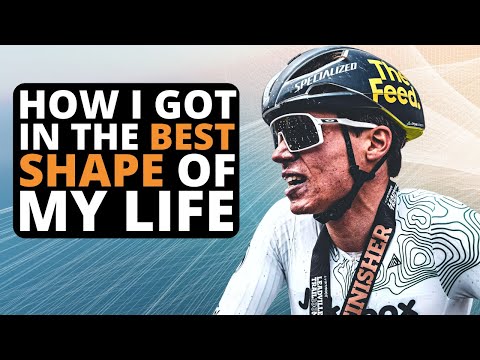 https://youtu.be/7LScBZ5_zg0?si=0UYesJKepSyl5JjW

The exercise regimen that the Los Angeles Angels rookie first baseman conducted over the offseason was not recommended to him by a fitness professional. It’s not grounded in any conventional wisdom. And to pretty much everyone in his orbit, it seemed downright ridiculous.
Schanuel spent two days a week this offseason standing. For the entire day. From the moment he woke up until the moment he went to bed. His only reprieve was for meals.
It was a routine that sounds far easier in theory than it is in actual practice. And one that required a great deal of mental and physical willpower to complete.
“The first time, I was losing my mind,” Schanuel said. “The first day it was 1 p.m. and I had lost my mind.”"
https://theathletic.com/5279867/2024/02/16/nolan-schanuel-no-sitting-workout/
It raised a few points that I thought were pretty important:Mark Taylor said:
Interesting about Sagan is that he was relatively honest and open about his motivation not being the same as when he was younger.Mark Taylor said:I'm not sure how excited i would be as a sponsor if i read this , I guess it means , we will got a lot of press , but no actual wins'He could be our new Sagan' - door open for Julian Alaphilippe at TotalEnergies