I did, yes. I’m planning to email them next week, I’m also curious what they’ll say. I’m also going to get GP5000s, which I’m looking forward to. I previously rode Vittoria corsa pro’s (Jonas fan boy, hello), but I like JP’s instinct about Continental getting it right.LennartZandbergen said:You bought your bike directly at Canyon, right? I'd be curious what they say about it
In Print: Articles of Interest
Read into that how you want.
If you're a skeptic, or are interested in scientific research in general I'd consider this required listening.
https://podcasts.apple.com/gb/podcast/can-we-trust-sport-science-research/id1461719225?i=1000649056583
"The top cycling product is completely destroyed by accidents that are avoidable," Vangramberen opens his plea.
If you see what happened now in the Basque Country ... In addition to a lightning-fast descent, there is a gully of boulders. Without pads or mattresses. That's a very big mistake."
At the same time, the cycling journalist stresses that future analysis must go beyond this concrete fall.
"We have to look at this with a helicopter view. The technology exists to make it safer. Clothing with airbags, like they are already used in horseback riding, skiing and motocross."
"Why isn't that becoming mandatory in racing? Like the helmet in the past - it's something almost unimaginable now. It's there, use it."
"Some former riders then bring up the argument that it's always been that way, that it's part of racing. But that's nonsense, isn't it? Do we really have to keep doing it because of that?"
"What sensible parent is going to put their child on a racing bike any time soon? It's 2024 and riders are still allowed to fly unprotected at 80 kilometers per hour against a boulder in just swimming trunks."
"Name me one sport in the world where you keep seeing serious injuries. Or there could be a death at any moment. There's no such thing, right. It's just not of our time."
"Look, so much is invested in bikes that are ever faster and lighter. But how often are they safer? Do something about that, because this just has to stop."
Tipping point?
Vangramberen thinks/hopes that the events of the past week may be a pivotal moment for the future of cycling.
"It's now two accidents in big races with the very biggest riders. This could be a tipping point. Sunday during the Ronde, there was a discussion in the car with Greg Van Avermaet about those safety clothes. He was reluctant then, but just now he messaged me that it might not be a bad idea to work on that after all."
"But honestly: after the death of Gino Mäder, we also thought there would be a change. People flaunted the new security body SafeR, but nothing actually changed. It's all alibi measures. There has to be real change at some point."
"I think the initiative will have to come from the riders themselves. Although I honestly don't believe in that. Where there is money, honor and glory to be had, people are going to take risks."
"So they need to be protected from themselves by reducing the impact of the fall. So for that, it's looking to the UCI. As the umbrella organization, they can mandate that everyone has to ride with protective clothing."
Finally, Vangramberen also called for an end to (badly) fallen riders being so explicitly portrayed live during races.
"During Dwars door Vlaanderen, our director immediately emphasized that Wout should not be portrayed too closely. Certain things - such as administering medical care - were never on screen."
"Beware: I think we also showed that fall in the Ronde last weekend too much. But that that injured woman is not put on screen is self-evident. Out of respect for family and friends."
"But in Spain they cover it as if it were an exciting soap opera, with all the trimmings. Including a hundred reruns. There should be a protocol for that too in the case of serious falls."
"If you film a traffic accident you can be punished, but showing a heavy fall in the race all over the world can just happen. What are we doing then?"
Renaat Schotte: "I get a dirty Formula 1 feeling from 20 years ago about this."
On Radio 2, Renaat Schotte also made a plea to make the race safer as a matter of urgency.
"I don't know what's going on this spring. You know, I wonder to what extent the improved braking and faster bikes have anything to do with it."
"I get a dirty Formula 1 from 20 years ago feeling about this. With riders crashing because of rules. I hope to never have to talk about that in the race again."
Schotte then raises again the question about braking: "Is there enough braking now? To be clear, I am not advocating the reintroduction of the classic brake, but now with the disc brakes there does seem to be an increased risk."
"Clearly something has to change. If not in terms of safety measures, then to the mentality in the peloton. What are we doing and why are we doing this? Riders should also take a look at themselves. It is sport. I dare say but sport. Not a game of life and death."
Thanks for the translation. I think this matter is trickier than it was.
First, speeds are up. ASO's Gouveneau mentioned this as for a reason to slow the peloton down going in to Arenberg. (he didn't mention that this year, the stones are likely super-slick, which will lead to more crashes, even at lower speeds.)
Second, WorldTour bike racers are conspicuously leaner. In addition to all the careful eating, going to altitude works as an appetite suppressant. Getting their body fat as low as they are, there's the real likelihood that their bodies are catabolizing bone matter. I talked with Allen Lim when he was working for Slipstream and the team sent riders to altitude between the Giro and Tour in 2008 partially so they wouldn't gain any weight post-Giro. He said he worried every time one of them went down. While Wout van Aert went down hard, he also was just off of altitude for 6 weeks or something, so he was super-lean, and thus super-thin boned. And some doping products can also lead to brittle bones, but anabolic steriods are probably not abused like they used to.
Third, there's a higher level of fitness. More riders at teh front together longer means more chances for disaster.
For the Basque country crash, while it was weird that there was a barrier just before the turn, and no barrier where it seemed to be needed most, it looked to me like Evenepoel faded in the corner, swiping Tesfazion's wheel. The resulting carnage probably could have been reduced, but with 200k a day, it's hard to anticipate everything. At the same time, there are things that can be improved. When I was in Belgium in 2008, the finished I witnessed at the now-departed Three Days of De Panne had inflatable barriers that fit between the vertical fencing and horizontal feet, so that it was impossible for a wheel to hit a foot and impossible for handlebars to hook the barriers. I am surprised this isn't widely used.
I think the responsibility is largely with race organizers optimizing for spectacle over rider safety. We've seen it with shitty finishes, suicidal descents, and refusing to to cancel/shorten stages in dangerous weather.
Second to that is the ephemeral team/league structure that drives people to risk their literal lives to maintain a spot on a team.
When the incentives are high and the employment terms are paper thin, riders never have a real option to say "no."
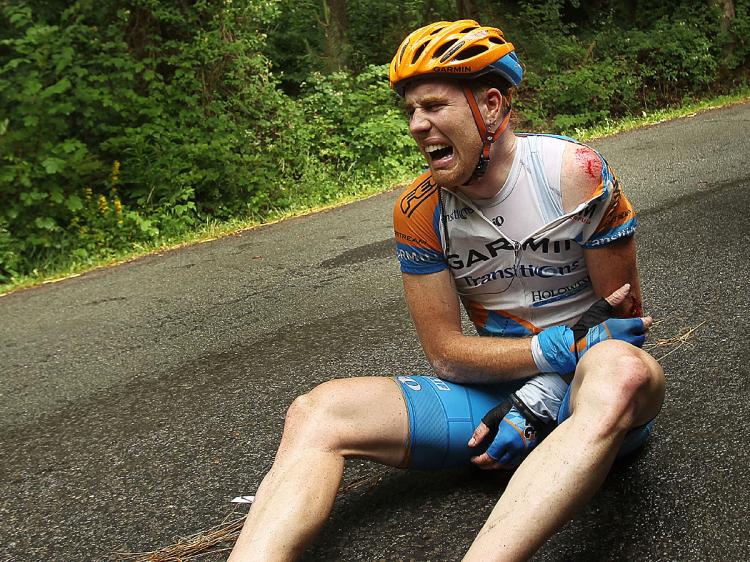
When WVA went down a huge curtain closed on my enjoyment of the season. Not for him in particular but it felt like a last straw for me, having seen so many fantastic sporting opportunities end in blood on the pavement and an award winning photo.
I also don't think WvA, Remco and Vingo take all those risks because they fear their contracts will expire.
WvA et al. crashed because all the teams felt that they had to be in the perfect position at 67K(!) to the finish. Back in the day (well, until like five years ago), the early hours of big races used to be chill for most riders, including the very best. They were not fighting for positions or taking risks the whole day. "I was always sitting in the back of the peloton and talking to other riders until the final", Museeuw said in a podcast last week. Now, teams go HARD almost from start to finish nowadays in the big one day races and the stage races. Both the crash today and the crash at Dwars door Vlaanderen were not in the final hour of the race, but riders took all the risks.
Then, speed. Better aerodynamics make downhills faster. Improved fitness and nutrition makes everything else faster. Average speeds are up big time. Milan - San Remo went at 46 km/h average last time, 42 km/h ten years ago and 40 km/h twenty years ago. Flanders: 44, 41, 38. Roubaix: 47, 44, 42. Higher speeds simply lead to worse injuries, regardless of how strong your bones are.
Also, all races are important now. WvA did 6 one day races and one stage race this year, MvdP only has four days of racing in this year, both Vingo and Remco only did three stage races so far. I don't know if less riding leads to noticeably lower peloton riding skills at the world tour level, but what I do know is that the stakes in the races they show up for are higher. Riders are less inclined to touch their brakes if that costs them the oh-so important position out front in the one big race they're doing this month.
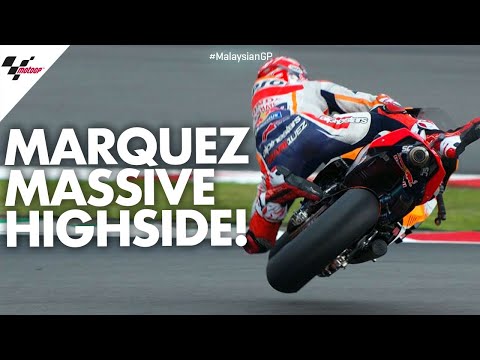
It's unrealistic to expect every random downhill section in all races to be made perfectly safe, I think. For sure sprint finales have to be safer than they are now, but what could the Dwars door Vlaanderen organization have done about that crash? A total rethink of clothing worn in bike races is the answer to me. This MotoGP rider was able to walk after crashing at 60 km/h:
https://www.youtube.com/watch?v=6nOwDAel38g&ab_channel=MotoGPThe other side of the coin, is that looking at this Basque crash and the one at Dwars Door Vlaanderen there seems to be little that can be put on the organizers. It is easy to place blame and be upset, but both appear more terrible luck and related to top riders usually being close together at critical moments.
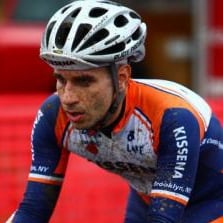
There might be a little more to today's crash, granted. The number of riders to mess that corner was big, even the chase group of 4 which was about a minute ahead of the peloton had a rider go off road on the same corner, but managed to safely navigate the ditch. Could, should the organizers have known and planted better safegards at a innocuous looking corner 37km to go?
What's the threshold? Should they put hay bale on every corner, on the full course?BlakeFoster said:I read something about the roads being bumpy/poor due to tree roots in the region. Came up in a couple different articles from different riders. I do think that corner at the bottom of a descent, with the draining ditch as it was + boulders, IMO there’s no excuse not to have at least hay bales there. Hay is dirt cheap.
Ayuso's post race interview is in spanish, he mentions that there was a little bit of gravel and bumps because of the tree roots "pero bueno, nada que no te encuentres en cualquier otro sitio" "but well, nothing that you wouldn't find anywhere else"
He also mentions how he crashed in a straight away the day before.
https://www.youtube.com/watch?v=49_sfy5i2CIhere's 1988. go to 22:55
indeed. To me, what's nuts is that the left side of the pave, where the stones are continuous, is where the crashing began, not with the hole on the right side of the road.Mark Taylor said:The car handled it worse than the bikes
Handlebar width is interesting. On the one hand, they've already limited the turned-in brake levers, which struck me as a pretty good idea. On the other, I think even Adam Hansen, the president of the CPA, used pretty narrow bars in his day, and he's a big guy. I think there's a case to be made for banning bars 36cm in width or less, but I suppose smaller riders would be bummed that they couldn't be proportionately narrow like a Van Schipp.
I'd love to know how they came up with that statistic.Mark Taylor said:On a podcast yesterday it was mentioned that the UCI have studies on crashes and more that 50% are caused by reckless riding .The balance is probably because, 20 DS's are screaming in the radio " move to the front now "
Agree that statistic sounds like it came from the UCI, ie pulled out of a very dark, stinky place. Shame they didn't care to tell us about the other 50%, or what kinds of "recklessness" they saw, and when. How did they count crashes? Per "incident" or per person that went down. Did they follow up with severity; how many days of training/racing were lost? Did they break it down by season, road/weather condition?mugwump said:I'd love to know how they came up with that statistic.Mark Taylor said:On a podcast yesterday it was mentioned that the UCI have studies on crashes and more that 50% are caused by reckless riding .The balance is probably because, 20 DS's are screaming in the radio " move to the front now "I do think the race radios are, at best, an even split between making races safer and more dangerous.
UCI man. Thank god somebody is looking out for sock height.
Two people from Zipp's product team join Escape Collective "Geek Warning" to talk about de Gent's crash and their hookless wheels. https://share.transistor.fm/s/68c5b871
Sounds like a PR exercise by Zipp. That would be much more compelling if there were engineers who did not have a vested interest in one view of that story.BlakeFoster said:Resurfacing the hookless debate. I saw this linked on reddit last week and started to listen this morning. Haven't finished yet, but figured others may want to listen, too.
Two people from Zipp's product team join Escape Collective "Geek Warning" to talk about de Gent's crash and their hookless wheels. https://share.transistor.fm/s/68c5b871
What I haven't heard has to do with the tolerances of tire beads, if the range of tolerances is safe with the hookless rims, and what is the possiblity that a random tire is beyond the safe tolerance range and how someone could possibly know. Several in our group have reported that their Conti' tires have been extremely hard to mount--is this because the rim is too tall or the bead is too tight, or is it the confluence of a rim being ever so slightly too tall and the bead being slightly too tight?
So the next question for me is: would a hooked rim hold the slightly loose bead and a hookless not hold the same slightly too-loose bead?
I'd like to believe the hook is a kind of fail-safe. But I don't know if it is.
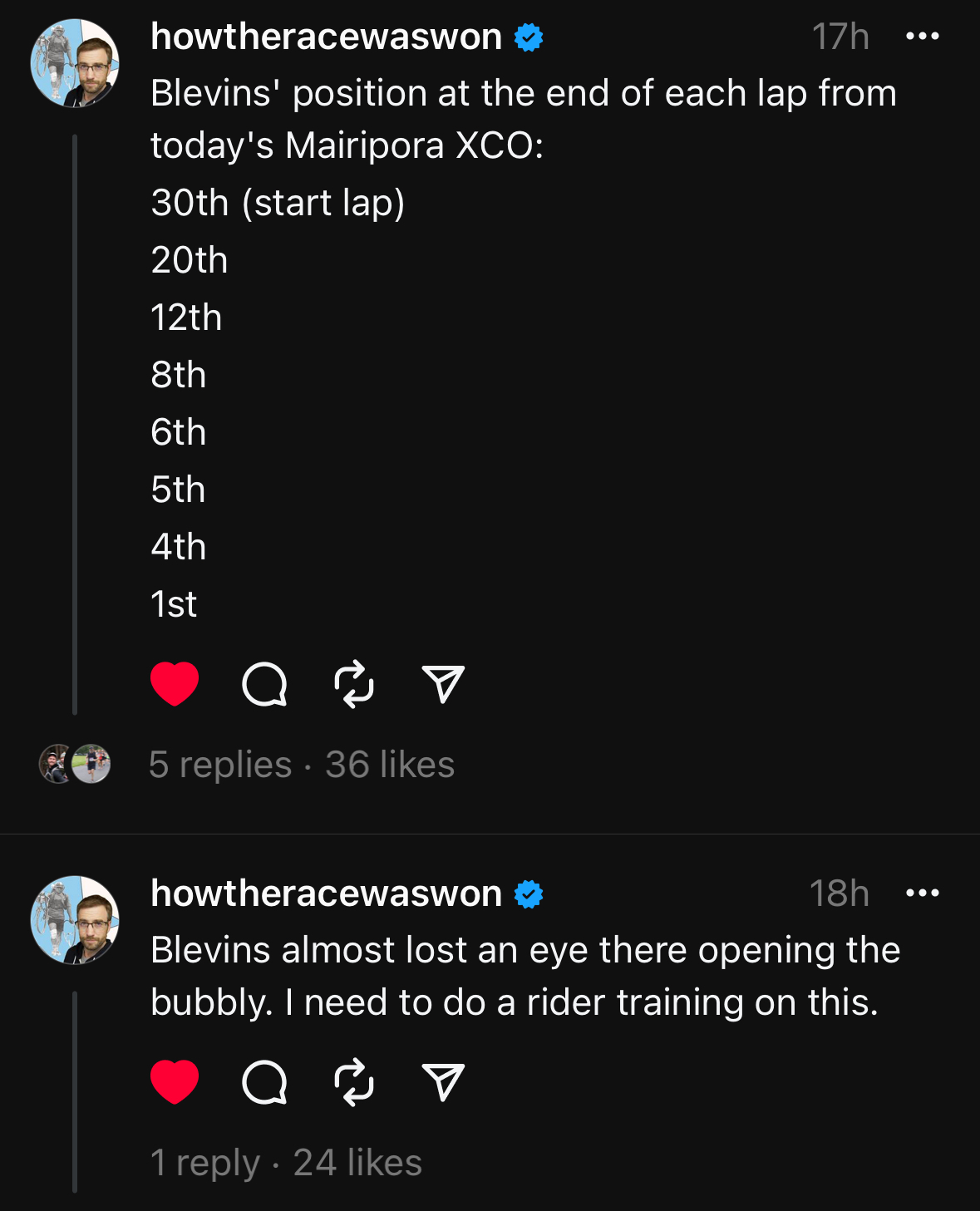
https://www.threads.net/@howtheracewaswon/post/C5wRS-cIn6f/?xmt=AQGz5UFJJUwU4yQjLWJ0VgZiM6TpemJfR8cGF_gCGza2Hw
the women’s race is also pretty great, specially the last two laps Races can be viewed on Max
Aiming to include more countries, the IOC/UCI changed the number of olympic MTB slots for the top 10 ranked countries from 3 to 2 (thus freeing those 10 extra spots for other nations)
The battle is on to be part of team USA. After the weekend, I'm wondering if Kate Courtney might not take one of the slots.
Here are the highlights of the Elite women and Elite men XCO races:
https://www.youtube.com/watch?v=sI-oJadywyk
https://www.youtube.com/watch?v=PCTA4-iMJJo
https://www.youtube.com/watch?v=Fuk8uQjlRbo
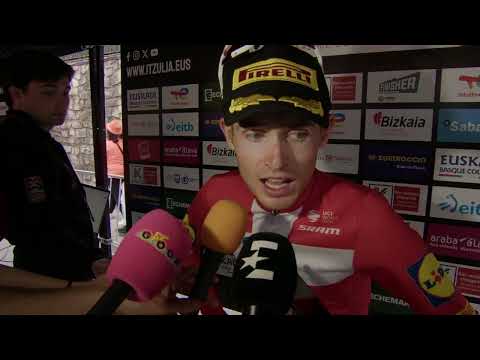
https://www.youtube.com/watch?v=kEhK_qryPnc

https://youtu.be/kQsJK81rZ4E?si=8VgpxPKCKBVd1MXp&t=1376