Kissena Forum Archive

Bicycle Pictures and Videos

4908 comments · 90771 views
@Jules

It strikes me that we can't separate the chicken from the egg when it comes to what drives the popularity of a sport or sporting figure when used in marketing.  It's a perpetuating cycle.  Bo Jackson was an easy sell in that ad not for his charisma, which is not experienced at all, but for the fact that he was a pro in two hugely popular sports of his time.  There's a base of understanding, and not much needs to be added by Nike.  THey're effectively piggybacking on what we know already about those sports, not introducing Bo, nor explaining their product.   

Cyclists, save Lance, don't have that built-in advantage when it comes to most mainstream consumer products, save Wheaties.  

Yeah I didn't pick Bo because of his marketability, just as an example of someone that plenty can compete with and win on the charisma scale. (3d6)
https://www.youtube.com/watch?v=QvloKB9Fg58
https://www.youtube.com/watch?v=VMinwf-kRlA
@Jules
@mugwump
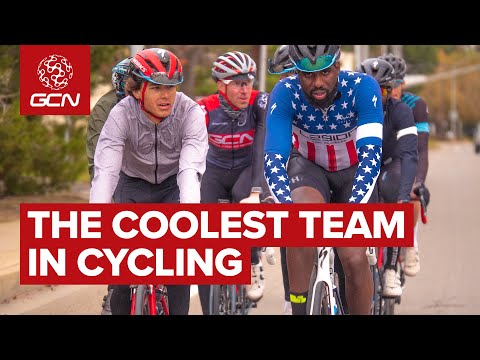
Justin Williams goes after some of the same topics (and many more) in this GCN/Jeremy Powers video & interview

https://www.youtube.com/watch?v=WzB20OftfiI

^fantastic video. Definite stinger "what's cool in cycling is being not cool." Ouch!
https://youtu.be/KX4u4J6m5Pg
Jules said:
^fantastic video. Definite stinger "what's cool in cycling is being not cool." Ouch!
It was better than most of the videos I've seen with Justin Williams.  But I was bummed that Jeremy didn't delve deeper. I wanted to understand how teams are holding riders back in the publicity realm--it's hard to see at the domestic level when most team staffs are drastically underpaid and overworked and desperate for any publicity. At the same time, there is never a shortage of stupidity and short sightedness in the world and cycling is no different.  

I also tried to hone in on the cool comment.  I wasn't sure what to make of it.  On the one hand, that cool is not being cool is a truism.  I don't know if it is more so in cycling or not, and his examples--of him in sweats or team merch' and his brother dressing possibly outlandishly.  I couldn't tell what he thought was the right way to go about things.  

Part of me feels that if "what's cool in cycling is being not cool" is overall a good thing, and could make cycling more appealing because of the indifference.  Part of me wonders if chasing the elusive cool ever pays off.  I guess I don't know how to define it, and as a person who grew up with cycling being uncool just for being cycling, I think the creating of our own language and traditions is a true response that cuts both ways--that it's uncool has a kind of appeal, but if it's too "high fidelity clerks" then it is an impediment.
@mugwump I've seen plenty of examples where rider-specific promotion is seen to be at the expense of the team or the race. Cycling is particularly good at keeping individuals down because there is always a new young gun coming up and the teams are incentivized riders cheap. This only really seems to crack for the world champions and even then (Thor Hushovd) it doesn't have a lot of longevity. Again - no stadium model, etc. 

I think the "what is cool" question is a bit bigger - my view is that leagues and specific athletes make things cool - both things that cycling doesn't have right now. There was a point when it seemed like everyone was wearing a livestrong bracelet. Oprah puts the number at 80 million. Regardless of the back story to that particular fraud it's a testament to the "be like Mike" power individual athletes can have.


@Jules

What is relevant is Williams' experience.  As he never rode at the WorldTour, his experience is amateur, continental, and pro-continental squads.  These are generally threadbare outfits stretching their resources as far as possible.  I have a hard time believing that these squads would turn down anyone helping market them.  The WorldTour is another story, though I'm guessing that Hushovd's WC victory did translate into some fat salary years at BMC, after he exited Slipstream.  Maybe Justin was referring to something like "the danielson rule" at Slipstream--podium caps needed to be worn brim-forward as sponsors paid for the head space and it was only seen if the brim was facing the camera.  Did the backwards cap constitute 'cool' in some way?  Was it right to limit it because sponsors had paid for the space?

The "what is cool" issue is, arguably impossible to parse.  Michael Jordan was a pretty unabashed asshole, but somehow he became a huge star.  Was it that he possessed a unique talent or charisma or did Nike (and Spike Lee) create it?  Jordan can be seen as the originator or popularizer of any number of trends that came out of basketball when he played and he did seem to help drive basketball's popularity at th time.

Armstrong is the big case study for us.  I think Armstrong did possess something big in the charisma front, but I'm also pretty sure that there was a pretty heavy 'village wide' effort from all parties--his cycling teams, USA Cycling, his management teams, Nike, and more that really helped.  Right person, right story, right time.  It was a pretty heavy lift and fairly unprecedented.  That it was unprecedented might have been a help.    

Could Kate Courtney, or Chloe Dygert for that matter, replace Bo Jackson?  That might be more relevant.  I think the general public needs a story they can quickly and easily understand in order for the typical mainstream marketing campaign to work.  I think that's harder with a cyclist than a ball and stick sport athlete.  In The Netherlands, I assume Marianne Vos could sell whatever, but here, it seems like it would need to be the right product for any cyclist to be the face of a marketing campaign.  
Well I don't think cap forward vs backwards is the issue.

I think it's things like individual riders bringing sponsorships, which reverses the power structure between rider & team. I see this happening unhindered in solo sports like triathlon, cyclocross & gravel where the team isn't needed the same way, it's clear that the athlete owns the sponsorship.

In the case of sport stars like Jordan, LA, etc the crux for me is that the star was the asset, not the sponsorship.  Because #bikes the teams are always desperate (or one step away) and are stuck in a position where the sponsors are the assets and the stars are secondary. To me this seems like the crux of the issue - how can you attract athletes to a sport where they can't really be superstars - or where it happens 100x less often than in ball sports.
I don’t think Lsgion is trying to make cycling look cool to the people that think of MJ as a successful asshole, more so for people that think of MJ as a shoe and fashion mogul. 

These guys don’t seem like assholes either- It looks like Legion walks the talk in terms of representation. Recently, they donated their prize money to cover race fees of aspiring, CA female cyclists. The bit about building and donating a bike for every race they win is significant too. All this while marketing the team as a group of winners, not Fondo attendees. 

When I watch this video I think about what I’m doing to express myself as a cyclist and what could be done to make cycling more interesting and accessible. 
^That usually means do the opposite of whatever this is: 

I also think Legion is trying to capture and display American culture within cycling more so than anything. In previous interviews and the GCN video, Justin Williams has talked about how being a kid from South Central LA is worlds away from being a kid growing up surrounded by the European cycling scene and culture and that disconnect between the two is I think where a lot of Americans look at cycling, cock their heads sideways and give a big "right....". So to that end, Legion shows up to races playing music they want to hear, wearing what they want to wear (whether it be team branded merch or otherwise) and don't really feel the need to live up to what is thought of as "proper" in European cycling culture.

To me, this is where the "cool" factor comes in. Kids in the US can look at Corey or Justin Williams and relate to their music choices, their style and their general attitude as Americans and have an icon in the sport they can feel a personal connection to, whereas looking at a WT rider, even American riders, it may be more difficult (not to say its not possible, especially with social media/youtube) because of the structure and nature of that beast (soigneur, team buses, riders being shepherded around and looked after, etc.).

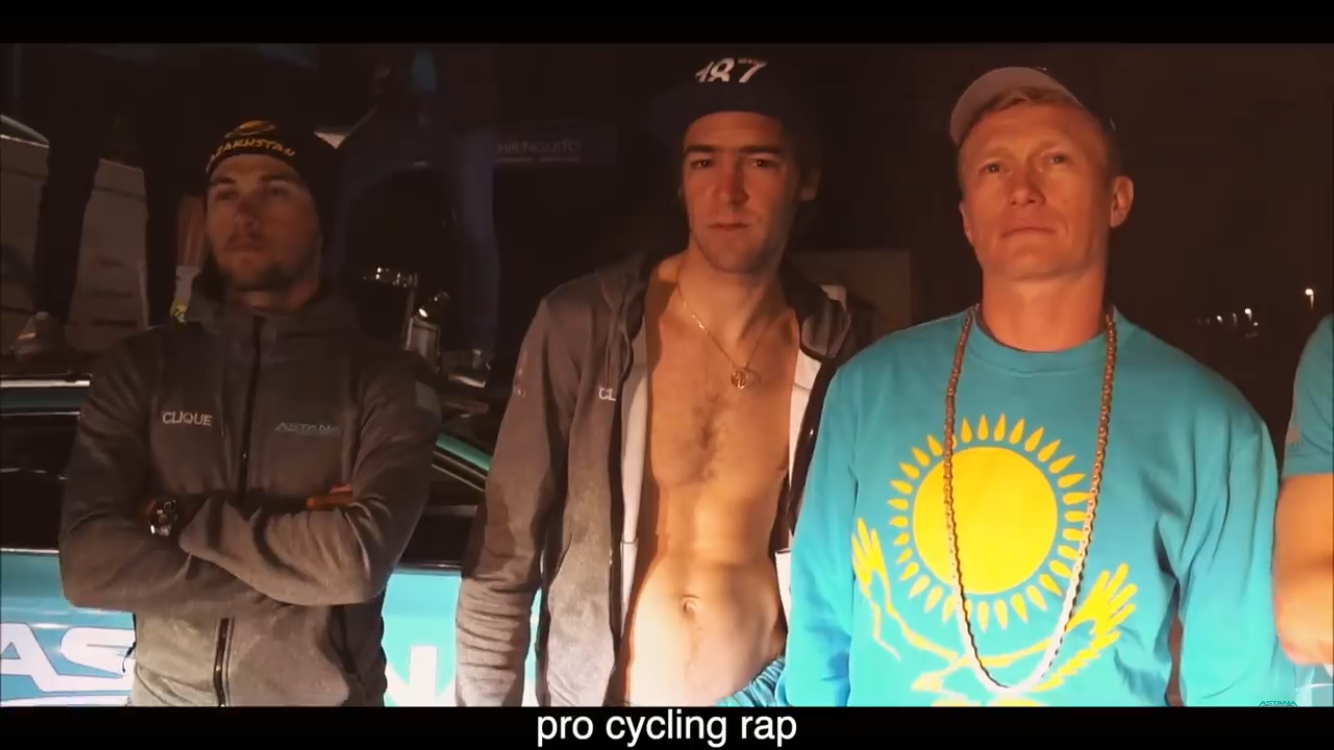
BUT at the end of the day cool is an entirely subjective standard- except that Astana rap video. That's just nightmare fuel at its finest.
Jules said:
I think it's things like individual riders bringing sponsorships, which reverses the power structure between rider & team. I see this happening unhindered in solo sports like triathlon, cyclocross & gravel where the team isn't needed the same way, it's clear that the athlete owns the sponsorship.

Actually individual riders do bring sponsorships.  Caleb Fairly was on Slipstream for a few years because his dad paid his way.  Probably a bunch of second-division teams have riders who have brought sponsors to the team--Think about all those names plastered on the Androni-Gioccatolli jersey; those small names for many teams are linked to specific riders.

But I don't think that's what you mean.  I think you're referring to Red Bull-type sponsors.  Isn't that a bit tricker to parse, as teams, and  yes, 'team' is important, basically find a sponsor for everything a rider might use?  


 Justin Williams has talked about how being a kid from South Central LA is worlds away from being a kid growing up surrounded by the European cycling scene and culture and that disconnect between the two is I think where a lot of Americans look at cycling, cock their heads sideways and give a big "right....". 
I've wondered about this.  Justin's dad was a cyclist.  Seems like his dad rode a ton; I imagine that Justin had access to cycling mags, saw cycling on television, heard some talk about cycling.  That kind of exposure was way more than I had, and more than most kids I knew had when we started riding. Back then, there was a two or three second clip at the start of ABC's Wide World of Sports; that was the only televised cycling I saw for a few years.  I didn't even know there was bike racing in the US for a few years after I started riding.  

Sure it's a different world, but not as different as it was for people who didn't know somebody in the sport.
Speaking of sponsorship I was always curious when I was a child about why the cycling teams are commercial teams. Why aren't cycling teams city teams? Why doesn't Barcelona which by the way has a section for any single sport on earth doesn't have a team racing the Vuelta? 

The other question I always asked myself is since cycling is a such a popular sport both on TV and on the road why is it that it doesn't attract major corporations? Quickstep, Mappei, Brooklyn, Once...Most of them are small companies.  Besides Sky, there are very few of the  major sponsors you see in soccer for instance. Why is that? I truly believe that the sport is generally seen as not cool enough, not glamorous enough. 
Remy.

re: team cities... there are plenty of national and regional teams in pro cycling (Astana, UEA, euskadi, Israel, etc...)

re: small companies vs large. simple: This is because of doping. If cycling had no scandal doping risk larger corps would put some of their marketing behind it.

Ironically, Regional/National teams traditionally promote the win, which incentivizes doping ( as opposed of Legion or Rapha/EF, for example, that promote the lifestyle, which deincentivize doping)
Also 
cycling does not have any revenue.
No stadiums , no multi million dollar TV rights 

Cycling is a money pit. Stadium sports have rather low costs year to year beyond salaries and the capital investment. A stadium can be sold/rented, used for multiple sports, etc.

Bike teams need new everything all year around. 
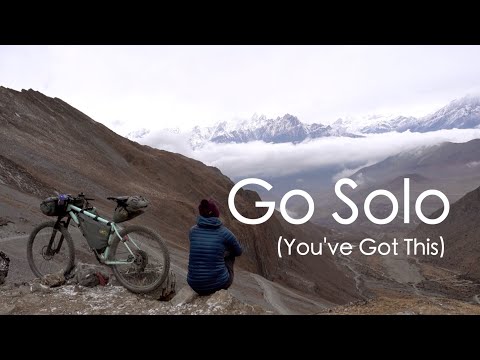
https://youtu.be/qbg6rPoBNkw
^Ahhh, the feels! Before wife, kids & mortgage I had a dream about riding a transalp from one end of Nepal to the other. This is even better.
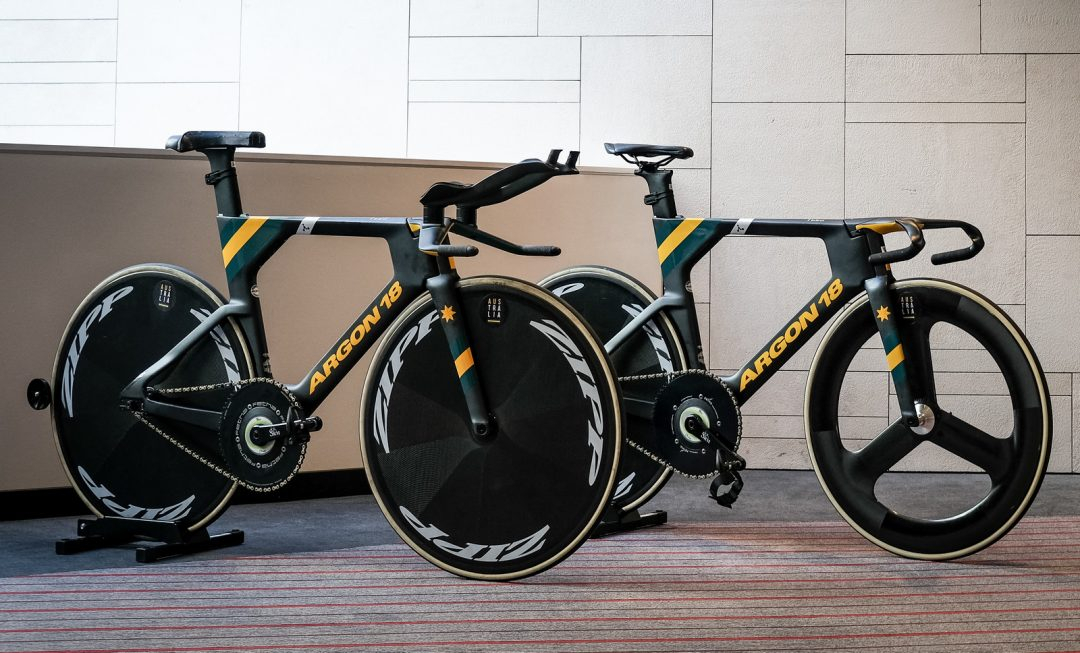
I don't know anything about track bikes, but these are the best ones. 

https://cyclingtips.com/2020/02/cycling-australia-reveals-new-track-bike-for-tokyo-olympics/

What I find interesting was that listening to a podcast on the wide forked British track bike , I’m pretty sure the reason the revealed it early was because the UCi said that it had to of been ridden in completion in 2019
these Aussie bikes haven’t , as far as I know
What I find interesting was that listening to a podcast on the wide forked British track bike , I’m pretty sure the reason the revealed it early was because the UCi said that it had to of been ridden in completion in 2019
these Aussie bikes haven’t , as far as I know
“While the new Electron Pro was officially unveiled on Tuesday, it has already been used in competition: at the Track World Cup in Cambridge, “

also, as much as this type of articles like to make it, there isn’t anything specially new or innovative about these frames
eloy said

also, as much as this type of articles like to make it, there isn’t anything specially new or innovative about these frames
Woah woah woah. First and foremost, they look  cool. Second, who doesn't *LOVE* a new fork/wheel/axle "standard"?? 
IIRC Hambini crapped all over that wide forked bike as it was first presented - basically from a fit & finish perspective.
Jules said:
IIRC Hambini crapped all over that wide forked bike as it was first presented - basically from a fit & finish perspective.
Who is Hambini?
Jules said:
IIRC Hambini crapped all over that wide forked bike as it was first presented - basically from a fit & finish perspective.
Who is Hambini?
https://www.youtube.com/user/nrgizerbunny/videos

All he does is crap all over stuff. I found it amusing when I first discovered him, but now find him terribly boring -- while he is sometimes right, from his perspective, every frame manufacturer out there is a disaster.
I heard he is like the Durianrider of aero/engineering commentary?
What I find interesting was that listening to a podcast on the wide forked British track bike , I’m pretty sure the reason the revealed it early was because the UCi said that it had to of been ridden in completion in 2019
these Aussie bikes haven’t , as far as I know
What I find interesting is that Argon 18 is in this game at all.  They seem to be too small to justify the kind of payout I assume working with a powerhouse like Australia Cycling could demand.  I don't see how they sold enough bikes to sponsor Astana, either, but I guess Cycling Australia is smaller.  I've heard the Canadian government is partially supporting the company in some way.