What turned me off was the cleat mounting procedure. How many of us have struggled to get the cleats and shims positioned "just so" and eventually, just said, "Fuck it. Good enough." And now there's a power meter where precise shim/plate placement is key to getting power readings?twoyacks said:
Bicycle Tech/Gear Discussion Thread
V brakes are ugly…discs in comparison not so muchThierry Bonnaire said:Disks are so Godamn ugly. The end.

Le Sigh. We've covered most of this already some time ago.
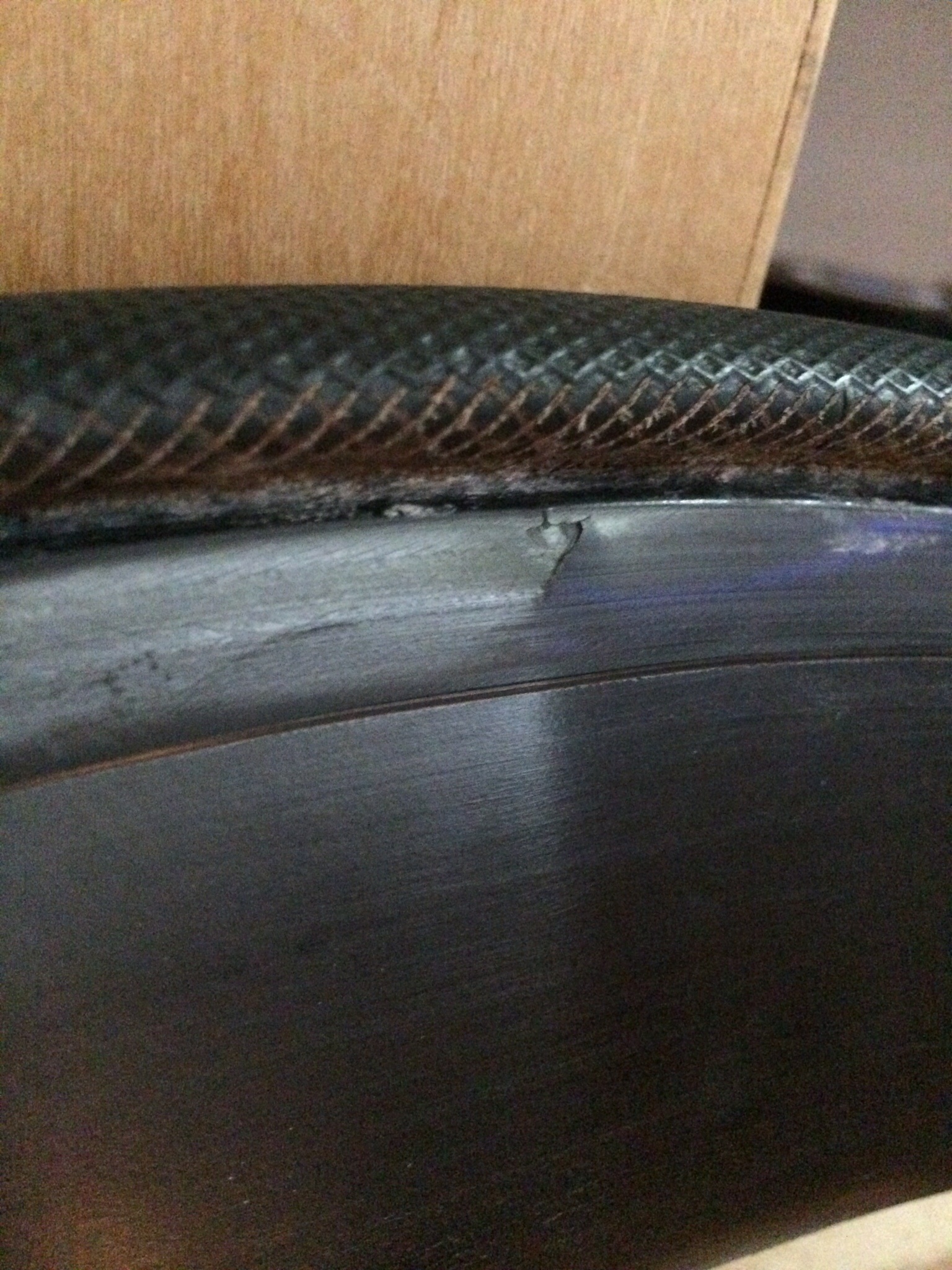
Eloy is largely correct. Rotor disc brakes have a known track record of destroying pads in muddy conditions. Van Dessel has reported that in muddy races they've seen disc pads wear out in less than 40 minutes of racing, both for good riders on their own bikes and bad riders borrowing bikes. I know, Rim disc brakes do, too. However, it does seem that there is more evidence that mud and grit wreak havoc on rotor discs to a greater degree. THere's another critical difference. When rotor disc brake pads wear out, you have metal on metal, and chances are it won't stop you at all. When your rim brake pads wear out, the metal holder still has pad material in it and likely can still help you stop one or two last times (of course, replacing a rim is more expensive than replacing a rotor, but it won't matter if you're dead).
Pro crossers are different. They race with two or three bikes in muddy conditions and have each bike washed each lap (not incidentally, you need to take great care in making sure not to get things like lube, grease, or polish on your discs or pads). They also switch pads and sometimes rotors depending on the conditions. Typically, they use organic pads for better modulation and swtich to metal or sinterized pads in muddy conditions, which loses modulation and some low-speed stopping power for greater durability. They can start every race with their bikes sporting fresh pads. Some rotors hold mud in them, which speeds pad deterioration. It's debatable how easy/fast/convenient switching is for us. It's also debatable the time it will take to reset the fluid or cable when putting in new pads. However, rotor discs almost always need some braking to "bed-in" the pads or vice versa. Not sure how much time this will take, but it's not just put them in and go.
MTB discs are another story. Part of the reason for their adoption was because of suspension. V-brakes were designed for rear suspension by Bontrager, and they were easier to set up on front suspension, too. Putting a disc caliper on a suspension leg was easier because tehre was more material there. Same goes for the rear frame elements. And stopping a slower-moving bike is easier. The faster-moving DH bikes are built heavier to begin with--and these are generally going no faster than we do just riding down East Clinton Ave, often much slower.
So much of the folks promoting disc brakes get to "it's just different." That there is so little publicly shared quantifiable data bothers me.
I rode a Specialized Roubaix with SRAM's Hydro Disc brakes on tuesday. Started out the ride chatting with Nicole Duke, a SRAM rider and a big proponent of disc brakes. She believed they were better, but pointing to things like better braking in the wet, braking later and better modulation, and better adjustment for small hands doesn't seem like eough. Braking in the wet should be quantifiable. Braking later might not have to do with anything physical, just something mental. Better modulation can be quantifiable, but, in many cases, could be largely negated by different geometry. Smaller hands is not an issue, as SRAM in particular has reach adjustment on their levers. SOmeone suggested that as the brakes are easier to operate, you can brake better when tired.
When we started out the ride, the advice to the group from the SRAM guy leading was "hey, these bikes have hydraulic brakes (some rim, some rotor), and Zipp's new tires. We've got alot of downhill, so try letting the bike out a little."
I did. I went much faster than the group. I didn't feel scared. I didn't crash. Braking felt fine. Locking up the wheels was hard. Of course, I've never ridden this Roubaix before, I've never ridden the tires before, I've never ridden the brakes, and I've never done the descents. No way I could tell what I was experiencing.
The weight issue is not as simple as suggested. The hubs get heavier. The front wheel gets more spokes. Not all rims are made lighter ( ENVE does, Zipp doesn't) The system is less aero. The fork needs to be strengthened, as do the stays. OTOH, you can remove the brake bridge on the chainstays and possibly build a larger steerer tube, larger, lighter, stiffer fork blades. Of course, stiffer frame elements might be less comfortable, which then fatigues you more, which then makes it harder to ride fast.
I also took out a fat bike. At super-low speeds, the brakes, even with a light touch, were grabbier than I would have liked. Perhaps a learning curve issue, perhaps a real problem.
Related: I finally wore out one of my daily clincher rims this year. I wouldn't be surprised if I had 40k miles on it. If we're worrying about cost, we'd also have to compare it to the cost of rotors and pads.
Vlad, better technology might win in dangerous situations. But, the problem is we don't know what hte better technology is. If the brake fluid overheats on a long downhill, then it isn't better technology. The guy at bike rumor built up a disc brake bike and did it to himself; he boiled the fluid, lost braking and crashed hard enough that he broke bones. He made lots of mistakes in what he built and how he used it, but that's irrelevant. The issue is the brakes failed. Sure, he did some dumb stuff, but people often do. If he had been on a bike with rim brakes, he would have been fine. Shimano's Wayne Stetina said something along the lines of the guy needed to learn to brake dfferently. Like everyone is going to bother to learn how to brake differently just because they bought a disc wheel bike.
back to Eloy's initial comments. Discs may work better in some situations. But, in my opinion, the benefits of discs are hardly at "case closed."
So, while mounting up my Challenge clincher "open tubular" (snort, cough) Limus tires to be ready for some mud this weekend on a course that is very "Mountain-bike-light" with plenty of single track that is a hooting good time, but can be slick and muddy, I realized I wasn't sure what direction they should go. So I popped over to the internets (see Jules I can look some things up for myself) and found this page:
http://www.challengetech.it/info/faq/en
So what's interesting to me here is that I learn that apparently the Grifos can be mounted in different directions depending on what you want from them.
"The Grifo can be used in different directions to achieve different results.
If you point the arrow < < < of the tread forward the tire rolls faster.
If you turn the tire around with the arrow pointing backwards > > > the tire has more grip but added rolling resistance.
The rear tire is usually more suited to switching directions. Have fun trying different orientations for different conditions."
So it got me thinking....maybe one day, when I want a little more bite on the front wheel, I'll flip it around? Obviously, can't do the same with the rear...
Thanks JP, for taking the time, cool summary, and sharing your experiences.mugwump said:Le Sigh.
"The bright future of disc brakes in cyclocross faded at the USA Cycling Cyclocross National Championships, as competitors found themselves brakeless after a lap or two of sloppy racing..."